
Review · PARIS
Orsay Museum – Exclusive Guided Tour (Reserved Entry Included)
The Musée d’Orsay makes a fine partner to the Louvre. Housed in a grand old train station, it gives you the story of modern painting in a more manageable setting, from Millet and Manet to Monet, Renoir, and Van Gogh. The reserved entry saves time, while a guide such as Dina, Christophe, Liliya, or Hugo can turn a famous painting into a story about risk, scandal, and changing taste.
I especially like two things here: the tour follows the road into Impressionism instead of treating it as a pile of pretty pictures, and the guide can steer you toward both major works and less familiar pieces. The 2.5-hour format also gives you a useful first look without trying to conquer every room.
The main caution is price. At $144.21 per person, this is a serious spend for a museum visit, especially if you choose the private format. The value depends on how much you want interpretation, saved time, and a route shaped around your group.
Key points to know before booking
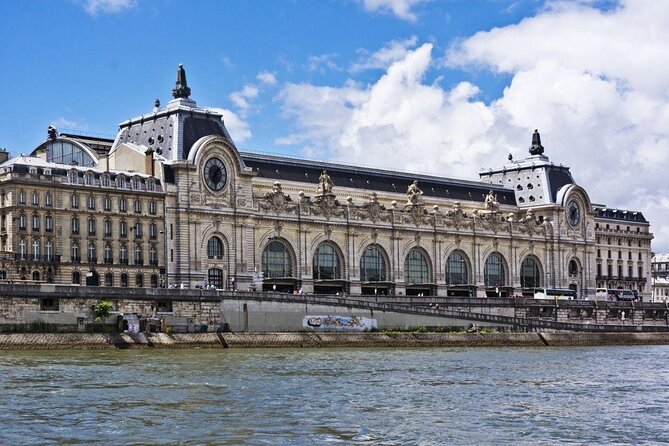
- The old train station is part of the experience: The Musée d’Orsay’s Beaux-Arts structure, huge clock, and open interior deserve attention alongside the paintings.
- The art follows a clear story: You move from earlier academic traditions through Manet and the Impressionists to Post-Impressionism and Van Gogh.
- Reserved entry is included: You do not pay an extra admission fee, though security checks can still cause a wait.
- Private and semi-private choices are available: The private option gives your group its own guide. The lower-priced semi-private option has different inclusions.
- The guide makes the biggest difference: Dina, Christophe, Liliya, Hugo, Romain, Nadia, and others have been praised for clear explanations, good pacing, humor, and attention to questions.
- Plan for small bags and sensible timing: Large bags and suitcases are not allowed, and morning starts may help you avoid the heaviest crowds.
Why the Musée d’Orsay works so well with a guide
The Louvre can feel like a city of galleries. The Musée d’Orsay is easier to grasp, but it still covers a wide sweep of art. You can admire a Monet one minute and then wonder why it matters next to a painting by Millet or Manet.
That is where the guide earns the fee. The tour is not just a march to the most photographed canvases. It explains the artistic changes that made Impressionism so startling in its own time. You learn why outdoor light, visible brushwork, modern city life, and ordinary people caused such a stir.
I like this approach because it gives you a way to look. Instead of thinking, That is a nice painting, you start asking what the artist changed, what older rules were being rejected, and why the public reacted so strongly.
The guides named in the feedback include Dina, Christophe, Liliya, Hugo, Nadia, Romain, Beatrice, Malaika, Dunja, Mathieu, Marcel, Paloma, Ugo, and others. The strongest descriptions focus on guides who speak with you rather than at you, invite questions, and adjust the route to the group.
That last point matters. A family with children may want stories and quick comparisons. A serious art lover may want more time with Manet, Monet, or Van Gogh. A private guide can respond to those differences more easily than a large fixed group.
More Museum Visits in Paris:
- Louvre Museum – Exclusive Guided Tour (Entry Included)
★ 5.0 · 6,296 reviews - Paris: Louvre Museum Ticket & Exclusive Immersive AudioGuide
★ 3.5 · 369 reviews - Van Gogh Museum Amsterdam Exclusive Tour w/ Reserved Entry
★ 5.0 · 1,760 reviews
Entering the Musée d’Orsay through the former railway station
You meet at the Musée d’Orsay in Paris’s 7th arrondissement. The activity ends at the same place, so you are free to continue exploring the area afterward.
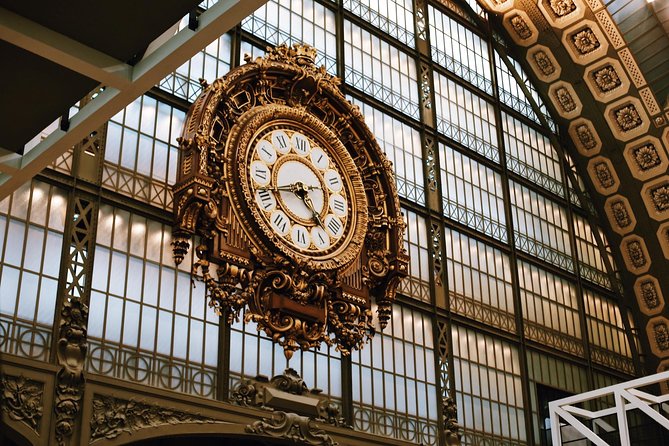
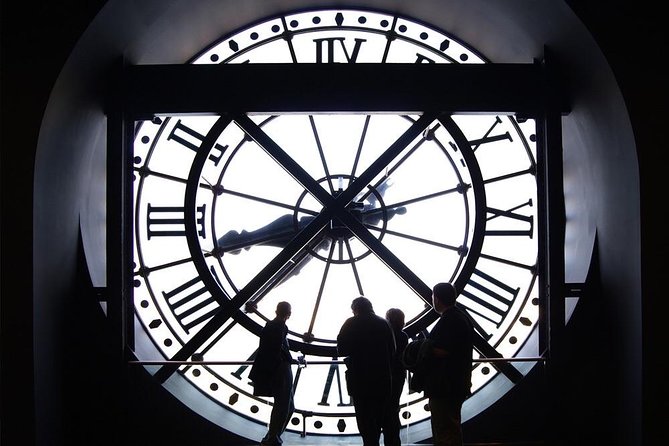
The building deserves a few minutes of your attention before the art takes over. This is a converted Beaux-Arts train station, and its large open design gives the museum a sense of space that many former palaces do not. The famous clock is one of the visual treats, and the architecture helps explain why the museum feels different from the Louvre.
Reserved entry is included in the price. That means you do not need to buy a separate admission ticket, and your guide can take you into the museum using the tour’s entry arrangement. Do not read reserved entry as a promise that you will walk straight through every security point. Increased security can still create lines.
You should also arrive with a light load. Large bags and suitcases are not allowed inside. Handbags and small, thin backpacks are permitted through security, subject to the museum’s rules.
The museum is near public transportation, but hotel pickup and drop-off are not included. You will need to make your own way to the meeting point, with a taxi or Uber suggested for those who prefer door-to-door transport.
Following the road to Impressionism
The tour begins with the artists and ideas that came before Impressionism. Millet and his painting The Gleaners help set the stage. The subject is ordinary rural labor, not a grand biblical or historical event, and that shift in subject matter matters.
From there, the guide can explain how artists began to challenge the polished traditions of academic painting. The point is not that one day everyone decided to paint loosely. The change came through arguments about subject, technique, light, and who deserved a place on the gallery wall.
Manet is a key turning point. His Luncheon on the Grass was scandalous because it did not behave like the respectable art of its day. The painting’s directness, modern setting, and challenge to convention make it an ideal work to discuss with a guide.
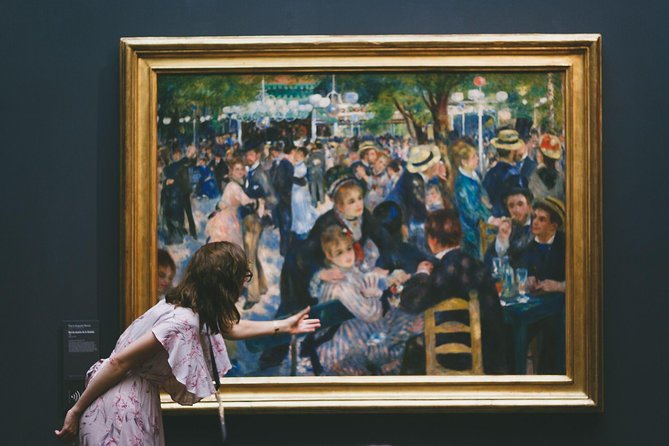
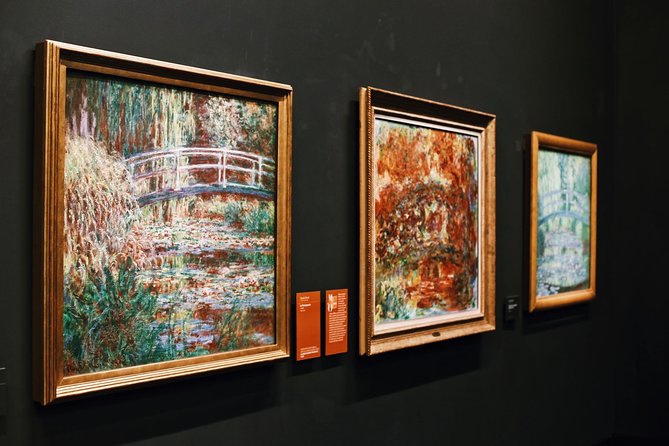
You then move into the better-known Impressionist rooms. Renoir’s Dance at Le Moulin de la Galette gives you a lively city scene full of movement and social energy. Monet’s poppies show how color and light can carry a picture, even when the subject appears simple at first glance.
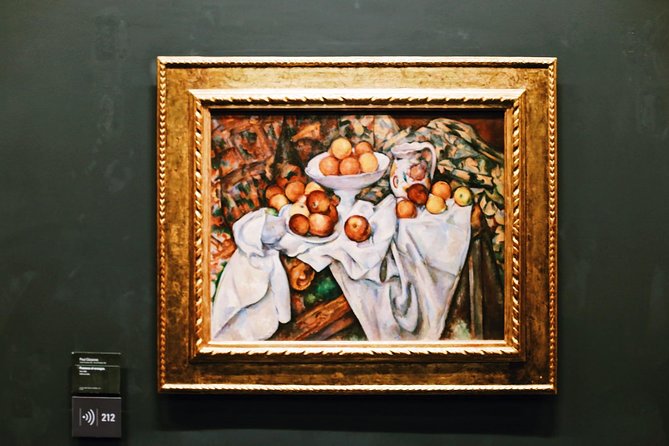
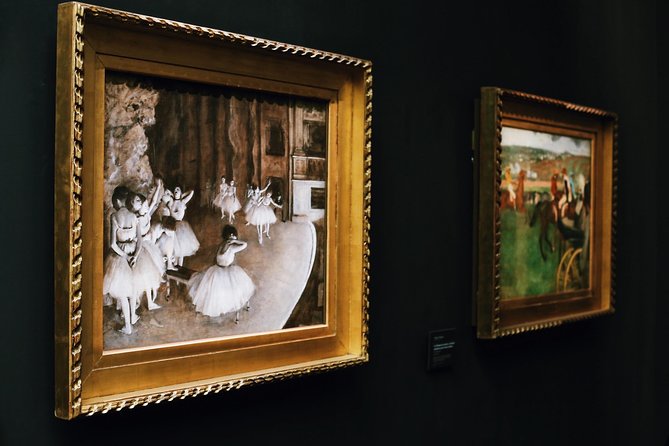
A guide can help you notice the choices behind the surface. Look at how brushstrokes suggest rather than spell out detail. Notice how the artists treated changing light, crowded streets, leisure, and the modern world. The best part of this section is learning that Impressionism was not merely a pretty style. It was a new way of deciding what belonged in art and how closely an image needed to resemble reality.
Meeting Van Gogh after the Impressionists
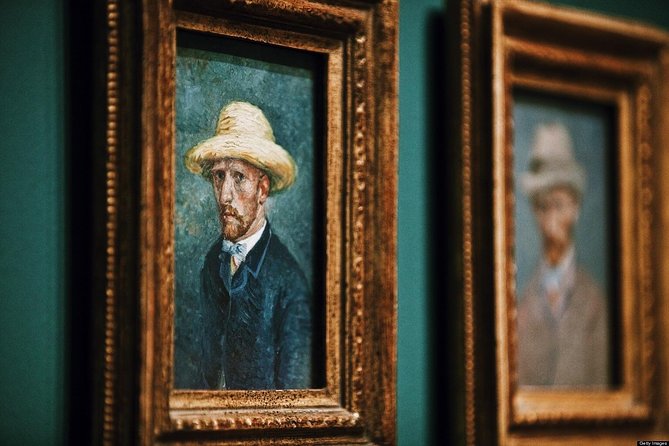
Van Gogh’s Bedroom in Arles gives the tour another turn. By this point, you have seen how Impressionist artists broke up traditional surfaces and used color in new ways. Van Gogh pushes those ideas further, with a personal intensity that feels different from Monet or Renoir.
This is a useful place to ask questions. How does the painting’s color affect your sense of the room? Why do the lines and forms feel so forceful? How does the work connect to Impressionism, and where does it move beyond it?
The exact collection on display can vary during the year, so the precise route may change. Still, the tour is built around the major artists and the evolution toward modern painting. You should expect to see highlights, along with some works that receive less attention from casual visitors.
The guide may also draw links between artists. Those connections are one of the best reasons to take the tour. Artists did not work in sealed boxes. Their friendships, rivalries, exhibitions, and disagreements helped shape the movement.
Christophe has been singled out for guiding visitors chronologically and adding details about the painters’ relationships. Romain is praised for a calm pace and a strong command of English when explaining Impressionism. Ugo and Liliya are noted for their enthusiasm and ability to make the material interactive.
A few more luxury tours around Paris worth a look
- From Paris: Versailles Guided Tour by Deluxe Minibus
★ 4.8 · 973 reviews - Paris Louvre Exclusive Semi Private Guided Tour Max 6 People
★ 4.6 · 28 reviews - Acropolis: Premium Acropolis and Parthenon Guided Tour
★ 4.8 · 5,208 reviews - Guided Luxury Paris Day Trip with Optional Lunch at the Eiffel Tower
★ 4.5 · 2,702 reviews
What 2.5 hours can and cannot cover
The listed duration is about two hours to two hours and 30 minutes, with the private version described as 2.5 hours. That is enough time for a strong introduction, not enough time for every room.
This is an advantage for many people. You can see the museum’s major works, understand the basic sequence of artistic change, and leave with energy for the rest of your day. The museum is large enough that an unguided first visit can become a tiring search for famous names.
It is also a limit. If you already know the Orsay well, or want long quiet periods in front of individual paintings, a guided route may feel too directed. One critical account describes a guide moving too quickly and not welcoming questions. That appears to be an exception among the supplied feedback, but it points to a real issue: the experience depends heavily on the individual guide and the chemistry of the group.
The strongest guides adjust their pace. Dunja is described as spending extra time with the group rather than cutting the visit short. Paloma is praised for conversation and organization. A private booking gives you the best chance of asking for more time in a room or returning to a work that catches your eye.
Headsets may be used, especially in crowded conditions. One detailed account says they made it easier to follow the guide when the museum was busy. That is a small practical feature, but it can make a big difference when other visitors are speaking nearby.
Private tour or semi-private savings?
The private version is designed for your own group, with a guide exclusively for you. It is the better choice if you want to set the pace, ask many questions, bring children with different interests, or focus on a particular artist.
The semi-private option costs less, but the details are not identical. The private listing specifically includes a tour guide exclusively for your group and wheelchair-friendly access, while those statements do not apply to the save-money semi-private choice. Confirm the exact option before paying.
A small group can be a good middle ground. One account describes a maximum of six people, allowing the guide to tailor the route without the price of a fully private visit. Since group arrangements can vary by booking option, check the conditions attached to your selected time.
This is not a tour for someone who wants to be left alone with the collection. You will be moving with a guide and following a planned route. It is best for a first visit, a short stay in Paris, or anyone who wants the basic art story explained clearly.
Is $144.21 per person a fair price?
At $144.21 per person, the tour is not a bargain admission ticket. You are paying for reserved entry, an English-speaking art guide, and the structure of a private or small-group visit.
The value is strongest if you have limited time. You avoid spending part of your day figuring out where to go, which paintings matter, and how the collection fits together. You also avoid paying an additional admission fee at the door.
The value is weaker if you are happy to read labels, move at your own pace, and spend several hours exploring alone. The Musée d’Orsay can be rewarding without a guide, particularly if you already know which artists you want to see.
I would compare the price with your Paris schedule, not just with the museum ticket. If this is your only art museum visit, a guide can give you a useful foundation. If you have several museum days planned, you might prefer to take this tour at the Orsay and visit another museum independently.
Group discounts may be available, and the price varies by the option you choose. Check the final booking details for your party size and format.
Timing, comfort, and access
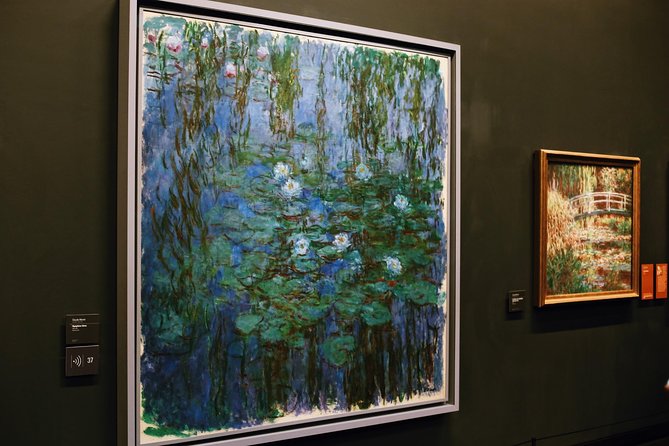
Morning, afternoon, and evening start times are offered. I would choose based on your day rather than assuming one time is always best. Early or later visits may help with crowds, but the museum can still be busy, and security lines are possible.
You need a moderate level of physical fitness. The museum is large, and you will be on your feet for much of the visit. One guide helped a visitor who had left a cane in a taxi by finding a portable chair, but you should not depend on that kind of help being available every time.
The private tour is listed as wheelchair friendly. The same claim does not apply to the semi-private option, so visitors with mobility needs should confirm the selected format before booking.
Appropriate dress is required for entry into some sites on the tour. For this activity, practical clothing and comfortable shoes make sense. Some museum rooms may require quiet or limit speaking, and your guide will explain those rules before you enter.
Temporary exhibitions are not included. The permanent collection is the focus, so do not book this expecting special-entry access to every changing show.
Who will enjoy this Orsay visit most?
I would recommend it to:
- First-time visitors who want to understand Impressionism rather than simply photograph it.
- Couples or families who prefer a private guide and a clear route.
- People with only a few hours for the museum.
- Art lovers who want connections between Delacroix, Millet, Manet, Monet, Renoir, and Van Gogh.
- Visitors who dislike waiting in ordinary admission lines.
- Anyone who benefits from explanations in English.
I would hesitate if you want a very slow, silent museum visit or if the price would make you uncomfortable. I would also check the guide arrangement carefully if your main need is wheelchair access or if you want a semi-private booking.
Should you book the Musée d’Orsay guided tour?
Book it if you want the Orsay to make sense quickly. The museum’s strongest feature is not only its famous paintings, but the story connecting older academic art to Impressionism and then to Van Gogh. A good guide brings that story into focus.
Choose the private option if you care about pacing, questions, and a route shaped around your group. Choose semi-private only after checking its access and guide terms. If you can request a guide, names such as Dina, Christophe, Liliya, Hugo, Romain, or Ugo have been associated with clear, lively explanations.
For a self-guided museum fan, $144.21 may be too much. For a first-time visitor with limited Paris time, the reserved entry and focused 2.5-hour route can be worth the cost.
FAQ
Where does the tour begin?
The tour begins at the Musée d’Orsay, 75007 Paris, France.
Where does the tour end?
The activity ends back at the Musée d’Orsay meeting point.
How long does the tour last?
The tour lasts about two hours to two hours and 30 minutes. The private tour is described as lasting 2.5 hours.
Is museum admission included?
Yes. All entrance fees and reserved museum entry are included.
Is hotel pickup included?
No. Hotel pickup and drop-off are not included. Uber or a taxi is recommended for reaching the meeting point.
Is the tour offered in English?
Yes. The tour is offered in English.
Can I choose a private tour?
Yes. You can choose a private tour in which the guide is exclusively for your group. A lower-priced semi-private option is also available.
Are temporary exhibitions included?
No. Temporary exhibitions are not included in the tour.
Is the tour wheelchair friendly?
The private tour is listed as wheelchair friendly. This does not apply to the semi-private option, so confirm your selection before booking.
Can I bring a large bag or suitcase?
No. Large bags and suitcases are not allowed inside the museum. Handbags and small, thin backpacks may pass through security.
What happens if the museum closes unexpectedly?
The museum may close occasionally without advance warning. If opening is delayed by more than one hour after the scheduled start, an alternative will be provided. Refunds or discounts are not available in those cases.
Can I cancel for a full refund?
Yes, if you cancel at least 24 hours before the experience start time. Cancellations or changes made less than 24 hours before the start are not accepted for a refund.
Just added around Paris
- Paris: Premium Professional Photo Shoot★ 5.0 · 79 reviews
- Paris: Private VIP Photoshoot with Experienced Photographer★ 5.0 · 72 reviews
- Paris Premium & Private Highlights city tour on Sidecar★ 4.9 · 27 reviews
- Premium Paris Monuments Tour★ 4.8 · 16 reviews
- Paris Vintage Sidecar Premium & Private Half-Day Tour★ 5.0 · 19 reviews
- Paris: Premium Film Director Photoshoot & Natural Direction★ 5.0 · 27 reviews
- Paris Louvre Exclusive Semi Private Guided Tour Max 6 People★ 4.6 · 28 reviews
- Paris: Eiffel Tower & Louvre Photoshoot (High End Edits)★ 5.0 · 125 reviews
Paris VIP Tours, compared.
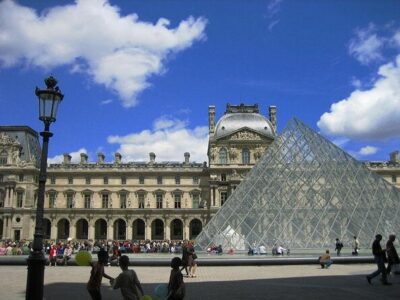
Louvre Museum – Exclusive Guided Tour (Entry Included)
Read our review →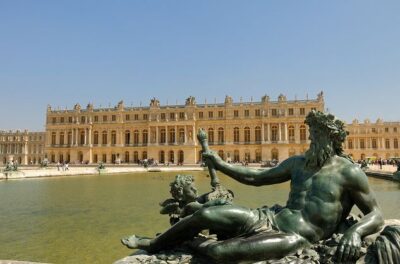
From Paris: Versailles Guided Tour by Deluxe Minibus
Read our review →
Seine River Dinner Cruise with Live Singer by VIP Yacht de Paris
Read our review →
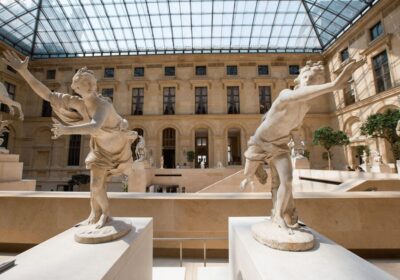
Paris: Louvre Museum Ticket & Exclusive Immersive AudioGuide
Read our review →

Paris Wine Day Tours exclusive wine tour in the Sancerre area
Read our review →
Paris Wine Day Tours exclusive Champagne tour incl. 3 visits
Read our review →Browse the lists this tour appears in