
Review · PARIS
Paris Louvre Exclusive Semi Private Guided Tour Max 6 People
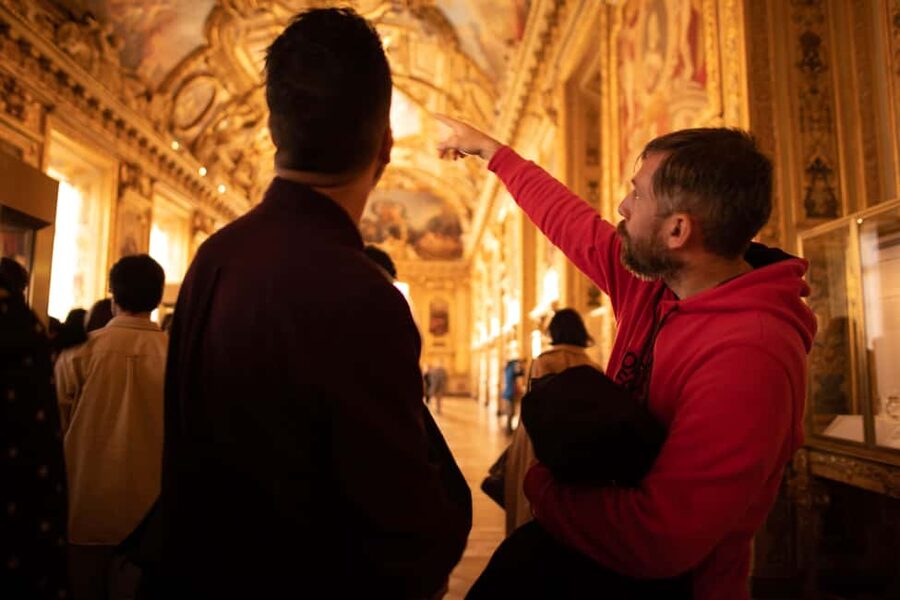
The real prize here is not simply getting into the Louvre. It is having a guide lead you through a museum with more than 35,000 works on display, while keeping the group to six people maximum. You will see the Mona Lisa, Venus de Milo, the Great Sphinx of Tanis, and major paintings by Delacroix without trying to make sense of the palace-sized museum alone.
I like two things right away: the small group, which makes it easier to hear and ask questions, and the ticket that lets you remain inside after the guided portion ends. The tour also gives you a useful thread through the Louvre’s past as a fortress, royal palace, and art museum.
The main concern is price. At $199 per person, this is a premium Louvre visit, and the quality depends heavily on the guide assigned to your group. One reported tour ended abruptly after a disagreement, so I would treat the guide as an important part of the value, not a minor detail.
Key points at a glance
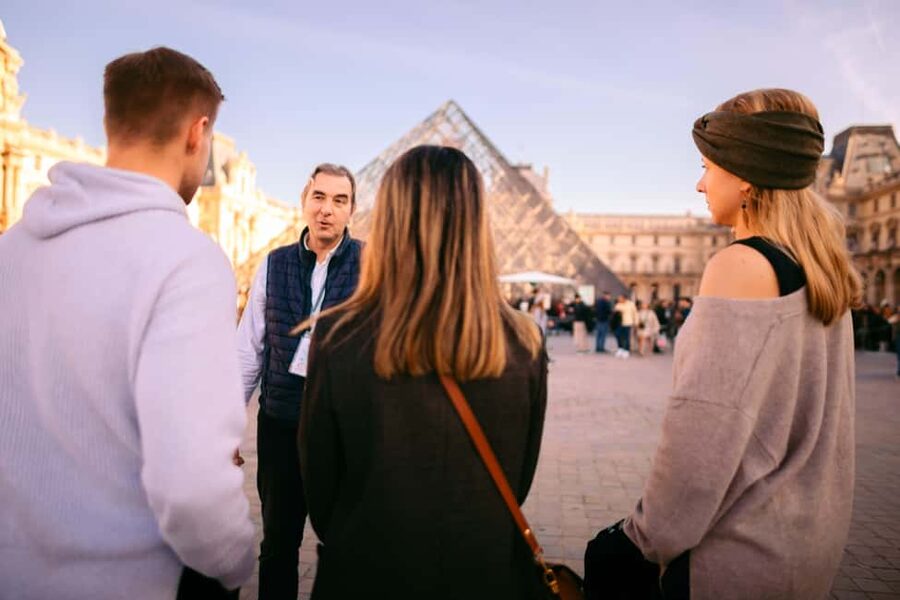
- Six people maximum: A small group makes the Louvre easier to navigate and gives you more room to ask questions.
- Major masterpieces included: See the Mona Lisa, Venus de Milo, the Great Sphinx of Tanis, Delacroix, Canova, and other famous works.
- Roughly two to two and a half hours: The pace focuses on highlights rather than attempting the whole museum.
- Stay after the tour: Your ticket remains useful after the guided visit, so you can continue at your own pace.
- Several guide languages: Tours are offered in English, French, Portuguese, Spanish, Russian, and Swedish.
- Meet under the horse statue: Find the Louis XIV figure in front of the glass pyramid and look for the LivTours sign.
Why a small Louvre tour can make sense
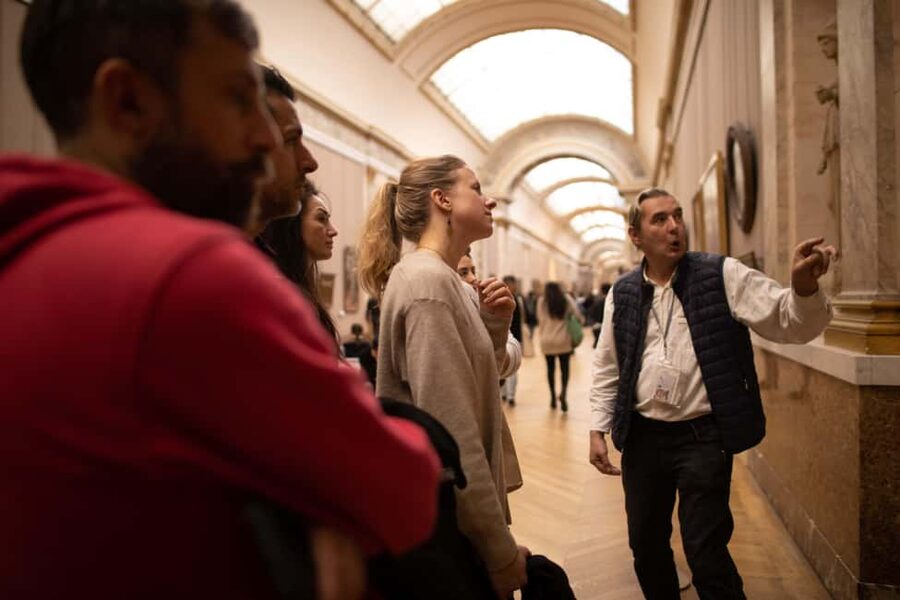
The Louvre is not a museum you casually wander through and fully understand in one visit. Its collection is enormous, its corridors can feel confusing, and its most famous rooms attract heavy crowds. A private or semi-private tour gives you a route and a reason for moving from one section to the next.
The group limit is especially important. With six people, you should be able to hear the guide more clearly than in a large coach group, and the guide can respond to individual interests. If you want more explanation about sculpture, painting technique, royal history, or Leonardo da Vinci, you have a better chance of getting an answer than you would in a crowd of 20 or 30.
This is not a quiet, empty-museum experience. The Louvre remains one of Paris’ busiest attractions, and the Mona Lisa room can be crowded. Still, a skilled guide can help you move through busy areas and use the limited time well.
Sara, Zach, Nazli, and Door are among the guides named in the feedback provided for this experience. The comments about them are especially strong: Nazli was praised for her passion and command of the subject, Sara for handling a busy summer day while adapting to interests, and Zach for connecting art technique with history. Those details point to the best version of this tour: not a memorized list of famous names, but an explanation of why the works matter.
More Premium Small-Group Tours in Paris:
- Premium Milford Sound Small Group Tour & Cruise from Queenstown
★ 5.0 · 3,001 reviews - Small-Group Premium Northern Lights Tour from Reykjavik
★ 4.4 · 2,977 reviews - Hoi An/ Da Nang – Ba Na Hills – Golden Bridge Deluxe Small group
★ 5.0 · 2,613 reviews
Meeting at the Louis XIV horse statue
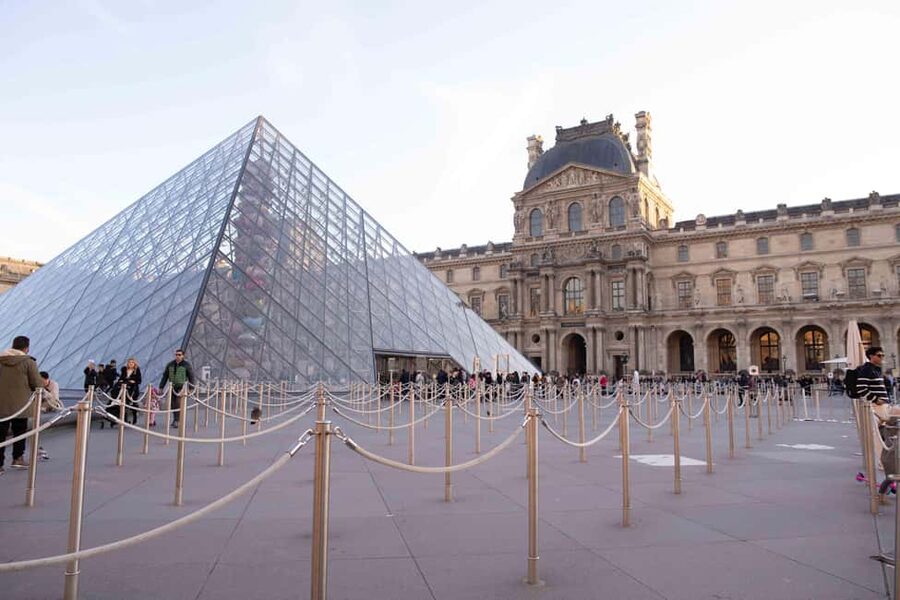
Your meeting point is under the statue of Louis XIV on horseback, in front of the Louvre’s glass pyramid. The statue is identified as Louis XIV under the features of Marcus Curtius, and your guide will carry a LivTours sign.
Arrive 10 to 15 minutes early. This matters at a large museum, where a few extra minutes spent searching around the pyramid can create needless stress. The meeting point is outdoors, so give yourself enough time to locate the statue before the scheduled start.
The glass pyramid is easy to recognize, but the surrounding area can be busy and visually distracting. Look specifically for the horse statue and the guide’s sign rather than waiting near any entrance at random.
Bring a passport or ID card. The tour information also says that non-folding wheelchairs and electric wheelchairs are not allowed, so anyone who relies on one of those should check carefully before booking.
The glass pyramid and the Louvre’s changing identity
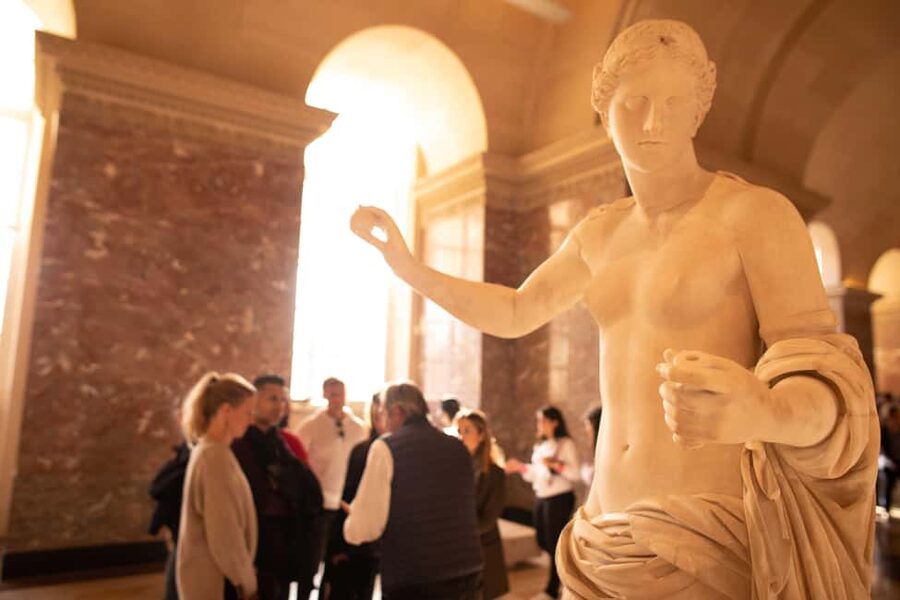
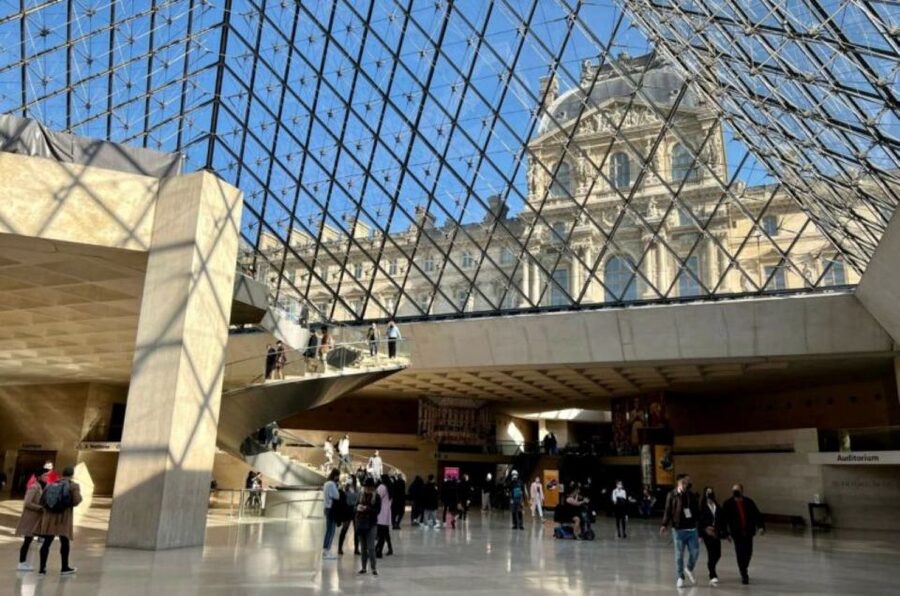
The pyramid is mainly a meeting landmark here, but it also provides a useful first glimpse of the Louvre’s unusual identity. The modern glass entrance sits in front of a former royal palace, creating the contrast that defines the museum: old stone, royal power, and modern museum design sharing one space.
You will pass by the pyramid before entering the museum for the guided visit. The real focus comes inside, where your guide can explain how the Louvre developed from a fortress into a royal residence and later into one of the world’s leading museums.
That background is not just decoration. It helps explain why the building can feel less like a simple gallery and more like a city of rooms, wings, stairways, and grand ceremonial spaces. Knowing that the Louvre once served royal purposes gives the paintings and sculptures a stronger setting.
Inside the Louvre with a clear route
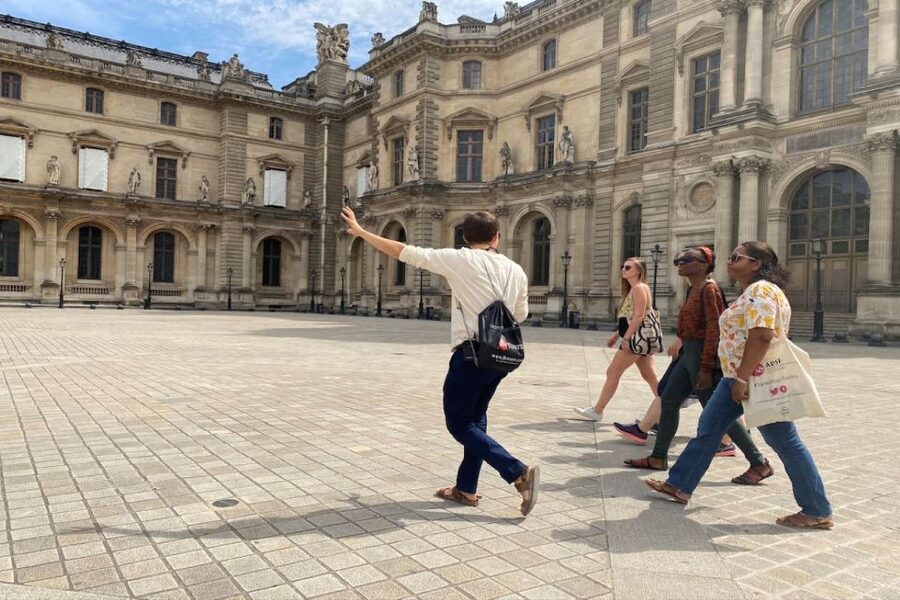
The guided portion lasts about two hours to 150 minutes, depending on the scheduled format. That is enough time for a well-planned highlight route, but not enough to cover every major department.
You can expect to see dozens of important works. The tour focuses on major pieces by artists and sculptors such as Leonardo da Vinci, Antonio Canova, and Eugène Delacroix, along with Greek sculpture and ancient Egyptian art.
A good guide turns the visit into a series of connected questions. What was this object made for? Who paid for it? How did its original audience see it? What makes the technique important? Those questions help you look at art instead of simply collecting famous names.
The small-group structure should help here. If you are puzzled by a painting or want to understand why a sculpture is considered important, you can ask without interrupting a large crowd. The guide can also adjust the amount of detail to suit your group, though the exact amount of flexibility will vary by guide and schedule.
A few more luxury tours around Paris worth a look
- Louvre Museum – Exclusive Guided Tour (Entry Included)
★ 5.0 · 6,296 reviews - From Paris: Versailles Guided Tour by Deluxe Minibus
★ 4.8 · 973 reviews - Orsay Museum – Exclusive Guided Tour (Reserved Entry Included)
★ 5.0 · 507 reviews - Acropolis: Premium Acropolis and Parthenon Guided Tour
★ 4.8 · 5,208 reviews
Venus de Milo and the power of Greek sculpture
The Venus de Milo is one of the museum’s essential stops. Even if you have seen photographs of it many times, the original gives you a better sense of its scale, material, and pose.
Your guide will explain the work’s place in Greek sculpture and why it remains so famous. The missing arms are part of the sculpture’s mystery, but the larger lesson concerns the way ancient artists presented the human body, balance, movement, and ideal beauty.
This is where a live guide earns the fee. A label can give you a date and a name. A guide can point out how the figure’s weight shifts, how the body twists, and how viewers are encouraged to move around the sculpture.
You should not expect to spend half an hour with every major object. The itinerary is built around highlights, so some stops will be brief. If Greek art is your main interest, mention that to the guide at the beginning and ask how much time the route can give to sculpture.
The Great Sphinx of Tanis and ancient Egypt
The Great Sphinx of Tanis gives the tour a different visual and historical register. Instead of a Greek idealized figure or a Renaissance portrait, you encounter an imposing Egyptian monument connected to royal power and ancient religious culture.
Your guide can help you read the symbols and understand how the object fits within the Louvre’s Egyptian collection. This is useful because ancient Egyptian works can seem familiar from photographs while remaining difficult to interpret in person.
The presence of the sphinx also keeps the tour from becoming a Mona Lisa-only outing. You get a sense of the Louvre’s wide reach, from ancient civilizations to European painting and sculpture. That range is one of the museum’s greatest strengths, but it is hard to appreciate without a route.
The Mona Lisa and the most crowded stop
The Mona Lisa is the moment most people have in mind when they book. You will stand in front of Leonardo da Vinci’s famous portrait, though you should prepare for a busy room and a short viewing experience.
The painting’s fame creates a strange situation. It is one of the world’s most discussed artworks, yet the conditions around it can make quiet study difficult. You may have limited space and time, and the room can feel more like a major attraction than a private art lesson.
A guide helps by giving the painting context before or after you approach it. You can learn why the portrait became so famous, how Leonardo handled the face and expression, and why its place in popular culture is so powerful. The painting itself is only one part of the experience. The setting, the crowd, and the expectations all shape how you see it.
Do not judge the entire tour by the amount of time you get in front of the Mona Lisa. The value lies in connecting that stop with the wider collection. The Venus de Milo, Sphinx, Delacroix, Canova, and other works give you a fuller picture of what the Louvre offers.
Delacroix, Canova, and the art beyond the headline works
The tour includes dramatic paintings by Delacroix and sculpture by Canova. These stops matter because they move you beyond the two objects that dominate most first-time visits.
Delacroix is a chance to discuss drama, color, movement, and the emotional force of large-scale painting. Canova offers a different lesson through polished marble, idealized bodies, and the technical control needed to make stone appear soft.
The exact works and route may vary, but the stated focus is clear: you will see dozens of important pieces rather than only the most famous two or three. I like that balance. A first Louvre visit should include the icons, but it should also give you enough context to understand the museum as a collection of many periods and artistic traditions.
The guide’s ability to connect history and technique is important here. Zach was specifically praised for bringing those two sides together, and that is the kind of explanation that can make a painting or sculpture stay with you after you leave.
Staying inside after the guided visit
One of the strongest practical benefits is that you can remain in the museum after the guided tour. The guided portion gives you orientation, and the extra time lets you return to a favorite work or visit sections not covered on the main route.
This turns the experience into more than a fixed two-hour tour. You can use the guide to get your bearings, then continue independently while the building and collection are still fresh in your mind.
Do not assume you can see everything afterward. The Louvre is too large for that, and your energy may be limited. Instead, choose one or two areas you want to revisit. If a sculpture or painting catches your attention during the tour, make a mental note and return to it later.
This arrangement works particularly well for first-time visitors. You get expert direction at the start, but you are not forced to leave as soon as the guide says goodbye.
Is $199 worth it?
At $199 per person, this is expensive compared with simply buying museum admission and walking through on your own. The price pays for entry, a professional local guide, and a group capped at six, not for exclusive access to empty galleries.
I see the value in three situations. First, you have limited time in Paris and want to use a short Louvre visit efficiently. Second, you feel uneasy navigating a huge museum by yourself. Third, you care about explanation and want more than names and dates on wall labels.
The price is harder to justify if you already know the Louvre well, prefer a slow solo visit, or want to spend a full day studying one department. You may also find the cost high if your main goal is simply a quick look at the Mona Lisa.
The guide makes or breaks the value. Strong guides such as Nazli, Sara, and Zach received very positive feedback for passion, clear explanations, and handling busy conditions. One negative experience involved a guide who ended the tour abruptly after becoming frustrated with another group member. That appears to be an isolated warning rather than the overall pattern, but it is still worth keeping in mind when paying a premium.
Who should book this Louvre visit?
I would recommend it to a first-time Louvre visitor who wants a focused introduction and prefers a small group. Families, couples, and small parties may appreciate the chance to ask questions without competing with a large crowd.
It also suits visitors who want famous works but do not want to spend hours planning a route through the museum. The combination of a guide and continued museum access gives you structure without taking away all independence.
Art specialists and returning Louvre visitors should look closely at the route before booking. The tour is designed around major highlights, so it may not spend enough time in a particular department for a specialist visit.
If the $199 price would make you feel rushed or anxious about getting your money’s worth from every minute, choose a less expensive museum visit. The Louvre rewards patience, and no short tour can cover its full collection.
Practical details before you go
The tour is offered in English, French, Portuguese, Spanish, Russian, and Swedish. Private and small-group formats are available, so check the specific option when selecting your time.
Free cancellation is available up to 24 hours in advance, and you can reserve now and pay later. The exact starting time depends on availability.
Arrive 10 to 15 minutes early at the horse statue beneath the Louvre pyramid. Bring your passport or ID card, and remember that non-folding and electric wheelchairs are not allowed under the stated conditions.
Should you book it?
Book this tour if you want a well-planned first look at the Louvre, value a group of no more than six, and like the idea of staying inside afterward. The guide can save you time and give meaning to works that might otherwise blur together in a very large museum.
Skip it if you prefer complete independence, already know the Louvre, or cannot comfortably justify $199. For the right visitor, the small group, expert commentary, and continued museum access make the premium reasonable. Just arrive early, keep your expectations realistic about crowds, and remember that the guide’s quality is central to the experience.
FAQ
How long does the Louvre tour last?
The stated duration is between two hours and 150 minutes. Check availability for the exact starting time and format.
What is included in the price?
The experience includes entry tickets, a professional local guide, a semi-private group of no more than six people, and a guided visit to major Louvre masterpieces.
Can I stay in the Louvre after the tour?
Yes. Your ticket allows you to remain inside and continue exploring the collection independently after the guided portion ends.
Where is the meeting point?
Meet under the Louis XIV statue on horseback, in front of the Louvre’s glass pyramid. The guide will hold a LivTours sign.
How early should I arrive?
Plan to arrive 10 to 15 minutes before the scheduled tour time.
Which languages are available?
The live tour guide may speak English, French, Portuguese, Spanish, Russian, or Swedish.
What should I bring?
Bring a passport or ID card.
Are wheelchairs allowed?
Non-folding wheelchairs and electric wheelchairs are not allowed under the stated conditions.
Just added around Paris
- Paris: Premium Professional Photo Shoot★ 5.0 · 79 reviews
- Paris: Private VIP Photoshoot with Experienced Photographer★ 5.0 · 72 reviews
- Paris Premium & Private Highlights city tour on Sidecar★ 4.9 · 27 reviews
- Premium Paris Monuments Tour★ 4.8 · 16 reviews
- Paris Vintage Sidecar Premium & Private Half-Day Tour★ 5.0 · 19 reviews
- Paris: Premium Film Director Photoshoot & Natural Direction★ 5.0 · 27 reviews
- Paris: Eiffel Tower & Louvre Photoshoot (High End Edits)★ 5.0 · 125 reviews
- VIP Versailles Bike Tour & Kings Apartment Tour★ 4.3 · 18 reviews
Paris VIP Tours, compared.
Louvre Museum – Exclusive Guided Tour (Entry Included)
Read our review →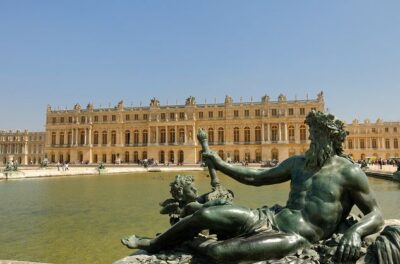
From Paris: Versailles Guided Tour by Deluxe Minibus
Read our review →
Seine River Dinner Cruise with Live Singer by VIP Yacht de Paris
Read our review →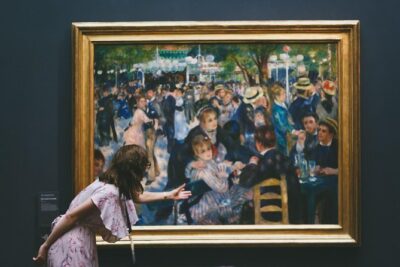
Orsay Museum – Exclusive Guided Tour (Reserved Entry Included)
Read our review →
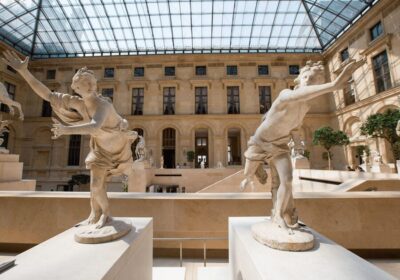
Paris: Louvre Museum Ticket & Exclusive Immersive AudioGuide
Read our review →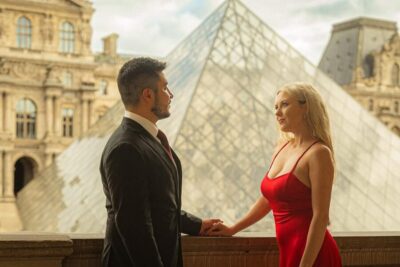

Paris Wine Day Tours exclusive wine tour in the Sancerre area
Read our review →Browse the lists this tour appears in