
Review · SOUTH AFRICA
Soweto and Johannesburg Exclusive Full Day Guided Tour
Johannesburg and Soweto make the most sense together. This full-day tour connects the city’s gold-mining roots, apartheid-era struggle, modern arts districts, and township life in one long, carefully packed day. You move by private vehicle, with time to step out at major sites rather than simply watching the city through a window.
I like the wide historical sweep, from Constitution Hill and the old mining district to Mandela House and the Hector Pieterson Museum. I also like the personal guiding style reported from guides including Mo, John, Banele, Tsholo, Thabang, and Tsolo, several of whom made the tour more memorable by explaining places through local experience.
The main drawback is the pace. With roughly 16 listed stops over 7 to 8 hours, several city sights are quick photo stops, and lunch is not included. The group-size information also needs checking before you book: the tour is promoted for larger groups of up to 14, while the additional information lists a maximum of 13.
Key points to know before booking
- Two major sides of Johannesburg in one day: See the polished northern suburbs, central city, historic sites, and Soweto.
- Constitution Hill is the main history stop: Allow about an hour for the former prison, fort, and Constitutional Court site.
- Soweto gets the most meaningful walking time: Vilakazi Street, Mandela House, the Hector Pieterson Museum, and Regina Mundi Church form the emotional heart of the day.
- Private transport keeps the route practical: Pickup and drop-off are offered from hotels in Johannesburg or Pretoria.
- Guides shape the experience: Mo, John, Banele, Tsholo, Tsolo, and Thabang are among the guides praised for clear explanations and warm service.
- Budget for your own meal: Bottled water and transport are included, but lunch, soft drinks, coffee, and tea are not.
Why this tour works as a Johannesburg introduction
Johannesburg is not a city you understand from one postcard view. Its story is spread across northern suburbs, a dense central business district, former prison grounds, mining relics, and the streets of Soweto. Seeing those places in one day gives you a useful framework for the rest of your South Africa trip.
The route also lets you compare sharply different parts of the city. You begin around Nelson Mandela Square and Houghton Estate, where Mandela lived late in his presidency, then move through central Johannesburg and its public landmarks before reaching Soweto. That progression matters. It links political leadership, wealth, urban change, forced separation, protest, and present-day community life.
I would choose this tour early in a Johannesburg stay if I wanted a broad orientation without arranging several separate excursions. A guide can explain the connections between the stops, while private transport saves you from piecing together a long route yourself.
More Full-Day Trips in the world:
- From Dubai: Abu Dhabi Premium Full-Day Sightseeing Tour
★ 4.9 · 26,728 reviews - Abu Dhabi Premium Full-Day Sightseeing Tour From Dubai
★ 5.0 · 3,277 reviews - Halong Bay Full Day with Kayaking, Hiking viewpoint, Cave – Deluxe To Luxury
★ 5.0 · 884 reviews
From Nelson Mandela Square to the northern suburbs
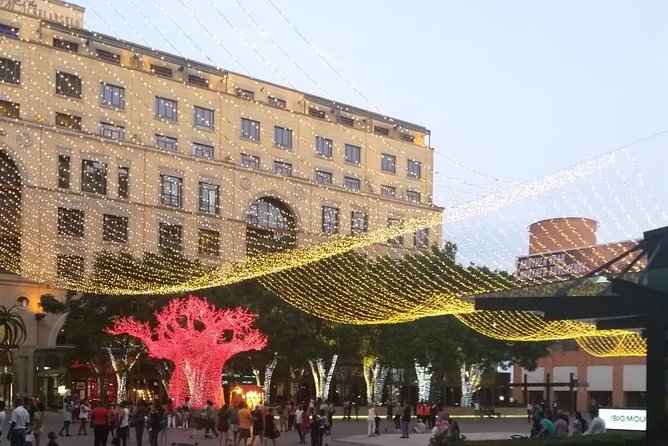
The day begins at 8:30 a.m., with pickup from a hotel in Johannesburg or Pretoria. The first stop, Nelson Mandela Square, is short, about 20 minutes, and admission is free. Its large Mandela statue makes an easy opening photograph, though this is more of a meeting and orientation point than a museum visit.
Houghton Estate follows for about 15 minutes. This leafy northern suburb is important because Mandela moved to a house here with his wife toward the end of his presidency. You will see the setting associated with his later years, but the schedule does not include an interior tour of the home.
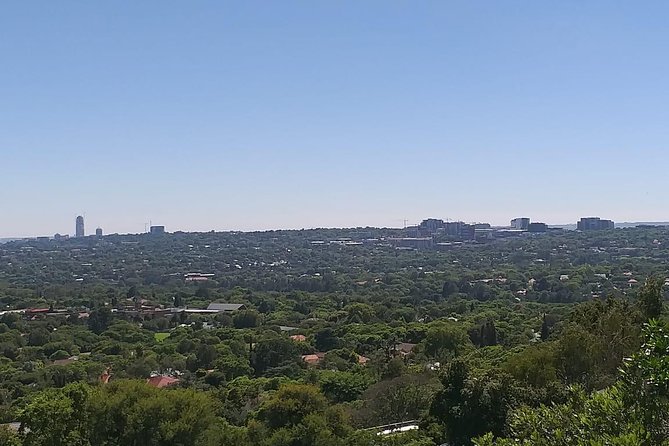
Munro Drive adds a quick scenic pause, with views across the greener northern side of Johannesburg. At around 10 minutes, it is best treated as a lookout rather than a long walk. The route also passes the Hillbrow Tower, one of the city’s most recognizable skyline markers.
These early stops are useful for showing the city beyond its political museums. You get a sense of Johannesburg’s scale, its changing neighborhoods, and the difference between a leafy residential district and the dense center. Still, if you prefer long visits at each site, the pace may feel brisk.
Constitution Hill puts the past in a physical place
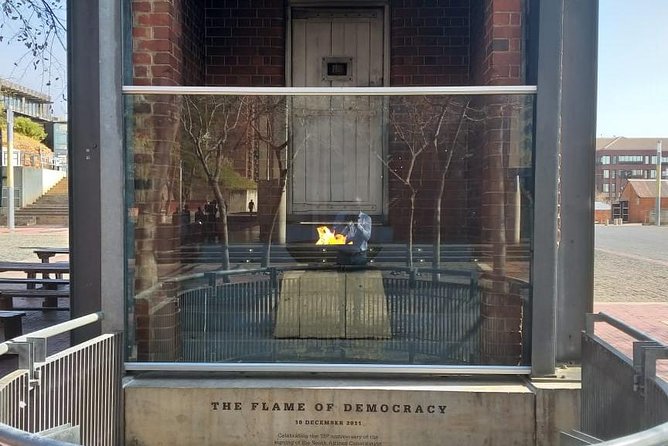
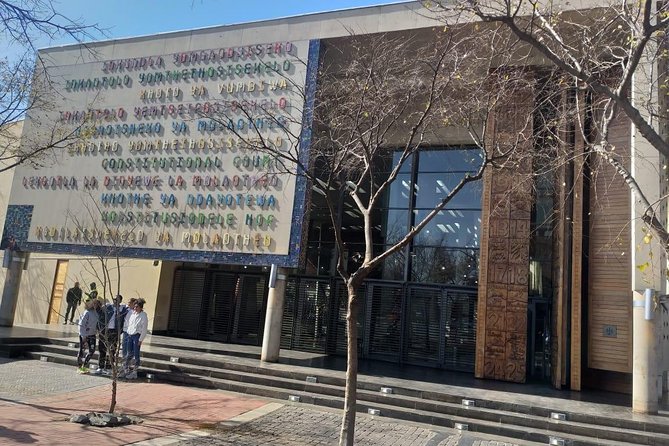
Constitution Hill is the first major stop, with about one hour and admission included. This former prison and military fort now houses South Africa’s Constitutional Court. The site links the country’s harsh political past with the legal protections of its democratic present.
This is where the tour’s historical story gains weight. Rather than hearing only a timeline in the vehicle, you enter a place associated with imprisonment and state control. The court adds a second layer, showing how modern South Africa tries to protect the rights of all citizens.
I would pay close attention here and save energy for the rest of the day. Constitution Hill is not just another photo stop. It gives context to the later Soweto visits, especially the stories of protest, resistance, and the country’s move toward democracy.
Braamfontein, the Nelson Mandela Bridge, and Newtown
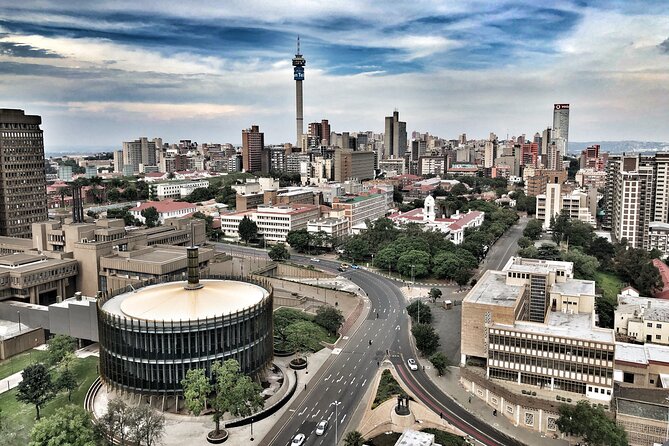
The vehicle continues through Braamfontein, a district known for museums, theaters, restaurants, coffee shops, art galleries, and design stores. The tour does not list a long visit here, so expect to see the area as part of the city drive rather than have time to explore its shops.
The Nelson Mandela Bridge is a very short stop, listed at about four minutes. It is a striking modern landmark and a useful view of Johannesburg’s changing skyline, but there is not enough time for a leisurely stroll across it.
Newtown receives about 15 minutes. This precinct reaches back to the 1880s and now includes arts venues, museums, galleries, and theaters. The stop helps show how former industrial and working districts can take on new cultural uses. Again, the schedule favors an overview. If you want to visit a particular museum or gallery, plan a separate visit on another day.
A few more luxury tours around the world worth a look
- Louvre Museum – Exclusive Guided Tour (Entry Included)
★ 5.0 · 6,296 reviews - Acropolis: Premium Acropolis and Parthenon Guided Tour
★ 4.8 · 5,208 reviews - Guided Luxury Paris Day Trip with Optional Lunch at the Eiffel Tower
★ 4.5 · 2,702 reviews - Great Ocean Road Tour w/ Deluxe Minibus & Top-Rated Guide
★ 4.8 · 2,644 reviews
Gold, Gandhi Square, and the Johannesburg CBD
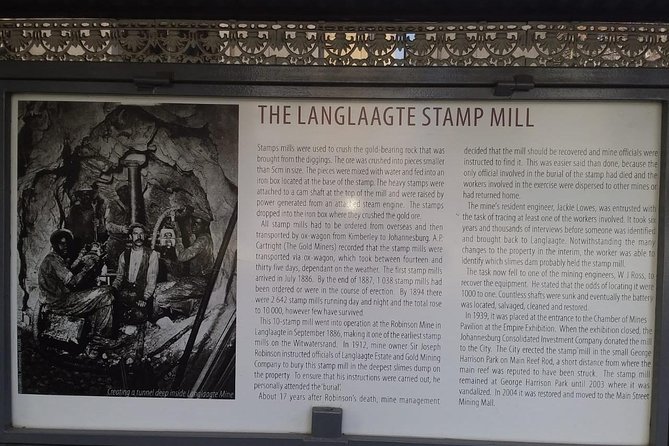
The mining district brings the city’s origin story into view. Old mining headgear, stamp presses, carts, and information boards recall the gold rush that helped create Johannesburg. The visit is scheduled for about 15 minutes, enough to see the outdoor remains and hear an explanation, but not enough for an extended museum session.
The route also passes Gandhi Square, with its statue of Mahatma Gandhi shown as a young man. The Central Business District follows, with its concentration of tall buildings and major commercial streets. Together, these sights create a quick lesson in the city’s growth, from mining settlement to major African business center.
This section is strongest when your guide explains how the sites connect. Without narration, mining machinery, a statue, and skyscrapers can feel like unrelated points. Guides such as John, Mo, Banele, and Tsholo have been praised for making the history easy to follow and for keeping the explanations from becoming dry.
Maboneng offers a different view of the inner city
Maboneng, meaning Place of Light, gets about 30 minutes. This former industrial precinct is now associated with restaurants, coffee shops, boutiques, galleries, studios, and other creative businesses. It presents a more current face of Johannesburg, with new uses filling old urban spaces.
I like having this stop in the route because it prevents the day from becoming only a lesson in apartheid and political struggle. Johannesburg is also a city of renewal, small businesses, art, and changing neighborhoods.
Thirty minutes is enough to look around and take in the mood, but not enough to settle in for a meal or serious shopping. Since lunch is not included, you should not assume Maboneng will be your full lunch break. Ask your guide about the day’s meal timing, and carry money for food and drinks.
The road into Soweto and the FNB Stadium
On the way to Soweto, the vehicle passes FNB Stadium, also called Soccer City. The stadium hosted the opening and closing ceremonies of the 2010 FIFA World Cup and has been linked to other major historic events. Its design is distinctive and easy to recognize from the road.
The stop is about 10 minutes, so expect an exterior view rather than an event or stadium tour. It is a good reminder that Soweto and Johannesburg are not only places of political memory. They are also tied to international sport and contemporary national identity.
Diepkloof Park and the shape of Soweto
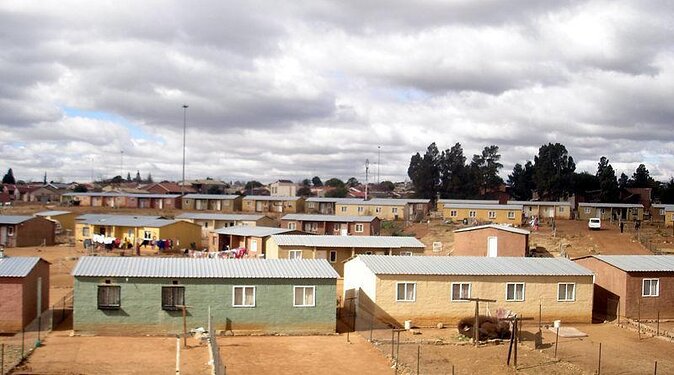
Diepkloof Park introduces the origins of Soweto and present-day kasi life, a local term connected with township culture. The stop lasts about 15 minutes before the tour moves toward the best-known historic streets.
This is an important transition. Soweto is often presented to outsiders only through Mandela, the 1976 uprising, and apartheid. A short explanation of current township life helps you see the area as a living community, not simply an open-air history lesson.
The tour also offers an optional squatter camp visit through the Kliptown Youth Program, listed at about 15 minutes. This is an aspect to approach thoughtfully. It may give you a closer view of difficult living conditions and community work, but you should ask your guide what the visit involves and decide if it fits your comfort level.
Vilakazi Street brings Mandela and Tutu into the same story
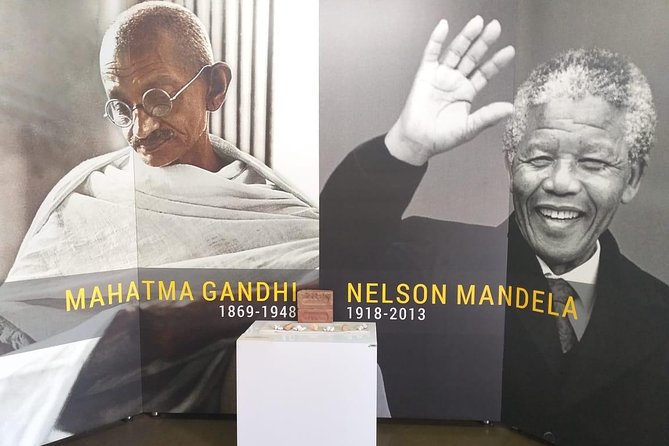
Vilakazi Street is one of the day’s central stops, with about 45 minutes and admission included. It is famous for being associated with two Nobel Peace Prize winners, Nelson Mandela and Archbishop Desmond Tutu. Few streets carry that particular combination of political and religious leadership.
You then spend about 20 minutes at Mandela’s House, also known as No. 8115. The home has been preserved as a heritage site, with sound, film, interpretive panels, and guided material explaining Mandela’s life there.
This visit is more personal than seeing a statue or a name on a square. You get a sense of the domestic setting connected with Mandela before and after his imprisonment and presidency. The time is short, so focus on the interpretation rather than trying to absorb every detail.
Vilakazi Street can also be a busy part of the day, with people arriving for the same landmarks. Keep your group together and listen for the meeting time. The private format should make it easier to ask questions and shape the explanation around your interests.
The Hector Pieterson Museum explains the 1976 uprising
The Hector Pieterson Museum and Memorial is another included admission, with about 20 minutes scheduled. It stands near the place where 13-year-old Hector Pieterson was shot on June 16, 1976, during the Soweto Uprising.
This is one of the most serious parts of the tour. The museum presents the uprising and the brutality of apartheid through exhibits connected to a specific child and a specific event. That focus makes the larger political story easier to understand, but it can also make the visit emotionally heavy.
Twenty minutes is not a long museum visit. If you want to read every panel, you may need to move quickly. Still, the stop gives essential context for the street scenes and monuments around Soweto. It also helps explain why June 16 remains such a major date in South African history.
Regina Mundi shows the role of community institutions
Regina Mundi Catholic Church, known as the people’s church, receives about 20 minutes. The church played an important part in Soweto’s resistance to apartheid. Its presence in the tour broadens the story beyond politicians and famous houses.
Here, you see how a religious institution could become part of public and political life during a period when many forms of opposition were restricted. The visit works best when your guide explains the church’s role in local memory and resistance.
By this point, the day has moved from national landmarks to places tied closely to residents and community action. That is one reason a local guide matters. Names and dates alone do not explain why these locations still carry such force.
Guides, transport, and the practical side of the day
Pickup and drop-off are offered from hotels around Johannesburg or Pretoria. The air-conditioned vehicle is a real benefit because the route covers a lot of ground and includes outdoor stops. Bottled water is included, but WiFi, coffee, tea, soft drinks, and lunch are not.
The experience is described as private, with attention directed to your own group. At the same time, the maximum group size is listed as 13, while another description says up to 14 people. If you are booking for a large family or group, confirm the exact vehicle and capacity before paying.
The guides praised most warmly include Mo, John, Banele, Tsholo, Tsolo, and Thabang. Specific strengths associated with them include clear explanations, good pacing, punctuality, local connection, a courteous manner, and a talent for making difficult history understandable. One guide, Mo, grew up in Soweto, and that personal link added meaning to the visit. Another guide was appreciated for combining the tour with work helping children.
Vehicle details may vary. One booking involved a comfortable, roomy van, while another group expected a van and received a sedan for a private tour. That is not necessarily a problem for a small group, but it is another reason to confirm the transport arrangement if you need extra space.
Is the $100.65 price good value?
At $100.65 per person, the tour costs more than a basic city transfer, but it includes a full day of transport, hotel pickup and drop-off, a private guide, and several included admissions. Constitution Hill, Vilakazi Street, Mandela’s House, the Hector Pieterson Museum, and Regina Mundi Church are the main paid or organized visits.
The value is strongest for a first visit, a family group, or anyone who wants to cover both Johannesburg and Soweto without arranging separate taxis and museum entries. A larger group can also spread the private-tour cost across several people.
The value is weaker if you want long, quiet visits at museums, extended shopping, or a relaxed lunch. The itinerary is ambitious, and many stops last only 10 to 20 minutes. I would treat this as a broad orientation with several important visits, not as a slow study tour.
Free cancellation is available if you cancel at least 24 hours before the 8:30 a.m. start time. Changes or cancellations inside that window are not accepted for a refund.
Who should book this Johannesburg and Soweto tour?
I would recommend it to first-time visitors who want the city’s major themes in one day. It also suits families and larger private groups, especially those who value hotel pickup and do not want to manage Johannesburg transport themselves.
History-minded visitors will appreciate the sequence from mining and segregation to resistance and democracy. The tour also works for people who want a local guide’s explanation rather than a list of landmarks.
I would hesitate if you dislike full schedules or prefer independent wandering. You may find the quick stops frustrating, especially at Newtown, the mining district, and the Nelson Mandela Bridge. You should also be ready for serious material at Constitution Hill, the Hector Pieterson Museum, and Regina Mundi.
Should you book it?
Book this tour if you want breadth, private transport, and strong historical context in a single day. The combination of Johannesburg’s central districts and Soweto’s key sites is hard to arrange as efficiently on your own.
Before booking, confirm the group limit, vehicle type, and lunch plan. If those details suit you, this is a practical and worthwhile way to get your bearings, understand the forces that shaped the city, and see Soweto as a living place rather than only a collection of famous names.
FAQ
How long does the tour last?
The tour lasts approximately 7 to 8 hours.
What time does the tour start?
The stated start time is 8:30 a.m.
Is hotel pickup included?
Yes. Pickup and drop-off are offered from hotels around Johannesburg or Pretoria.
Is the tour private?
The tour is described as private, with a guide focused on your group. The additional information lists a maximum of 13 participants, while another description says it can accommodate up to 14, so confirm the exact limit when booking.
What is included in the price?
The price includes bottled water, an air-conditioned vehicle, hotel pickup and drop-off, and admission to the listed included sites.
Is lunch included?
No. Lunch is not included. Coffee, tea, soft drinks, and onboard WiFi are also excluded.
Which major sites are visited?
The route includes Nelson Mandela Square, Houghton Estate, Munro Drive, Constitution Hill, Newtown, the mining district, Maboneng, FNB Stadium, Diepkloof Park, Orlando Towers, Vilakazi Street, Mandela’s House, the Hector Pieterson Museum, Regina Mundi Catholic Church, and an optional Kliptown Youth Program visit.
Is the Kliptown Youth Program visit required?
No. The squatter camp visit through the Kliptown Youth Program is listed as optional.
Can I cancel for a full refund?
Yes, if you cancel at least 24 hours before the experience starts. Cancellations or changes made less than 24 hours before the start time are not eligible for a refund.
Just added around the world
- luxury 3 Days 2 Nights Desert Tour from Fez to Marrakesh★ 4.5 · 73 reviews
- Fes to Fes Private Desert tour 1-night 2-Day Tour luxury camps★ 5.0 · 23 reviews
- luxury day trip to Chefchaouen From fes by small group★ 5.0 · 59 reviews
- 2 Day Desert Tour from Fez with Camel ride Overnight luxury Camp★ 4.5 · 24 reviews
- 3 Days Luxury Desert Tour From Fes To Marrakech via Merzouga★ 5.0 · 87 reviews
- 2 Days Luxury Magic Morocco Desert Tour From Fes To Fes★ 5.0 · 16 reviews
- luxury desert tour 3days 2 night fez merzouga ouarzazat marakech★ 4.5 · 111 reviews
- 3-Day Luxury/Budget Desert Tour to Marrakech via Merouga from Fez★ 4.5 · 151 reviews
South Africa VIP Tours, compared.
Cape Town: 1.5-Hour Luxury Sunset Cruise with Prosecco
Read our review →
Durban Point Waterfront: Luxury Canal Boat Cruise
Read our review →
Luxury Canal Boat Cruise – Fun Things Durban Ushaka
Read our review →
Knysna: Luxury Sunset Cruise with Captain’s Barbeque
Read our review →
Hartbeespoort Dam: The Luxury Alba Boat Cruise with Food
Read our review →

Cape Town: 2-Day Wildlife Tour with Safaris and Luxury Stay
Read our review →
Cape Town: Premium Attractions City Pass with Bus Tour
Read our review →Browse the lists this tour appears in