
Review · NAPLES
Naples: Premium Pizza Class From Dough to Dessert & Wine
Naples takes pizza seriously, and this class puts you inside a 2017 World Pizza Champion pizzeria to learn the craft from flour, water, salt, and yeast. I like the personal workstation for every participant, plus the chance to eat both a wood-fired Margherita and a sweet fried dough dessert made from the same basic dough. The main consideration is that the dough may not have enough time to fully prove during a two to three-hour class.
I especially like the mix of practical skill and local food culture. Guides such as Lucia, Francesca, and Sabrina have explained the history and translated the pizzaiolo’s Italian instructions, while chefs including Alessandro and Maurizio have shown the hands-on technique. The class can be multilingual, so explanations may occasionally take longer, but that is part of the real pizzeria setting.
Key points at a glance
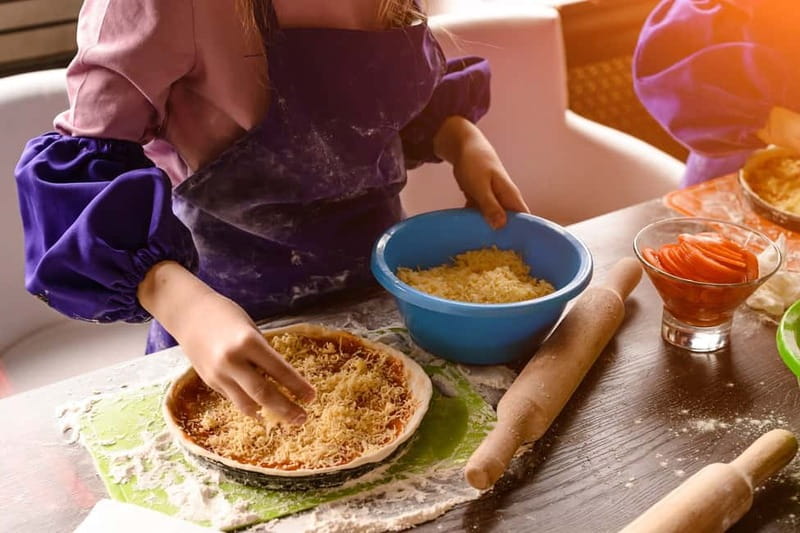
- Your own workstation: You knead, shape, top, and prepare your pizza rather than simply watching a demonstration.
- Four basic ingredients: The class shows how water, flour, salt, and yeast become Neapolitan dough.
- The staglio technique: You learn how dough is divided into round portions called panetti.
- Real wood-fired baking: Your Margherita goes into a traditional oven under the pizzaiolo’s guidance.
- Savory and sweet courses: The meal includes your pizza, fried dough filled with chocolate spread, a drink, and limoncello.
- Useful home cooking tips: You receive a digital recipe, though home results will depend on your oven and proving time.
Inside a World Pizza Champion pizzeria
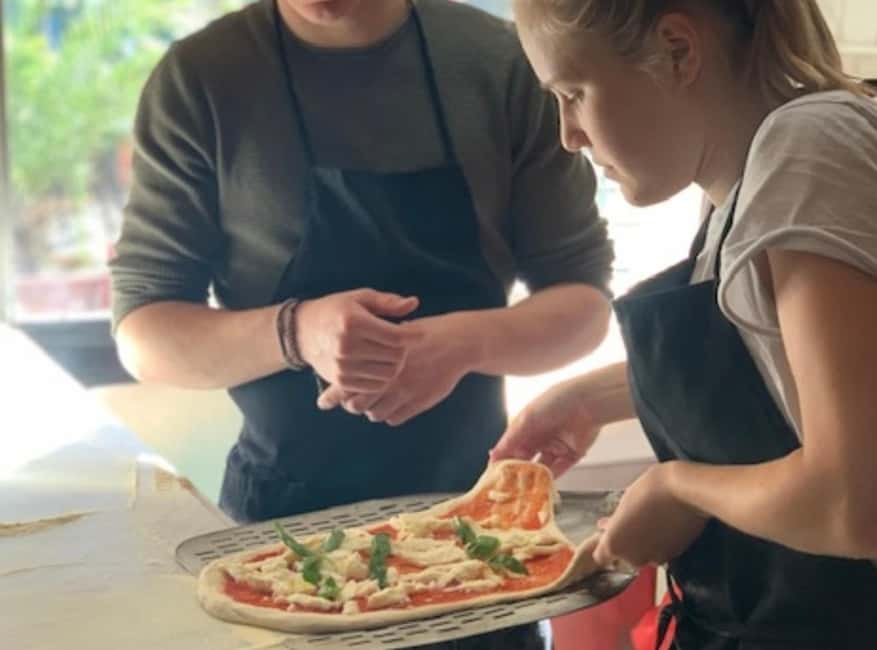
The setting does much of the teaching before the class begins. You are not in a generic cooking studio with premeasured dough waiting on a counter. You work inside a functioning Neapolitan pizzeria, where the oven, ingredients, and pace of service give the lesson a useful sense of place.
The pizzeria won the World Pizza Championship in 2017. That matters less as a trophy than as a sign that the person handling your dough works within a serious pizza tradition. You can watch how a professional moves, handles flour, and treats the dough gently rather than pressing it flat like pastry.
The class is designed for small groups, with private bookings also available. A small group of four has been reported, which gives you more room to ask questions and receive help when the dough refuses to behave. Group size can affect the feel of the session, so check the option you book if personal instruction is important to you.
The instructors may work as a team. An English-speaking guide explains the process and local context, while the pizzaiolo demonstrates the technical work in Italian. Guides including Lucia, Francesca, Sabrina, and Dora have been praised for translating instructions and keeping everyone involved. If your chef speaks little or no English, the guide serves as the bridge.
A few more luxury tours around Italy worth a look
- Cu Chi Luxury Group Tour – Tapioca and Cake Half Day
★ 5.0 · 3,375 reviews - Bohol: Premium Chocolate Hills, Tarsiers & River Experience
★ 4.7 · 804 reviews - Finca 18 Puerto Vallarta Tequila Tour + Chocolate Pairing
★ 5.0 · 393 reviews
Turning four ingredients into Neapolitan dough
The class begins with the basics: water, flour, salt, and yeast. That short ingredient list is the point. Neapolitan pizza is not built around a heavy pile of toppings. Its character comes from the dough, the handling, the heat, and the quality of a few carefully chosen ingredients.
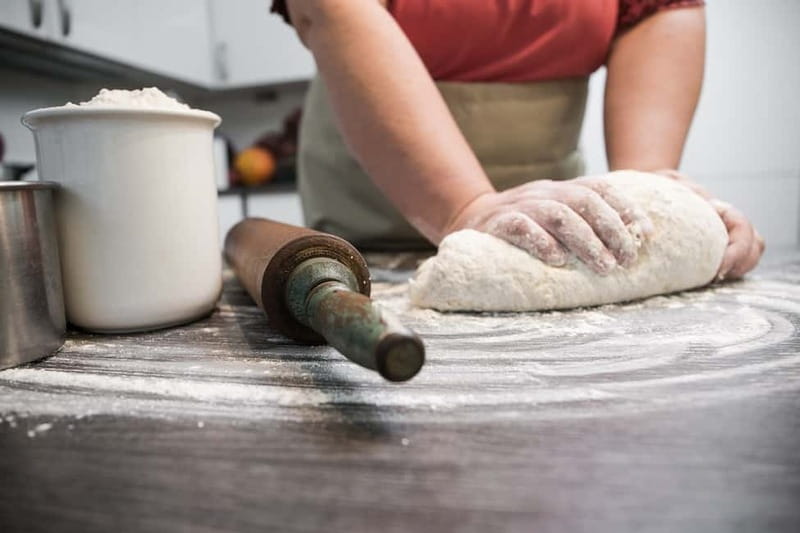
You work the mixture by hand, learning how it changes as you knead. The useful lesson is not just a recipe. You start to notice texture, elasticity, and resistance. A dough that feels too wet or too tight needs a different touch, and the pizzaiolo can correct your technique before you move on.
You then learn how to divide the dough using the traditional staglio method. These individual portions are called panetti. This step is easy to underestimate, but it affects how evenly the dough opens later. The goal is to create a smooth portion that can rise and stretch without tearing.
Your own station makes a real difference here. In a larger demonstration class, you might watch a chef make the dough and then receive a prepared ball. Here, you handle the mixture yourself and see the stages in the correct order.
There is one practical limit to keep in mind. A complete dough process needs proving time, and a two to three-hour activity cannot always allow for a full rise. One creative solution used during a class was to turn the freshly made dough into bread when it was not ready for pizza. That keeps the food from going to waste, but it means the pizza you eat may not always come from dough that has followed a long, traditional fermentation schedule.
Shaping the pizza without a rolling pin
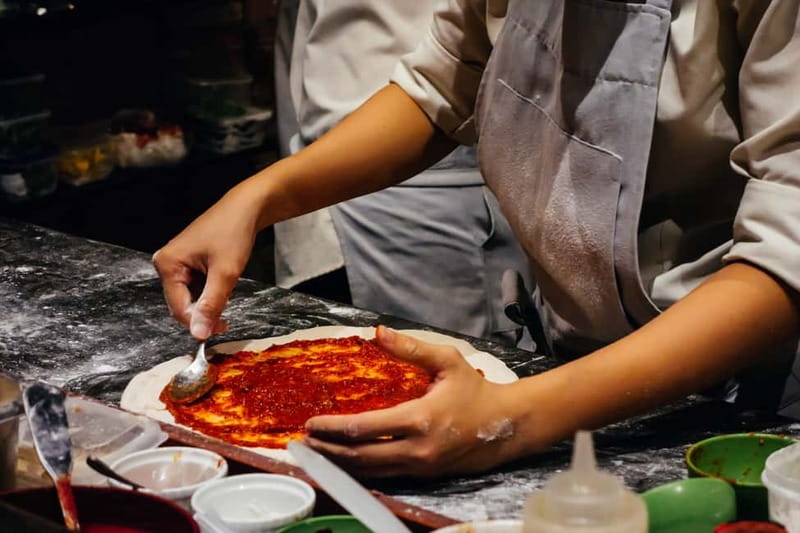
Once the dough is ready, you learn to shape it by hand. This is where many home cooks discover that pizza making is less about force and more about control. Press too hard and you push out the air at the edge. Stretch too quickly and you risk a hole.
The pizzaiolo demonstrates how to flatten the center while leaving a thicker rim. You then work your own dough, with help available when the shape starts to go wrong. Some instructors have also shown how to handle the pizza once it is in the oven, including small corrections that are difficult to learn from a written recipe.
The class is friendly to beginners. You do not need cooking experience, and you are not expected to arrive knowing the difference between a pizza peel and a rolling board. You do need to accept that your first round may not look perfect. That is part of the useful fun.
Wear clothes that can tolerate flour. One participant noted that aprons were not provided, and flour can end up across the front of your shirt. This is a small point, but it matters if you are heading straight to a nicer dinner afterward.
San Marzano tomatoes, buffalo mozzarella, and basil
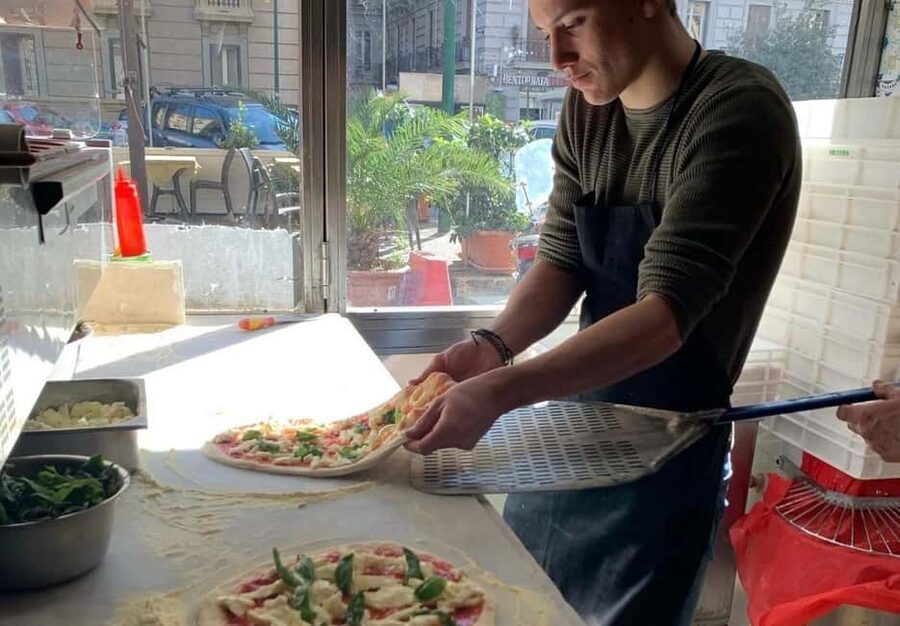
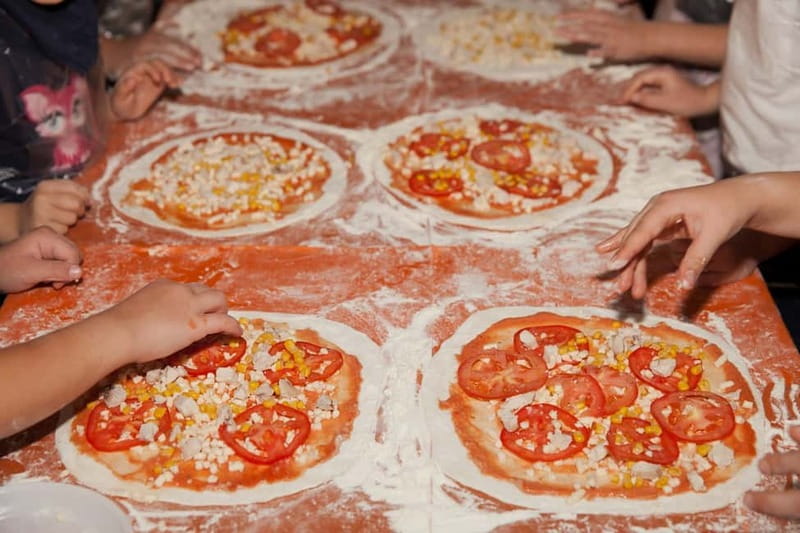
After shaping, you add the classic toppings. The ingredients include San Marzano tomatoes, buffalo mozzarella, basil, and DOP extra virgin olive oil. The list is short because the style depends on balance rather than excess.
You make a Margherita, the pizza most closely associated with Naples. The tomato provides acidity, the mozzarella adds creaminess, the basil brings fragrance, and the olive oil ties it together. You get a better sense of why the dough matters when the topping is this restrained.
The chef and guide also explain why quantities and ingredient quality count. This is useful at home because adding more cheese or sauce does not automatically improve a pizza. A wet topping can make the center heavy, while too much cheese can hide the crust you spent time shaping.
The class also gives you a taste of the Neapolitan preference for simple food done carefully. You are not asked to create a complicated menu. You are learning to make one classic pizza well.
Same place, a different kind of splurge:
- From Milan: Como, Lugano and Bellagio Exclusive Boat Cruise
★ 4.8 · 6,635 reviews - Legendary Venice: Doge’s Palace, St Mark’s & VIP Terrace Access
★ 4.5 · 5,033 reviews - From Naples: Exclusive Tour of Amalfi Coast
★ 4.8 · 3,970 reviews - Rome: Colosseum Arena, Roman Forum & Palatine Hill VIP Tour
★ 4.5 · 3,674 reviews
The wood-fired oven is part of the lesson
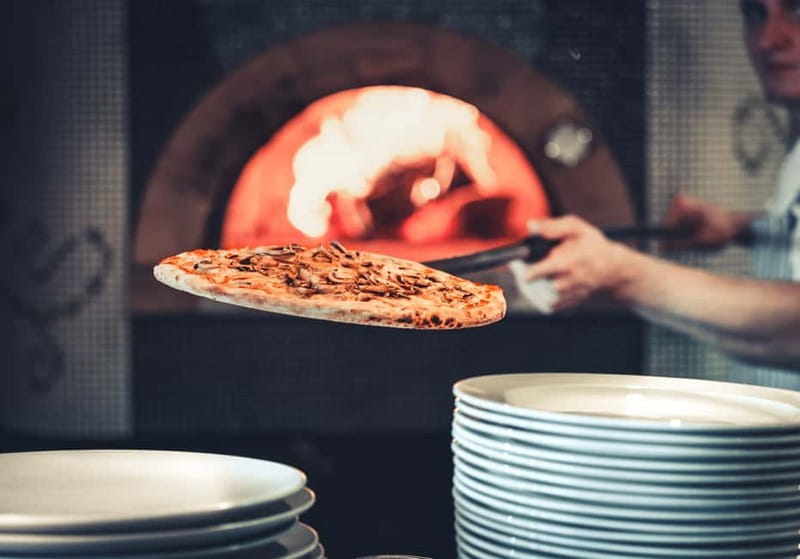
The oven changes the experience from a kitchen workshop into a pizzeria class. Your pizza is baked in a traditional wood-fired oven, and the pizzaiolo manages the heat and timing.
This is the point where professional help is most useful. An oven capable of baking Neapolitan pizza reaches temperatures and speeds that most home ovens cannot match. A small difference in position can affect the crust, so the chef may turn or adjust the pizza as it cooks.
You get to see how quickly the pizza changes from soft dough to a finished Margherita. The edge should puff and color while the center remains tender. You are also shown tricks for working with the pizza inside the oven, although you should not expect to operate the oven alone.
At home, you can repeat the dough recipe and shaping method, but your result may differ without a wood-fired oven. That is not a flaw in the class. It is a useful reminder that technique is only one part of the final pizza.
A full meal, not just a cooking demonstration
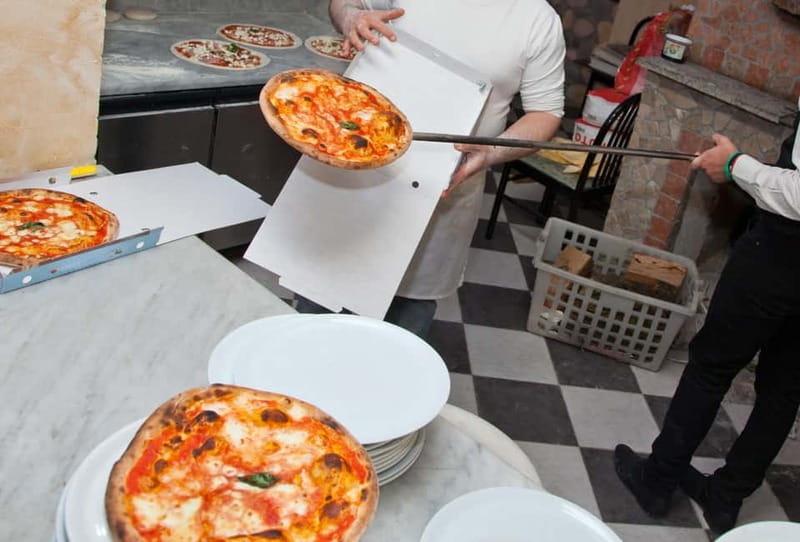
When your pizza is baked, you sit down and eat it. This makes the class feel like a meal with instruction rather than a short lesson followed by a snack.
The included drink is one glass of wine, water, or beer. The choice lets you keep things simple or add a local drink to the meal. Limoncello comes at the end, giving the session a distinctly southern Italian finish.
The class also includes a sweet course made from pizza dough. Fried dough bites are filled with a famous chocolate spread, turning the same basic ingredient into dessert. The portion can feel rich after a full Margherita and, in some versions, fried pizza, so do not expect a light final course.
The sweet dough is one of the more memorable details because it shows another side of Neapolitan street food. You are not simply eating a second dessert brought from elsewhere. You see how dough can shift from savory to sweet with a different treatment.
Some sessions have also included fried pizza as a local specialty, sometimes stuffed with ricotta or other savory ingredients. The exact food presentation can vary, so treat this as a possible extra rather than a guaranteed separate course beyond the listed dessert.
What the guides add to the experience
The guide is important because the technical instruction and cultural explanation come from two different roles. The pizzaiolo shows you how to mix, knead, divide, and stretch. The guide helps you follow the sequence and explains the story behind the food.
Lucia has been noted for clear step-by-step instruction and a warm manner. Francesca has combined pizza history with practical guidance, while Sabrina has translated Italian chef instructions into strong English. Dora has also helped bridge language differences during sessions with an Italian-speaking pizzaiolo.
Names and staff can change, so you should not book expecting one particular person unless the operator confirms it. The consistent feature is the guide and chef working together. That arrangement is especially useful if you want to ask questions in English.
A multilingual class may slow the rhythm. Instructions might be repeated in more than one language, and conversation with the chef may rely on translation. If you prefer a highly fast-paced technical workshop, a private class is likely the better choice. If you enjoy meeting people and do not mind pauses, the shared format adds a social side.
Is $70 a fair price?
At $70 per person, the value depends on what you want from a food activity. You receive a two to three-hour lesson, your own workstation, a full meal, a drink, limoncello, and a digital recipe. You also get access to a World Pizza Champion pizzeria and a wood-fired oven that would be difficult to experience in an ordinary home cooking class.
I consider the price reasonable for visitors who want both dinner and an activity. A basic pizza meal would cost less, but it would not teach you how to make the dough or give you time with a pizzaiolo. A private booking offers more personal attention, though the price and exact group arrangement depend on the option selected.
The main value is practical. You leave with a method you can try again, not just a photograph of a pizza. You will still need to adapt the recipe to your flour, kitchen temperature, proving time, and oven.
The digital recipe is included, but one class participant had not received it immediately. If the recipe matters to you, confirm that it has been sent before you leave or contact the provider afterward.
Who should book this pizza class?
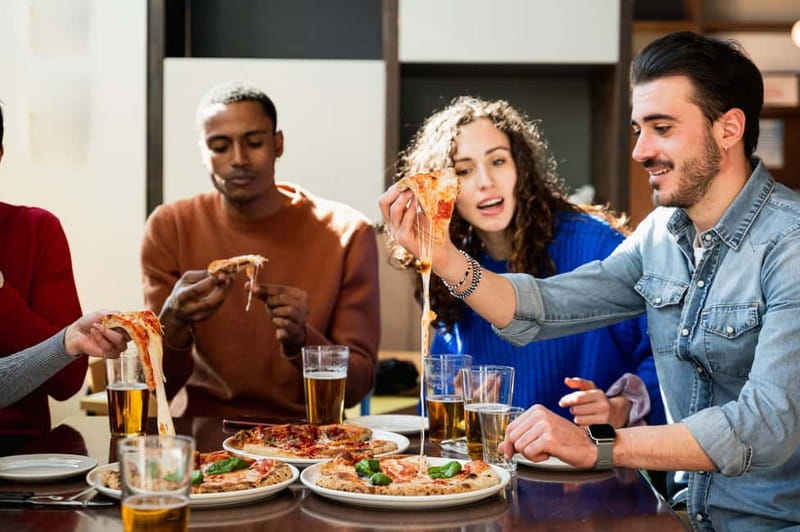
I would choose this activity for first-time visitors who want a meal with a strong local connection. It also suits families with children aged six and over, couples, and groups of friends who would rather do something together than sit at another restaurant table.
It works particularly well for teenagers. The process is physical, the results arrive quickly, and you get to eat what you made. One family with teenage boys found the pizza-making especially appealing, though your own home oven will not reproduce the wood-fired result exactly.
You should also book if you want a gentle introduction to Italian cooking. No experience is required, and the instructors demonstrate each step. The class is less suitable for children under six, who are not allowed to participate or enter the work and oven area for safety reasons.
I would think twice if you dislike flour on your clothes, shared instruction, or a hearty meal. The fried dough dessert can be substantial after pizza, and a multilingual group may not move at the same speed as a private lesson.
Cancellation is flexible, with a full refund available when you cancel at least 24 hours ahead. You can also reserve and pay later, which helps if your Naples schedule is still changing. Starting times vary, and the meeting point may depend on the option you choose, so check those details before setting your day around the class.
Should you book it?
Book this class if you want to understand why Neapolitan pizza is more than toppings on a crust. You will mix the dough, learn staglio, shape a Margherita, watch it bake in a traditional oven, and finish with fried sweet dough, wine or another included drink, and limoncello.
The strongest reasons to go are the personal workstation, the small-group format, the guide and pizzaiolo working together, and the chance to eat the result. The main compromises are limited proving time, flour on your clothes, and possible translation pauses.
For a practical, filling, hands-on evening in Naples, $70 is a fair spend. Choose a private or small-group option if detailed instruction matters most, and wear something casual enough for flour.
FAQ
How long does the pizza class last?
The activity lasts between two and three hours. Starting times vary, so check availability for the date you want.
How much does the experience cost?
The listed price is $70 per person.
What ingredients do I use?
You work with water, flour, salt, and yeast to make the dough. Toppings include San Marzano tomatoes, buffalo mozzarella, basil, and DOP extra virgin olive oil.
Do I make my own pizza?
Yes. Each participant has an individual workstation and takes part in kneading, shaping, stretching, topping, and preparing the pizza for baking.
What is staglio?
Staglio is the traditional method of dividing the prepared dough into individual portions called panetti.
Is the pizza baked in a wood-fired oven?
Yes. Your prepared Margherita is baked in a traditional wood-fired oven with guidance from the pizzaiolo.
What food and drinks are included?
The experience includes your savory pizza, a sweet fried dough dessert filled with chocolate spread, one glass of wine, water, or beer, and limoncello.
Is the class offered in English?
Yes. Instruction is offered in Italian and English. An English-speaking guide may translate the pizzaiolo’s instructions when needed.
Are children allowed to join?
Children aged six and over may participate. Children under six are not allowed to take part or enter the work and oven area.
Can I cancel the booking?
You can cancel up to 24 hours before the activity for a full refund. Reserve-now, pay-later booking is also available.
Just added around Italy
- Exclusive Siena and San Gimignano Tour & Chianti Wine Experience★ 5.0 · 19 reviews
- Cinque Terre & Pisa Premium Tour from Florence★ 5.0 · 170 reviews
- From Florence:Tuscany Tuk Tuk with Lunch, Wine & San Gimignano★ 5.0 · 15 reviews
- Exclusive Winery Tour with Tasting and Dinner in Chianti vineyard★ 4.5 · 49 reviews
- Exclusive Cinque Terre by Ferry with stop in Pisa from Florence★ 5.0 · 16 reviews
- Florence: Vip early Timed Entry Ticket Uffizi Gallery★ 5.0 · 34 reviews
- Premium Private Tour to Siena, Pisa, San Gimignano and Tuscany★ 5.0 · 143 reviews
- Exclusive Private Tuscany Wine Tour & Food Pairing Session★ 5.0 · 70 reviews
Naples VIP Tours, compared.
From Naples: Premium Tour of Sorrento, Positano, Amalfi
Read our review →
From Naples – VIP Tour with small groups on the Amalfi Coast
Read our review →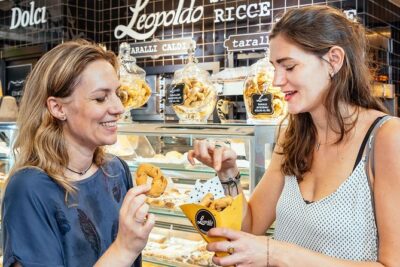
Exclusive Naples Private Food Tour: 6 or 10 Tastings
Read our review →
Best of Amalfi Coast & Pompeii: Exclusive Private Day Experience
Read our review →
Guided Hobie Kayak EcoTour: Premium Eco Experience Bonita Springs
Read our review →
Browse the lists this tour appears in