
Review · CROATIA
Exclusive old Zagreb walking tour
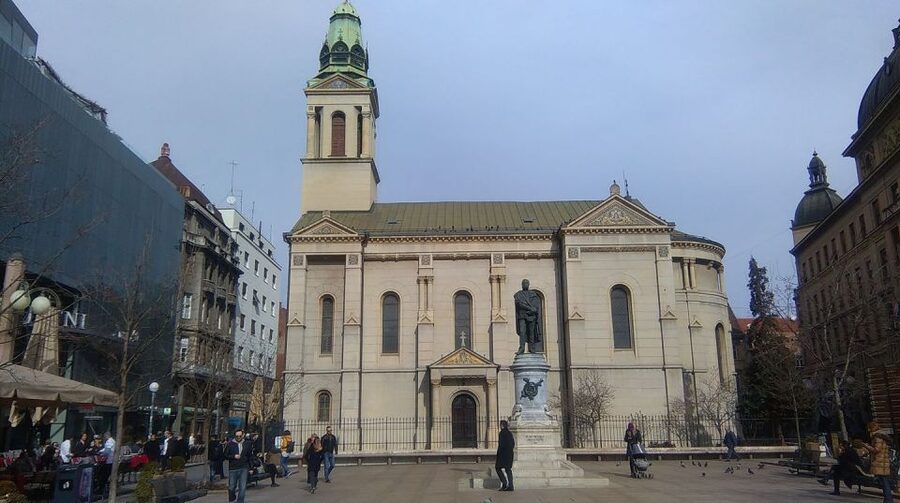
Zagreb reveals itself best on foot, and this evening route connects the city’s two historic hills with its lively central squares. You’ll move from grand King Tomislav Square through Kaptol and Dolac, then up into old Gradec before finishing among cafés and pubs around Flower Square. Domagoj leads the walk in English and brings Croatian history right up to current affairs.
I like the personal feel of this tour, with a guide who welcomes questions rather than simply reciting dates. I also like the useful mix of landmarks, local life, food suggestions, museum ideas, and practical tips for exploring Zagreb afterward. The main consideration is the pace: 90 minutes covers a lot, so you’ll see many places from outside rather than spend long inside museums or churches.
Key points
- Evening route through both Kaptol and Gradec: See the two historic parts from which modern Zagreb grew.
- Domagoj’s history and local context: Expect discussion of Croatian history, culture, current affairs, and everyday life.
- Night views from Gradec: Strossmayer Promenade and the viewpoint near Lotrščak Tower provide the tour’s best photo stop.
- Major sights in a compact walk: The route includes Zagreb Cathedral, Dolac Market, Stone Gate, St Mark’s Square, Ilica Street, the Octagon, and Flower Square.
- Good orientation for a first visit: You finish with a clearer sense of where to return for food, museums, cafés, and further sightseeing.
- Flexible booking: The tour costs $35 per person, lasts 90 minutes, and allows cancellation up to 24 hours before the start for a full refund.
Why this evening walk makes sense in Zagreb
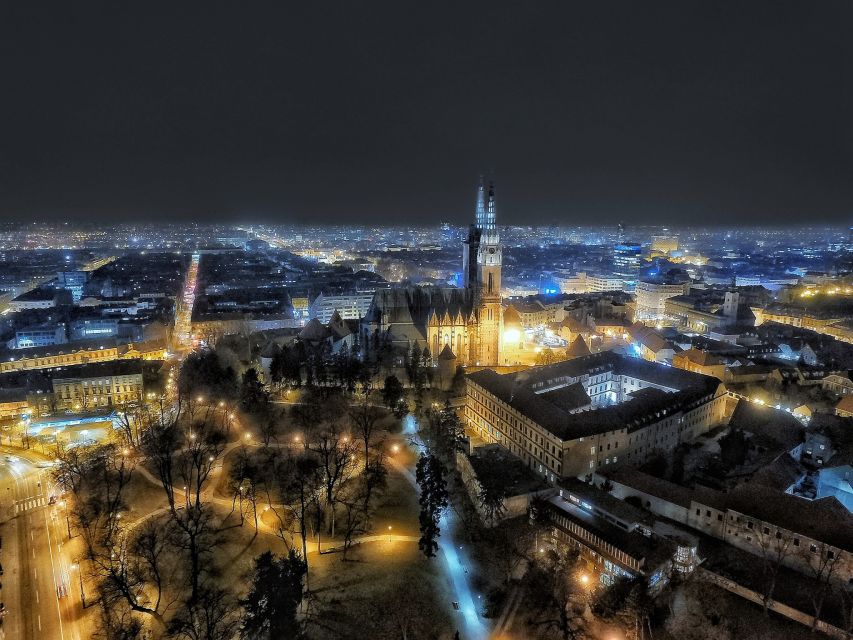
Zagreb’s center is compact, but its story is not always easy to read at street level. One square may represent royal power, another church authority, and a short uphill walk may take you from the modern city into medieval Zagreb.
This tour gives you that framework in one sitting. You are not simply ticking off buildings. You are following the route from the lower town toward Kaptol and Gradec, the two historic settlements that eventually formed today’s Zagreb.
The evening timing adds a useful change of mood. Zagreb’s squares and viewpoints take on a different character after daylight fades, and the route ends in an area where local young people meet at pubs. If you arrive in the city without much background, this is a practical way to get your bearings before spending the rest of your stay on your own.
The tour is also shaped by the guide. Domagoj is described as warm, polite, humorous, and very comfortable discussing both history and modern Croatia. He speaks English, answers questions, and offers suggestions for places to eat, museums to visit, transport, and areas worth exploring after the walk.
More Walking Tours in Croatia:
- Frida Kahlo VIP [Museum Tickets Included] Walk, Markets & Churros
★ 5.0 · 982 reviews - Madrid Old City Guided Exclusive Guided Walking Tour
★ 5.0 · 553 reviews - Exclusive Fez Medina Walking Tour with Private Guide
★ 5.0 · 392 reviews
Starting at King Tomislav Square
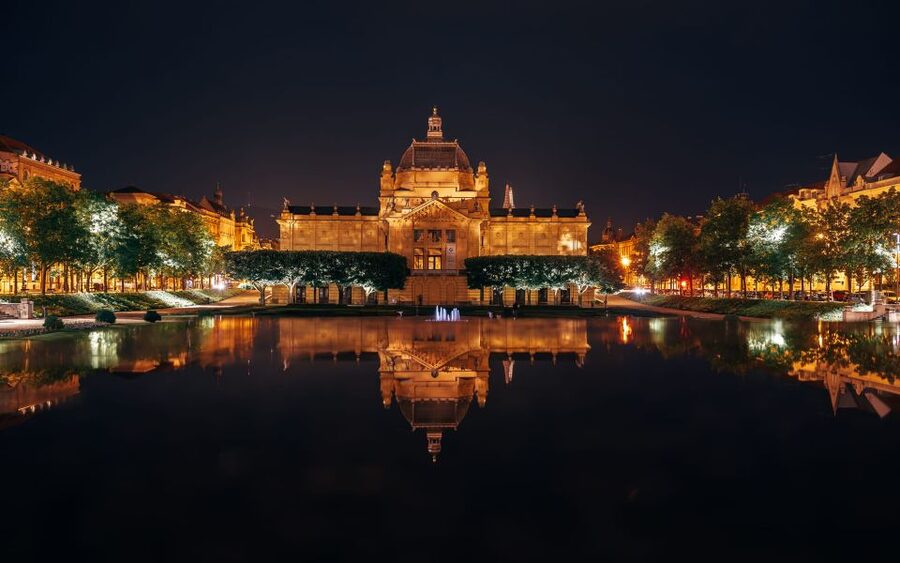
The meeting point is King Tomislav Square, one of the most recognizable open spaces in Zagreb. It is a fitting starting place because the square gives you a sense of the city’s formal, monumental side before the walk turns toward older streets and tighter urban spaces.
From there, you continue to Nikola Zrinjski Square. These opening stops help place Zagreb in its broader civic setting. Instead of beginning in a narrow medieval lane, you start with room to look around and understand how central Zagreb is arranged.
The route then reaches Ban Jelačić Square, the city’s main meeting point. This is the place where Zagreb’s old and new sides come together, with transport links, shops, cafés, and access to the historic upper parts of the city.
You should expect explanations of local history, art, culture, and architecture here. The value is not just the square itself. It is learning how to use it as your reference point during the rest of your stay.
Kaptol, Zagreb Cathedral, and Dolac Market
From Ban Jelačić Square, the walk heads toward Kaptol, one of the historic parts of Zagreb. Kaptol is tied to the Zagreb Archdiocese, so this section introduces the religious authority that shaped the city alongside the political power centered in Gradec.
Zagreb Cathedral is the major landmark in this part of the route. You will learn about its place in the city and see its exterior as part of the historic Kaptol area. Since the walk lasts only 90 minutes, you should not expect an extended interior visit or a long architectural study.
Dolac Market follows, and this is one of the most useful stops for understanding everyday Zagreb. An open-air market is not just a sightseeing backdrop. It gives you a better sense of local routines, food culture, and the way the city uses its central spaces.
The market’s position near Kaptol and the main square also makes it easy to return later. If you want to browse more slowly, shop for food, or simply watch the center at a different time of day, you can make Dolac a separate visit after the tour.
The route also includes Opatovina. This area helps bridge the market district and the climb toward Gradec. It is another reminder that central Zagreb is made up of connected historic zones rather than one single old town.
Climbing toward Gradec and the Stone Gate
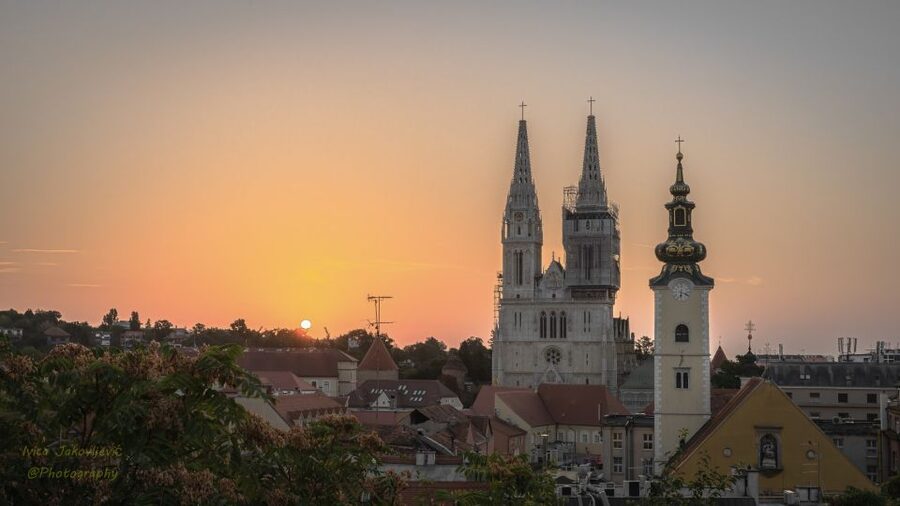
Gradec sits on the slope of Medvednica and developed alongside Kaptol. Together, these two settlements formed the base of modern Zagreb, and the contrast between them is one of the most important ideas in the tour.
The walk takes you toward Kamenita Vrata, or the Stone Gate. This old city gate is described as a rectangular tower and one of the best-preserved monuments of old Zagreb. It is more than a photo stop. The gate gives you a clear sense of how the historic town was protected and entered.
This part of the route is particularly helpful if you like cities that reveal their past through street layout. The transition from lower Zagreb to Gradec is physical, not just historical. You walk uphill and feel the shift from the broad central squares into the older upper town.
The route does involve walking through historic areas and moving uphill. The tour is wheelchair accessible, but you should still consider your own comfort with a city walk that includes Gradec and the slope toward the upper town. The activity information confirms accessibility, though it does not provide detailed information about every surface or incline.
A few more luxury tours around Croatia worth a look
- Zadar: Island Luxury Speedboat Tour with Snorkeling
★ 5.0 · 2,452 reviews - Split: Blue Lagoon & 3 Islands – Premium Speedboat Trip
★ 5.0 · 2,018 reviews - Zadar: 3 Islands Luxury Boat Tour with Aperol Spritz
★ 4.9 · 1,238 reviews - Elaphiti Islands On The Luxury Pirate Ship Karaka Dubrovnik
★ 5.0 · 1,082 reviews
St Mark’s Square and Zagreb’s political center
Old Zagreb leads to St Mark’s Square, one of the city’s most important historic spaces. Here you will see the city council, the Croatian Parliament, museums, churches, and other historic buildings.
This is where the tour moves beyond simple sightseeing and into the way Croatia is governed and represented. You can expect Domagoj to explain the role of the square and connect its buildings to the country’s broader political story.
The square is also one of the best places to understand Zagreb’s layered identity. Religious buildings, government institutions, museums, and older architecture sit close together. You get a compact lesson in how civic and religious life developed side by side.
The Church of St Mark is among the major sights in this area, though the information provided does not promise an interior visit. Plan on seeing the square and its buildings as part of the walking route rather than treating this as a museum tour.
If you are interested in Croatian politics or recent national events, this may be one of the more useful parts of the walk. Domagoj has been praised for explaining history and current affairs together, which helps keep the tour from stopping at medieval Zagreb.
Strossmayer Promenade and the Lotrščak viewpoint
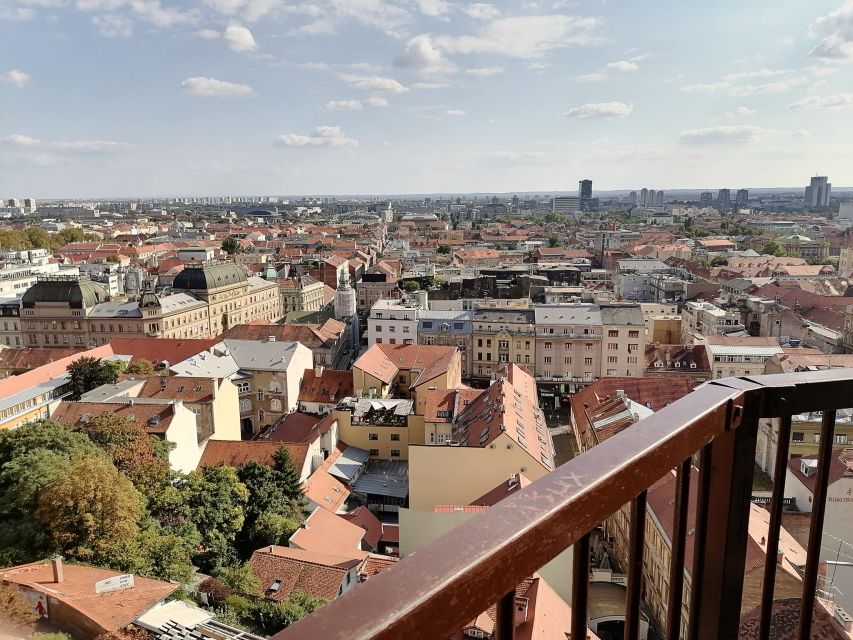
Next comes the Gradec lookout and Strossmayer Promenade. This is likely the most scenic section of the walk, especially in the evening.
From the upper town, you can look across Zagreb and take photographs as the city lights come on. The tour continues beneath the ancient Lotrščak Tower, where you reach a viewpoint for night views of the city.
This stop gives the walk some breathing room after the denser history around St Mark’s Square. You are still learning about Zagreb, but you also have time to look outward and understand the city’s position below the Medvednica slope.
The viewpoint is a strong reason to choose this tour over a purely daytime orientation walk. The lighting and evening atmosphere should make for appealing photographs, although the exact view will depend on the season and conditions.
Bring comfortable shoes and keep your camera ready. The route is designed for sightseeing on foot, and the best moments may arrive quickly as the guide moves the group through several connected locations.
Following the funicular to Ilica Street
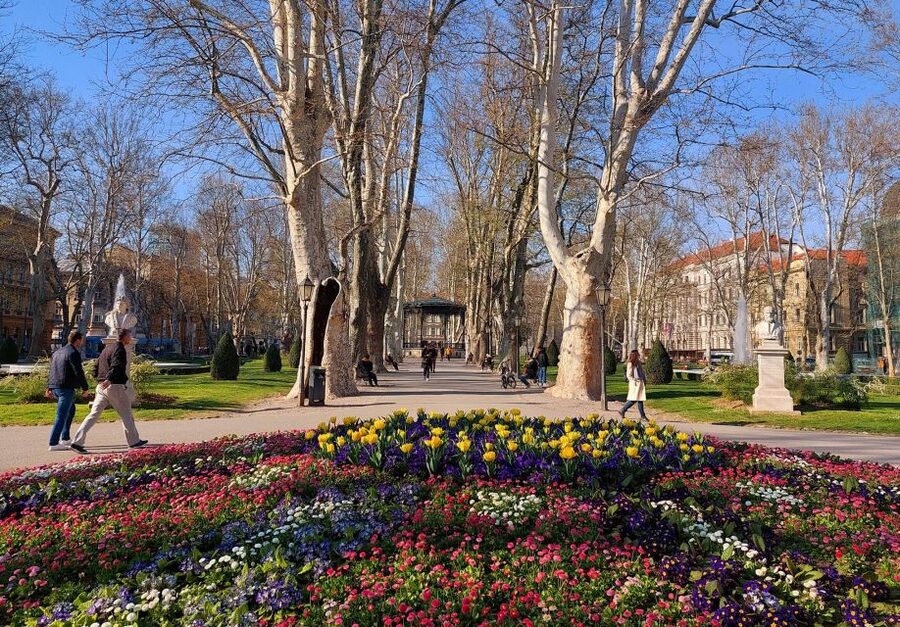
The walk then follows the line of Zagreb’s funicular toward Ilica Street. This connects the upper town with the lower city and gives you another look at how Zagreb’s historic and modern areas fit together.
Ilica is the longest street in Zagreb, so its inclusion helps shift the focus from old monuments to the city people use today. You will also see the Zagreb Octagon, an elegant passage linking central streets and a useful example of Zagreb’s urban architecture.
The route ends at Flower Square, where Zagreb’s younger crowd gathers around pubs at night. This is a sensible finish because it places you close to food, drinks, and further evening activity.
The final stop also gives you a practical choice. You can stay in the central area, use the guide’s suggestions for dinner, or continue exploring on your own. By ending here rather than at an isolated monument, the tour leaves you in a part of the city that is easy to use afterward.
What the guide adds to the experience
The strongest feature here is not the number of sights. Zagreb has plenty of central monuments, and you could walk past many of them without understanding why they matter. The guide’s role is to connect the places.
Domagoj has a reputation for knowing Croatian and Zagreb history well, speaking clear English, and keeping the tone relaxed. He also appears comfortable discussing the present day, not just old dates and dynasties.
That matters because Croatia’s past can be complicated. A good guide helps you follow the main story without turning the walk into a classroom lecture. The comments about humor, honesty, and openness suggest a guide who can make difficult subjects easier to approach.
You can also ask questions throughout the walk. The experience specifically invites questions, and the strongest use of your time may be to ask about something you notice in the streets, buildings, food culture, or current city life.
The practical advice is another plus. You can expect suggestions about dining, drinks, museums, transport, and areas to explore after the tour. For a first evening in Zagreb, those tips may be worth nearly as much as the sightseeing itself.
Is $35 a fair price for 90 minutes?
At $35 per person, this is not the cheapest way to walk around Zagreb, but the price is reasonable if you value explanation and orientation. You are paying for a live English-speaking guide, a route through the city’s main historic districts, and advice that can shape the rest of your visit.
The itinerary covers a lot in a short time. You see major squares, religious landmarks, the market district, the upper town, a historic gate, a viewpoint, the funicular route, Ilica, the Octagon, and Flower Square.
The tradeoff is depth. You will not have time for long stops inside museums, a detailed cathedral visit, or an extended market experience. If your main goal is to photograph the headline sights and understand how the city fits together, the price works well. If you want lengthy access to individual attractions, you need separate visits afterward.
The ability to cancel up to 24 hours before the start for a full refund also reduces the risk of fitting this into a changing itinerary. You can reserve now and pay later, which is useful if you are still arranging your Zagreb days.
Who should choose this Zagreb tour?
I would recommend it most strongly to first-time visitors who want context before exploring alone. It suits people who enjoy history but do not want a dry lecture, and it works well for anyone who wants recommendations for food, museums, and evening plans.
It is also a good fit for solo visitors or couples who prefer a personal exchange with the guide. The experience is described as relaxed and not overcrowded, though no fixed group size is provided, so you should not assume a private tour.
Families may find the route useful too. One parent specifically found the route suitable for a young child using a stroller, and the activity is listed as wheelchair accessible. Still, anyone with mobility concerns should ask for current route details because the historic upper town includes slopes and older streets.
You may want something else if you prefer a slow museum visit, a food tour, or a tour focused on one period of history. This walk is broad and fast. Its purpose is to connect Zagreb’s main pieces, not to examine one attraction for an hour.
Should you book the Old Zagreb walking tour?
Book it if you want a clear introduction to Zagreb in one evening, especially if you value a guide who can explain both Croatian history and present-day life. The route gives you the main historic structure of the city, strong night views near Lotrščak Tower, and a convenient finish at Flower Square.
I would choose it early in a Zagreb stay. You can use Domagoj’s suggestions to plan later visits to Dolac, museums, restaurants, and other parts of the city.
Skip it if you already know Zagreb well or want extended time inside specific attractions. For most first-time visitors, though, $35 is a fair exchange for 90 minutes of city orientation, local context, and a personable guide.
FAQ
How long is the Old Zagreb walking tour?
The tour lasts 90 minutes.
What language is the tour conducted in?
The live tour guide speaks English.
Where does the tour meet?
The meeting point is King Tomislav Square.
What places are included on the route?
The route includes Nikola Zrinjski Square, Ban Jelačić Square, Zagreb Cathedral, Kaptol, Dolac Market, Opatovina, Gradec, the Stone Gate, St Mark’s Square, the Gradec viewpoint, Strossmayer Promenade, Lotrščak Tower, Ilica Street, the Zagreb Octagon, and Flower Square.
Is the tour wheelchair accessible?
Yes, the activity is listed as wheelchair accessible.
Can I cancel the booking?
Yes. You can cancel up to 24 hours in advance for a full refund. You can also reserve now and pay later.
Just added around Croatia
- Luxury Private Elaphiti Islands boat tour from Dubrovnik★ 5.0 · 45 reviews
- Luxury Elaphite Islands half day Cruise with lunch Apreamare★ 5.0 · 19 reviews
- Private luxury speedboat tour-Islands, caves, beaches, snorkeling★ 5.0 · 71 reviews
- Croatia Luxury Villa and Yacht Combo Package on Korcula Island★ 5.0 · 67 reviews
- Luxury Sunset Tour with Wine Tasting★ 5.0 · 45 reviews
- Bosnia Day Trip: Mostar and Kravice Waterfalls by Luxury Minibus★ 4.5 · 245 reviews
- Blue & Green Cave Experience: Drinks, Snorkeling & Šunj Beach★ 5.0 · 70 reviews
- Luxury Private Boat Trip to the Elaphiti Islands from Dubrovnik★ 5.0 · 42 reviews
Croatia VIP Tours, compared.

Zadar: Island Luxury Speedboat Tour with Snorkeling
Read our review →
Split: Blue Lagoon & 3 Islands – Premium Speedboat Trip
Read our review →
Zadar: 3 Islands Luxury Boat Tour with Aperol Spritz
Read our review →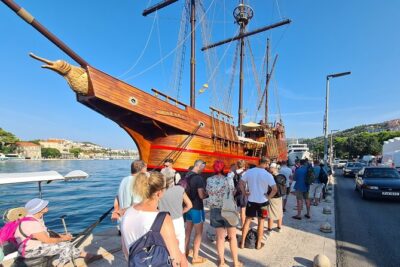
Elaphiti Islands On The Luxury Pirate Ship Karaka Dubrovnik
Read our review →
Luxury Blue Cave and Elaphiti Islands Small Group Tour
Read our review →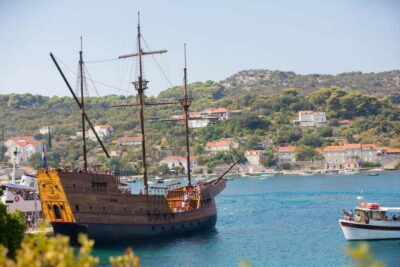
Dubrovnik: Elaphiti Island Luxury Pirate Ship Cruise
Read our review →
Zadar: Aperol Spritz & Island Vibes on Luxury Speedboat
Read our review →
Luxury Blue Cave, Hvar and Vis Boat Tour from Split and Brac
Read our review →Browse the lists this tour appears in