
Review · SEOUL
DMZ Tour (Exclusive offer: NK Defector meet up & Experience Hall)
The most moving part of this DMZ tour from Seoul is the human scale of the division. You see the river, the bridge where prisoners returned home, the tunnel dug beneath the border, and the North Korean side through binoculars. The history is not sealed behind glass. It is still part of daily life.
I like the no compulsory shopping stop, which leaves more room for the actual subject. I also like the range of stops: Imjingak and Freedom Bridge give the conflict a personal face, while Dora Observatory and the Third Infiltration Tunnel show the continuing military tension. The main drawback is the steep, narrow tunnel, plus the fact that military conditions can change the schedule without a refund.
Key points at a glance
- Meet a North Korean defector: The special session adds personal testimony to the political history of the peninsula.
- Walk through the Third Infiltration Tunnel: Expect a steep descent and a harder climb back than many people anticipate.
- See the border from Dora Observatory: Binocular views toward North Korea make the division feel immediate.
- Visit Freedom Bridge: Nearly 13,000 Korean prisoners of war crossed here on their return to South Korea.
- Ride in a comfortable coach: Round-trip transport keeps this long day simple, with a maximum group size of 40.
- Pay $35 for a full day: Admission and a guide are included, but lunch, the tram, and hotel pickup or drop-off are not.
Why this DMZ day matters
The Demilitarized Zone is not a normal sightseeing district. It is a controlled border area shaped by the Korean War and the unresolved division between North and South Korea. The tour gives you several ways to understand that division without asking you to arrange separate transport, admission, and border-area visits yourself.
You meet at City Hall Station in Seoul and return there at the end. The outing lasts about seven hours, usually with morning or afternoon departure information provided at booking. Since the route is outside central Seoul and access depends on military rules, a group tour is a practical choice.
Your guide provides commentary during the drive and at the stops. Guides named in the feedback include Felicity, Miel, Katie, Grace, Erica, Yeoni, AJ, Charles Park, Laura, and Chloe. The strongest pattern is clear: the guide makes a major difference. Good guides keep the schedule moving, explain the political background in plain English, answer questions, and help the group manage the tunnel and border-area rules.
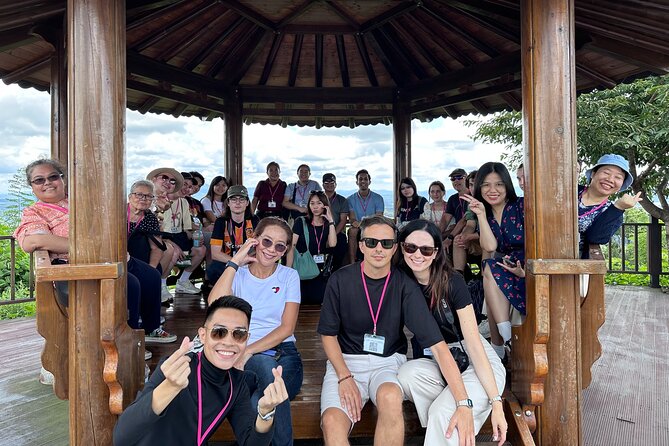
This is also a group outing, with as many as 40 people. That keeps the price low, but you should expect a shared pace and regular meeting times. Guides such as Katie and Miel have been praised for keeping groups on schedule, allowing people to move through the tunnel at a comfortable pace, and helping with photographs.
A few more luxury tours around the world worth a look
- Amsterdam Luxury Canal Cruise + Unlimited Drinks & Bites option
★ 5.0 · 30,518 reviews - Dubai: Premium Safari, Camel Ride & Al Khayma Camp 3-Buffets
★ 4.9 · 30,335 reviews - From Dubai: Abu Dhabi Premium Full-Day Sightseeing Tour
★ 4.9 · 26,728 reviews
Imjingak Park and the road to Freedom Bridge
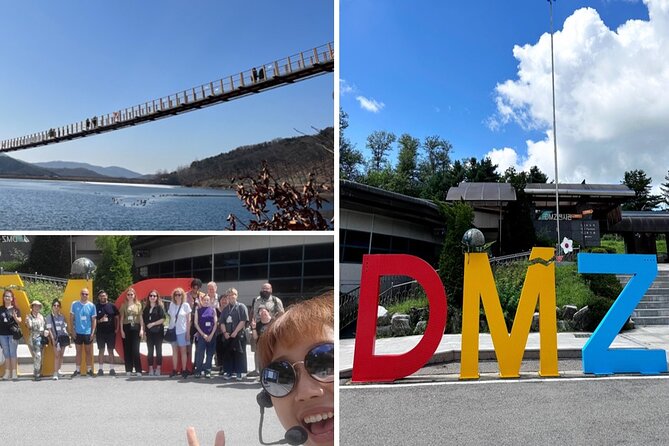
The first substantial stop is Imjingak Park, beside the Imjin River. It is a useful starting point because the area connects the Korean War with the families and prisoners affected by the division.
You can see artillery and other war artifacts used during the conflict. These objects make the war less abstract. Instead of hearing only about troop movements and political decisions, you encounter the equipment and memorial setting left behind by that period.
From here, the tour continues to Freedom Bridge. Nearly 13,000 Korean prisoners of war crossed the bridge while returning to South Korea. That fact gives the site its emotional force. A bridge is a simple object, but in this case it became part of a long-awaited return home.
Your guide’s explanation matters here. The stops are not large museum complexes with hours of displays. Much of the value comes from learning what you are looking at and why it matters. Felicity, Grace, and Sadie are among the guides praised for explaining the division clearly and treating the subject with the seriousness it deserves.
The Third Infiltration Tunnel is the physical test
The Third Infiltration Tunnel is likely to be the most demanding part of the day. It was located beneath the border between North and South Korea, and visitors walk down a steep route into the tunnel area. South Korea has blocked access at the Military Demarcation Line.
The walk is not especially long in the usual sightseeing sense, but the slope changes the experience. You go down first, then climb back up. The tunnel is narrow, and comfortable shoes are a must. People who expect an easy museum visit often find the return climb surprisingly strenuous.
That effort is also what makes this stop memorable. You are not simply looking at a map showing underground routes. You are physically moving through a passage associated with military infiltration and border security.
The tour allows a moderate amount of walking through a steep and narrow space. If you have knee, breathing, or mobility concerns, think carefully before booking. The supplied information says most people can participate, but it also makes clear that this is not a completely flat, easy walk.
A tram is not included. The tour information specifically lists the tram as an extra cost, so check the arrangements on the day rather than assuming every part of the route is covered by the admission fee.
Dora Observatory puts North Korea within view
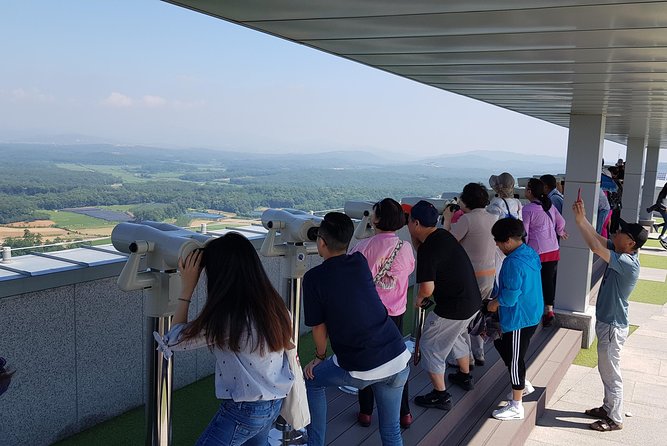
At Dora Observatory, you look toward North Korea, generally using binoculars available at the viewing area. This is one of the tour’s strongest visual moments because the border is no longer an idea on a map. You are standing in South Korea and looking across a restricted frontier.
The view depends on conditions and the day’s access rules, so do not expect a guaranteed perfect panorama. Still, the act of looking across the line is powerful. It gives the political story a clear physical direction.
This stop is best approached with patience. Listen to the guide before rushing to the viewing point. The explanation helps you understand what you are seeing, and it also clarifies where photography is allowed.
Photography rules matter throughout the DMZ. Follow the guide’s instructions about when and where you may take pictures. This is an active security zone, not a place where you can freely photograph every sign, fence, or military feature.
Same place, a different kind of splurge:
- Dubai Marina: Luxury Yacht Tour with Breakfast or BBQ Option
★ 4.7 · 21,528 reviews - Dubai: The Luxury Yacht Tour with Live BBQ Option
★ 4.7 · 13,665 reviews - Dubai Premium Red Dunes Safari, Camels & 5* BBQ at Al Khayma camp
★ 5.0 · 12,388 reviews - Dubai: Desert Safari with VIP BBQ and Optional Quad Bike
★ 4.9 · 7,349 reviews
Dorasan Station and the hope of connection
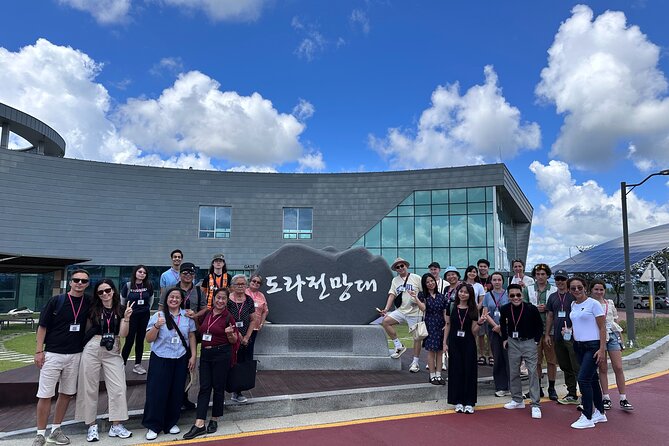
Dorasan Station offers a different mood from the tunnel and observatory. It is associated with the possibility of future connection between the two Koreas, even though the border remains closed to ordinary cross-border travel.
The station helps show that the DMZ is not only about weapons and separation. It also represents the hope that rail links, families, and communities might one day connect again. The tour’s larger value comes from this contrast: one stop shows the fear of infiltration, another shows the wish for reunification.
Your guide’s background commentary is especially useful here. Several guides are praised for explaining how the division began, how the Korean War shaped the modern border, and why reunification remains an important idea for many Koreans. You do not need a detailed knowledge of Korean politics before arriving.
The Experience Hall and the North Korean defector session
This special offer includes access to the Experience Hall and a meet-up with a North Korean defector. The session is a major reason to choose this version of the tour instead of a basic DMZ visit.
A defector can discuss life in North Korea and the experience of leaving in a way that maps and military displays cannot. You may also have a chance to ask questions. The session gives the day a personal voice and helps connect large political issues with one person’s life.
The conversation should be approached respectfully. North Korea is not a simple subject, and one person’s experience cannot represent every person in the country. Still, a first-person account can add useful human detail to what you have seen at the border.
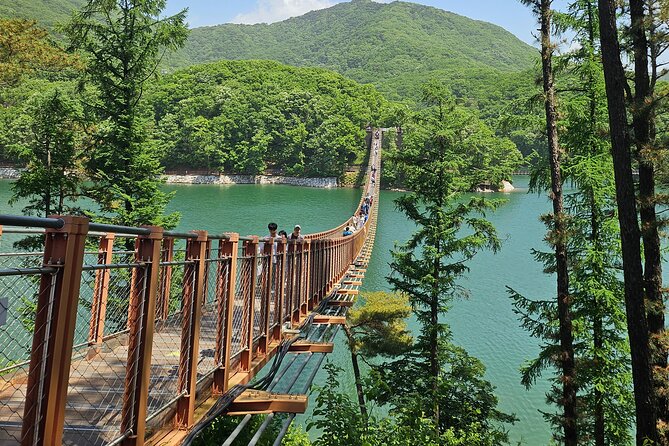
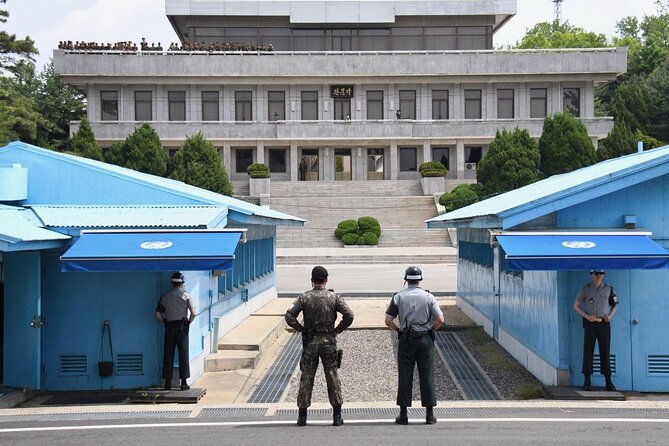
Some departures or versions of the route may not include every extra feature. The supplied experience title identifies the defector meet-up and Experience Hall as part of this offer, but other parts of the DMZ program can change. Confirm the exact inclusions at booking, especially if the suspension bridge or Joint Security Area is important to you. Access to specific military sites can be restricted by local or military conditions.
A $35 tour with sensible inclusions
At $35 per person, this is inexpensive for a seven-hour outing from Seoul. The price includes a guide, admission fees, and transport by air-conditioned coach. That is good value if you want the major DMZ sights without finding your own way through several controlled access points.
The low price does not mean the day is all-inclusive. Lunch is not provided, and hotel pickup or drop-off is not included. You meet and finish at City Hall Station, so allow time to reach that location by public transport.
The tram is also excluded. If you want to use it at the Third Infiltration Tunnel, plan for a separate payment. The tour’s lack of a compulsory shopping stop is a real advantage. Your time is directed toward the DMZ rather than a retail stop added to fill the day.
You should also factor in the group size. Up to 40 people can join, so this is not a private, quiet tour. The benefit is the low cost and the convenience of shared transport. The tradeoff is that you need to stay close to the group and return to the coach at the agreed times.
Guides are the key part of the experience
The feedback gives unusual insight into how much the individual guide shapes the day. Felicity is praised for a steady pace and clear explanations. Miel is noted for strong organization, timing, and detailed background on both Koreas. Katie is praised for keeping children engaged and helping with photographs.
Grace is described as patient and willing to answer questions. Yeoni receives credit for explaining the history in a way that made the subject easier to follow, while AJ, Laura, Charles Park, Erica, Chloe, and others are also singled out for friendly, clear presentations.
That variety means you should not book based on one guide’s name alone. Assignments can change. Instead, expect a guide-led day where the quality of the explanations and timing will shape your experience.
The best guides do more than recite dates. They explain the line between North and South Korea, show how the war affected ordinary people, and keep the group moving without making the day feel like a forced march. A few guide accounts also note help with pickup instructions and photographs, which can be useful at busy stops.
What to bring and how to prepare
Bring your current valid passport. You do not need to send a copy in advance, but you must have the passport with you on the day.
Wear comfortable clothes and sturdy walking shoes. The tunnel is the main reason. It is steep, narrow, and harder on the way back up. Avoid treating this as a coach-only sightseeing day.
Keep your schedule flexible. Military conditions or local circumstances can cause part of the itinerary to be canceled, and the tour information states that no refund is provided in that situation. Photography can also be limited, so listen carefully to the guide.
Arrive at City Hall Station with time to spare. If you miss the bus because of a late arrival or confusion about the date, there is no refund. The tour offers free cancellation up to 24 hours before the start time, but changes or cancellations inside that window are not accepted.
Who should book this DMZ tour
I would choose this tour if you want a first visit to the DMZ with the main sights arranged in one day. It suits history-minded visitors, families with older children, and anyone who prefers a guide to explain the political background rather than reading a few signs alone.
It is also a strong choice if meeting a North Korean defector matters to you. That personal session adds something different from a standard border excursion and may be the most memorable part of the day.
I would think twice if you dislike group schedules, have difficulty walking uphill, or need a guaranteed visit to one particular military site. The route can change, and the tunnel requires real effort.
Should you book it?
At $35, this is a practical and well-priced way to see several major DMZ sites from Seoul. I like the mix of memorials, military history, border views, and personal testimony, especially with no forced shopping stop.
Book it if you want an efficient introduction to the DMZ and are comfortable with a shared coach, a seven-hour day, strict photo rules, and the possibility of military changes. Bring your passport, wear good shoes, and treat the defector session as a serious conversation rather than a novelty. For most first-time visitors to Seoul, that combination makes this a worthwhile day outside the city.
FAQ
Where does the DMZ tour start and finish?
The tour starts at City Hall Station in Seoul and returns to City Hall Station.
How long does the tour last?
The tour lasts approximately seven hours.
Is hotel pickup included?
No. Hotel pickup and drop-off are not included. You should make your own way to City Hall Station.
What is included in the price?
The price includes an expert guide, transport by air-conditioned coach, and admission fees.
Is lunch included?
No. Lunch is not included.
Is the tram at the Third Infiltration Tunnel included?
No. The tram is listed as an additional cost.
Do I need my passport?
Yes. You must bring a current valid passport on the day of the tour. You do not need to send a copy in advance.
Is the Third Infiltration Tunnel difficult to walk through?
The tunnel involves a moderate amount of walking through a steep and narrow passage. Comfortable clothes and shoes are recommended.
Can I take photographs everywhere?
No. You must follow the guide’s instructions about when and where photography is allowed.
Can the itinerary change?
Yes. Parts of the itinerary can be canceled because of unexpected military conditions or local circumstances. The tour information states that such cancellations do not qualify for a refund.
Just added around the world
- luxury 3 Days 2 Nights Desert Tour from Fez to Marrakesh★ 4.5 · 73 reviews
- Fes to Fes Private Desert tour 1-night 2-Day Tour luxury camps★ 5.0 · 23 reviews
- luxury day trip to Chefchaouen From fes by small group★ 5.0 · 59 reviews
- 2 Day Desert Tour from Fez with Camel ride Overnight luxury Camp★ 4.5 · 24 reviews
- 2 Days Luxury Magic Morocco Desert Tour From Fes To Fes★ 5.0 · 16 reviews
- luxury desert tour 3days 2 night fez merzouga ouarzazat marakech★ 4.5 · 111 reviews
- 3 Days Luxury Desert Tour From Fes To Marrakech via Merzouga★ 5.0 · 87 reviews
- 3-Day Luxury/Budget Desert Tour to Marrakech via Merouga from Fez★ 4.5 · 151 reviews
Seoul VIP Tours, compared.
Signature DMZ Tour: Exclusive Defector Talk & Suspension Bridge
Read our review →
Premium Private DMZ Tour & (Suspension Bridge or N-Tower) include lunch
Read our review →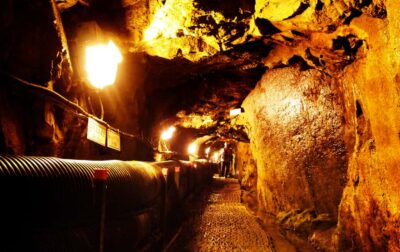
Seoul: DMZ Tour with Exclusive North Korean Defector Meet-Up
Read our review →
Browse the lists this tour appears in