
Review · AMSTERDAM
Anne Frank’s Amsterdam Jewish History WWII Exclusive Guided Tour
The most important thing to understand about this tour is that it is not an Anne Frank House visit. You see the house from outside, then follow a 2.5-hour walking route through Amsterdam’s wartime memorials, Jewish Quarter, and Holocaust sites. That wider view helps place Anne’s story within the experience of the city and its persecuted communities.
I like the route’s range, from the Homomonument and the February Strike memorial to the Auschwitz Monument and National Holocaust Names Monument. I also like the personal format. Guides including Monique, Clare, Jo, Hannah, Anita, Marco, and Huibert are praised for careful explanations and for adjusting the pace to the group. The main drawback is clear: if you want to enter the Anne Frank House, you must buy that ticket separately.
Key points at a glance

- Anne Frank House from the outside: Learn about the hiding place without admission to the museum.
- A wider wartime story: The route includes Jewish resistance, LGBTQ+ victims, deaf Jewish victims, Roma and Sinti victims, and the February Strike.
- Small-scale guiding: A private format means only your group participates, with a small-group option also available.
- A moving final stretch: The Auschwitz Monument and National Holocaust Names Monument give the tour a quiet, serious finish.
- Two and a half hours on foot: You need moderate physical fitness and sensible walking shoes.
- Good alternative when house tickets are unavailable: You still gain substantial context about Anne Frank and occupied Amsterdam.
Why this is more than an Anne Frank stop
Many people first approach Amsterdam’s World War II history through Anne Frank. That makes sense, but one house and one diary cannot explain the full story. This walk uses Anne as a starting point, then widens the lens to show how Nazi occupation affected Amsterdam’s Jewish population, resistance workers, LGBTQ+ people, deaf Jewish people, and other persecuted groups.
You begin at Westermarkt 60, near the Anne Frank House. The guide does not take you inside. Instead, you spend about ten minutes outside the building where Anne, her family, and four others hid for two years. The guide explains life in hiding and the setting around it, giving you useful context before you continue through the city.
This arrangement matters if you could not obtain an Anne Frank House ticket. It does not replace the museum’s rooms, documents, and original hiding place, but it gives you a fuller city story than an isolated museum visit can provide. If you already have an Anne Frank House reservation, the walking tour can also work well before or after it.
More Heritage Tours in Amsterdam:
- Amsterdam High-End Dutch Food & History Tour – Up to 8 guests
★ 5.0 · 482 reviews - Amsterdam: Luxury Canal Cruise with Historic VR Experience
★ 5.0 · 305 reviews - Amsterdam: Luxury Canal Cruise with Historic VR Experience
★ 4.7 · 31 reviews
Westermarkt and Anne Frank’s statue
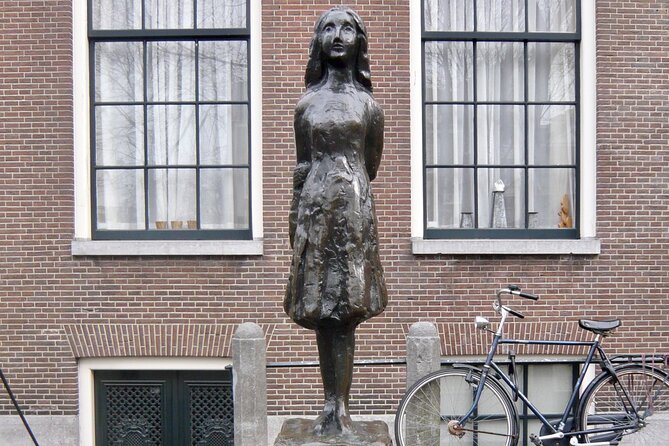
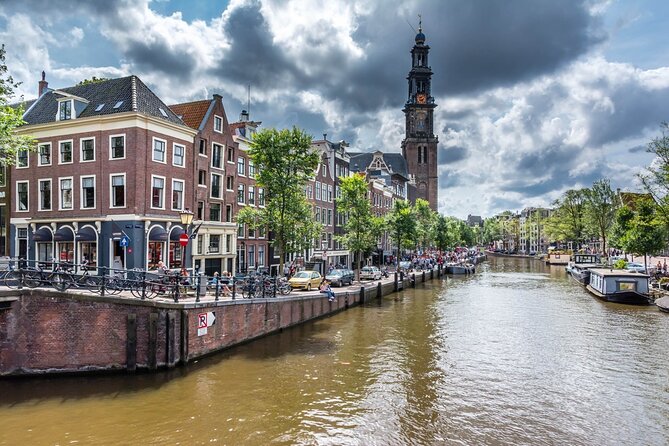
The next stop is Anne Frank’s statue, set against Westerkerk. The church’s bells were part of Anne’s experience in hiding, offering both comfort and a reminder of ordinary life outside the annex.
This is a brief stop, but the location gives the story a human scale. You are not simply hearing dates and names. You are standing near the church Anne could hear while confined indoors, looking at a statue created to remember a young person whose diary became one of the best-known accounts of Nazi persecution.
The guide can connect the physical surroundings with Anne’s daily life and explain why Westerkerk mattered to her. Do not expect a long pause here. The route has twelve stops, so the guide keeps each visit focused.
Memorials that widen the story
At the Homomonument, the tour recognizes LGBTQ+ people persecuted under Nazi rule. This memorial was the first in the world dedicated to LGBTQ+ people who suffered persecution, and it adds an important layer to a route that might otherwise focus only on Jewish history.
The group then moves toward Dam Square. This historic center once contained a Nazi recruitment office. You also see the National Monument, a cenotaph honoring people who died in World War II and later conflicts.
Dam Square can feel busy and open, so this portion is less intimate than the smaller memorials. Still, it shows how wartime memory sits within everyday Amsterdam. You are walking through a public space used for shopping, meeting, and sightseeing, while learning how occupation changed its purpose.
The Spinoza Monument brings the story further back in time. Baruch Spinoza was a Dutch Jewish philosopher whose ideas about religion and politics were radical in his era and later influenced the Enlightenment. This is not a World War II memorial, but it helps you understand the intellectual and Jewish traditions connected with Amsterdam.
I appreciate this stop because it prevents the tour from treating Jewish life only as a story of persecution. Amsterdam’s Jewish community had a long cultural and intellectual presence before the war, and that earlier history gives the later losses greater meaning.
Resistance, deportation, and the February Strike
The Jewish Resistance Monument commemorates Jewish resistance fighters killed during World War II. It also marks the site associated with the first mass protest against Nazi occupation.
That detail is especially useful because it complicates the common image of a population simply waiting for events to happen. Resistance took many forms, and this stop gives the guide a chance to explain the courage and danger involved. The stop lasts about ten minutes, enough for a focused account without turning into a lecture.
At Monument Megadlé Jethomiem, you pause at a subtle sidewalk memorial. Stones outline the former Jewish orphanage from which Jewish children and their caretakers were deported to Sobibor in 1943.
This is the kind of place you could easily pass without noticing. The understated design asks you to look down and pay attention. I find memorials like this particularly effective because they tie the loss to a precise address and a specific community, rather than presenting the Holocaust only as an enormous and distant number.
The Dokwerker, or Dockworker, commemorates the February Strike of 1941. Thousands of workers protested Nazi persecution in what is described as the first public protest against Nazi persecution in occupied Europe.
This stop brings the story beyond Jewish institutions and memorials. It shows how Amsterdam residents responded to persecution, at least for a brief and dangerous moment. The guide can connect the statue to the city’s wider wartime experience and explain why the strike remains central to Dutch memory.
A few more luxury tours around Amsterdam worth a look
- Amsterdam Classic Saloon Boat Canal Cruise with Live Guide
★ 5.0 · 806 reviews - Rijksmuseum Amsterdam Exclusive Guided Tour w/ Reserved Entry
★ 5.0 · 440 reviews - Van Gogh & Rijksmuseum w/ Reserved Entry Exclusive Guided Tour
★ 5.0 · 254 reviews - Louvre Museum – Exclusive Guided Tour (Entry Included)
★ 5.0 · 6,296 reviews
The Portuguese Synagogue and Jewish Amsterdam
The Portuguese Synagogue is one of the route’s most striking historic sites. It was once the world’s largest synagogue and represents the strength of Amsterdam’s Jewish community before the destruction of the Holocaust.
The tour includes an exterior look, but admission is not part of the price. The Jewish Museum across the street is also not included. If you want to enter either site, plan that as a separate visit and allow extra time beyond the two-and-a-half-hour walk.
This is an important practical distinction. The tour gives you a guided framework, but it is not an indoor museum tour. You will learn why the synagogue matters, yet you should not expect to see its interior or museum displays unless you arrange admission yourself.
Smaller memorials, serious stories
The Deaf Memorial honors Jewish deaf and hard-of-hearing people murdered by the Nazi regime between 1940 and 1945. The memorial recalls how the Nazis labeled these people as inferior and subjected them to systematic killing.
It is a small stop with a large moral weight. The route’s inclusion of this memorial shows that persecution did not affect one uniform group in one uniform way. The guide can help you understand how Nazi policy targeted people through both Jewish identity and disability.
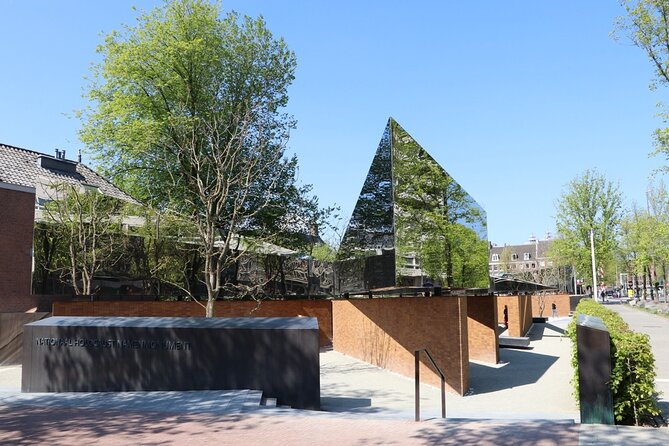
The Auschwitz Monument comes later in Wertheimpark, in a quieter setting. Its shattered mirrors reflect the sky, symbolizing the broken heavens associated with Auschwitz and other concentration camps.
After busy streets and central squares, this park stop changes the mood. The broken reflections create a simple image that needs little explanation, though the guide’s context helps you understand the memorial’s purpose. Give yourself room to pause here. The schedule allows roughly ten minutes, but the emotional weight may make it feel longer.
Ending at the National Holocaust Names Monument
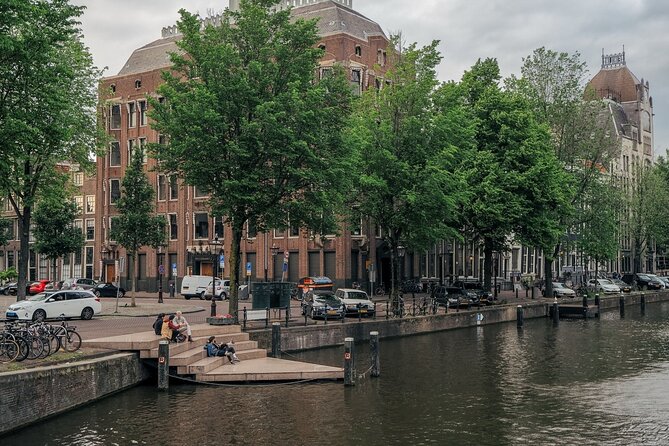
The final stop is the National Holocaust Names Monument, near the National Holocaust Museum. The monument records the names of 102,000 Jewish victims and 220 Roma and Sinti victims murdered by the Nazis.
You also see Stumbling Stones, small brass plaques placed in the pavement at the last known homes of people deported during the Holocaust. These plaques turn ordinary streets into places of remembrance. You may find yourself reading individual names rather than thinking only in terms of statistics.
Ending here is fitting. The opening stop focuses on one famous hiding place and one family’s story. The final stop gives you thousands of names and addresses, showing the scale of the destruction while keeping the memory personal.
The listed endpoint is National Holocaust Names Monument, 1018 DP Amsterdam. Since the tour begins at Westermarkt and ends elsewhere, you should be comfortable navigating back to your hotel or next activity. Hotel pickup and drop-off are not included. Public transportation is nearby, and a taxi or Uber is recommended if you do not want to continue walking.
Guides and the value of a private format
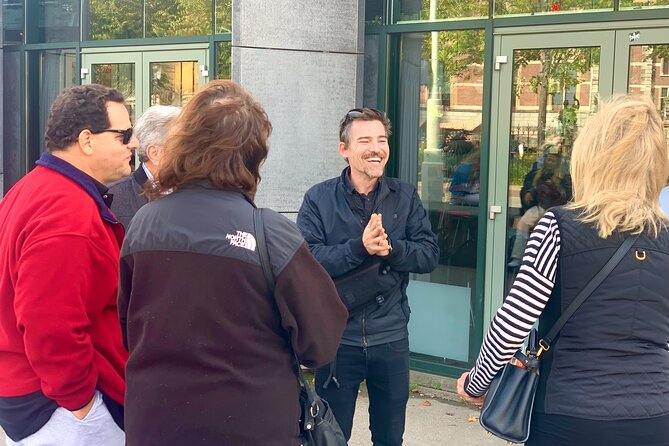
The strongest part of this experience is the guide. Monique is described as passionate about Amsterdam and its wartime history, sharing stories about people who lived through the occupation. Clare is noted for a thorough approach to Anne Frank’s story. Jo is praised for answering many questions and shifting easily between historical and modern subjects.
Hannah is described as well informed and passionate about Amsterdam. Anita, Marco, and Huibert are also singled out for strong local and historical knowledge. Marco’s small group allowed him to adjust the route to the group’s pace and interests, while Jo was flexible when the group needed a snack or cup of tea.
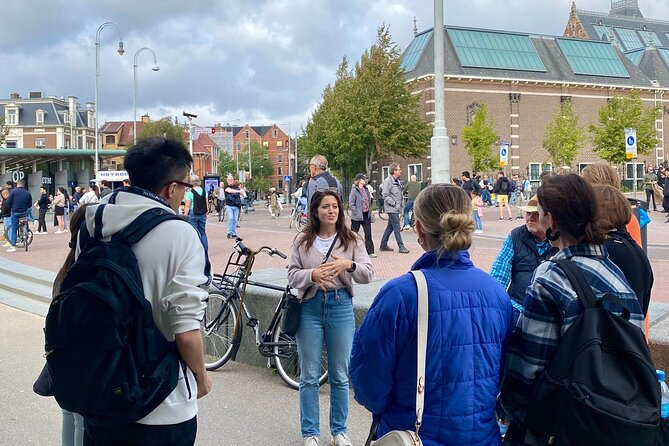
Those details tell you what the format can offer. You are not simply following a flag through a fixed speech. A private tour means only your group participates, and a small group allows more room for questions. The exact guide varies, so do not book expecting a particular person unless the provider confirms it.
The pace is generally adaptable, with frequent checks on comfort. Still, this is a walking tour with twelve stops and moderate physical requirements. Rain is possible in Amsterdam, so bring a waterproof layer and comfortable shoes. One guide took care to keep the group comfortable in rainy weather, but the tour remains outdoors.
Price, timing, and what you receive
At $59.28 per person, the price is reasonable if you want two and a half hours of focused guiding and a private or small-group setting. You are paying mainly for the guide’s interpretation, route planning, and ability to connect memorials that you might otherwise see without context.
The value is weaker if you only want a quick look at the Anne Frank House. The tour spends about ten minutes there and does not include entry. You also pay separately for food, drinks, the Portuguese Synagogue, and Jewish Museum admission. Gratuities are optional, and luggage or coat storage is not included.
The tour is often booked around 56 days ahead, so planning early is sensible, especially if your Amsterdam dates are fixed. Confirmation arrives at booking, and free cancellation is available up to 24 hours before the start time. Changes or cancellations inside that 24-hour window are not accepted for a refund.
Who should book this walk?
I would choose this tour if you want to understand Amsterdam’s wartime history rather than collect one famous photograph. It suits first-time visitors, families with older children who can handle serious subject matter, and anyone who wants an expert-led route through memorials that are easy to miss.
It is also a good choice if Anne Frank House tickets are gone. You will not enter the house, but you will still learn about Anne, her family, and the city around them. The route adds subjects many Anne Frank visits cannot cover, including Jewish resistance, the February Strike, LGBTQ+ persecution, deaf Jewish victims, Roma and Sinti victims, and individual names on memorial stones.
I would look elsewhere if you dislike long walking tours, need an indoor activity, or want to spend most of your time inside museums. You should also add separate admission and time if the Portuguese Synagogue or Jewish Museum is important to you.
Should you book the Anne Frank Jewish History tour?
Book it if you want a thoughtful, guide-led introduction to Amsterdam under Nazi occupation and prefer personal attention to a large group. The best reason to go is the route’s breadth: Anne Frank is the doorway, not the entire subject.
Skip it if your main goal is entering the Anne Frank House. In that case, secure a museum ticket first and consider this tour only if you want a broader follow-up. For most visitors with the time and stamina for a serious walking route, the combination of memorials, personal stories, and adaptable guides makes the $59.28 fee a fair buy.
FAQ
Does the tour include entry to the Anne Frank House?
No. The tour visits the Anne Frank House from the outside only. Admission is not included.
How long does the tour last?
The tour lasts approximately 2 hours and 30 minutes.
Where does the tour start?
It starts at Westermarkt 60, 1016 DL Amsterdam, Netherlands.
Where does the tour finish?
It finishes at the National Holocaust Names Monument, 1018 DP Amsterdam, Netherlands.
Is the Portuguese Synagogue included?
No. The tour does not include admission to the Portuguese Synagogue or the Jewish Museum.
Is this a private tour?
The activity is listed as private, meaning only your group participates. Small-group and private formats are offered.
Is hotel pickup included?
No. Hotel pickup and drop-off are not included. Public transportation is nearby, and Uber or a taxi is recommended.
Can I cancel for a full refund?
Yes, if you cancel at least 24 hours before the experience start time. Cancellations or changes made less than 24 hours before the start time are not accepted for a refund.
Just added around Amsterdam
- Amsterdam: Luxury Canal Cruise with Historic VR Experience★ 5.0 · 305 reviews
- Van Gogh & Rijksmuseum w/ Reserved Entry Exclusive Guided Tour★ 5.0 · 254 reviews
- Amsterdam Light Festival: Cruise Unlimited Drinks & Bite option★ 5.0 · 18 reviews
- Rembrandt Experience VIP Admission Ticket + Photo★ 4.5 · 28 reviews
- Amsterdam Light Festival: Canal Cruise + Bite & Unlimited Drinks★ 4.5 · 20 reviews
- Premium Cheese Tasting with Wine and Beer Pairing★ 4.5 · 79 reviews
- Exclusive Cheese Walk & Dutch Wine Discovery★ 5.0 · 32 reviews
- Small-Group Luxury Canal Cruise with Local Skipper★ 5.0 · 24 reviews
Amsterdam VIP Tours, compared.

Amsterdam Luxury Canal Cruise + Unlimited Drinks & Bites option
Read our review →
Amsterdam: Luxury Saloon Boat Cruise with Cocktails & Waffle
Read our review →Amsterdam: Luxury Saloon Boat Cruise with Cocktails & Waffle
Read our review →
Amsterdam: Saloon Boat Cruise + Unlimited Drinks & Bite option
Read our review →
Van Gogh Museum Amsterdam Exclusive Tour w/ Reserved Entry
Read our review →
Discover Amsterdam: Luxury Canal Cruise with a Local Skipper
Read our review →
Amsterdam: Premium Henri Willig Cheese Tasting Experience
Read our review →
Browse the lists this tour appears in