
Review · MADRID
Madrid Old City Guided Exclusive Guided Walking Tour
Madrid’s old center is best understood on foot, and this tour gives you a clear route through its layered past, from the Royal Palace and Arab Wall to the lively squares around La Latina, Plaza Mayor, and Puerta del Sol. It is a useful first-day orientation, with guides such as Isabella, Sergio, Jake, Flo, and Michele adding history, food tips, and local context.
I like the small-group format and the fact that the tour connects major sights with less obvious corners, including Plaza de la Paja and Plaza de los Carros. I also like the flexible human touch reported by several guests, such as guides adjusting the pace, finding shelter during rain, and answering questions beyond the basic script.
The main consideration is that the advertised route lists 14 stops, but the experience can feel more like a guided walk-by tour than a series of interior visits. One critical review also reported difficulty hearing the guide in a larger group without headsets, so group size and your position near the guide matter.
Key points before you book
- A strong first look at Madrid: The route ties together the palace district, medieval lanes, La Latina, Plaza Mayor, and Puerta del Sol.
- Small groups are the main advantage: Private and semi-private options are offered, and several bookings became especially personal because of low attendance.
- Guides add more than dates: Isabella, Sergio, Jake, Flo, Michele, Leti, Jaime, Alfonso, and David have been praised for history, folklore, food advice, and local orientation.
- Most stops are viewed from outside: Palace and cathedral admission are not included, and the schedule allows about 10 minutes at each listed stop.
- Plan for real city walking: The route is generally manageable, but it covers narrow streets, squares, and busy central areas over two and a half hours.
- Bring water and dress for the forecast: The tour runs in all weather, and large bags or suitcases are not allowed.
Why this is a useful first walk through Madrid
Madrid’s old center can feel confusing at first. Streets radiate from Puerta del Sol, medieval lanes twist through La Latina, and major monuments often sit only a few minutes apart but belong to very different periods of the city’s past.
This tour gives you a framework. You begin beside the Royal Palace and finish at Puerta del Sol, passing through the old core rather than riding between isolated sights. I find that approach useful because you learn not only what each monument is, but also how the districts fit together.
The guide is the key part of the experience. The strongest feedback centers on clear storytelling and personal attention. Jake has been singled out for connecting Spanish history across several periods, including early colonial history and the Second World War. Flo has been praised for combining history with legends, food, and small details. Sergio is noted for answering questions and helping first-time visitors understand where things are.
That range matters. A walking tour can become a dull list of dates, but this one has the ingredients for something more useful: historical background, neighborhood context, and practical advice about eating and going out later.
At $56.52 per person, the value depends mainly on group size and how much you want a guide. For a private or very small group, the price is reasonable for two and a half hours of attention in central Madrid. If your group grows larger, the value becomes more dependent on how well you can hear and interact with the guide.
More Walking Tours in Spain:
- Bilbao Exclusive Private Walking Tour
★ 5.0 · 28 reviews - Barcelona Night Walking Tour Bars & VIP Club Pass
★ 4.3 · 26 reviews - Frida Kahlo VIP [Museum Tickets Included] Walk, Markets & Churros
★ 5.0 · 982 reviews
Starting at the Royal Palace and Almudena Cathedral
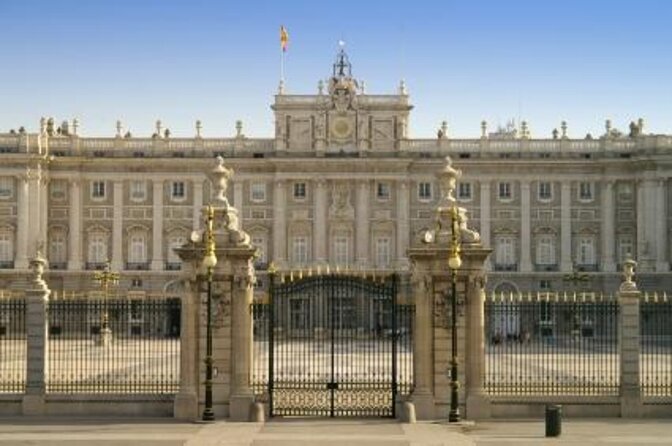
The meeting point is Plaza de la Armería, beside the Royal Palace. This is an impressive place to begin, with the palace and Almudena Cathedral forming an unmistakable pair at the western edge of the historic center.
The Royal Palace is the official residence of Spain’s royal family, though it is now used mainly for state ceremonies. It was home to Spanish monarchs from Charles III through Alfonso XIII. The tour schedule allows about 10 minutes here, and palace admission is not included.
That short time is important to understand. You should expect an introduction and an exterior look unless your booking or guide arrangements clearly state otherwise. One piece of feedback described a palace-focused version in which most of the time was spent inside viewing 23 rooms, but the published experience itself does not include the admission fee. If touring the palace interiors is your main goal, confirm exactly what your departure includes before booking.
The next stop is the Museo de la Catedral de la Almudena, part of the Catholic cathedral consecrated by Pope John Paul II in 1993. Again, the schedule allows about 10 minutes, and admission is not included.
This pairing gives the opening a strong sense of place. You see the royal center and the city’s major cathedral before moving into older, tighter streets. If you have little background in Spanish history, this is where a good guide can make the rest of the walk easier to follow.
Finding Madrid’s oldest surviving walls
The Arab Wall, also called the Muslim Wall of Madrid, is on Cuesta de la Vega. Its construction is linked to the city’s origins and it is probably the oldest surviving structure in Madrid.
The stop is brief, but it changes your view of the city. Madrid is often associated with grand Bourbon and Habsburg buildings, yet this wall points to a much earlier settlement. It also helps explain why the oldest part of Madrid feels different from the broad avenues and later neighborhoods beyond the center.
Admission is free. You will likely spend more time listening than walking at this point, so it is a good chance to ask the guide how Madrid developed from its early fortified settlement into the capital you see today.
Calle Mayor and the medieval Plaza de la Villa
From the wall, the route follows Calle Mayor, one of the central streets of old Madrid. It began in the Middle Ages and became a major thoroughfare during the early modern period, when Madrid was growing in importance.
This section is useful because it shows how the city’s old routes still shape modern movement. Calle Mayor leads toward Puerta del Sol while connecting the palace area with the heart of the historic center.
The walk then reaches Plaza de la Villa, one of Madrid’s best-preserved historic squares. It sits near the old Puerta del Sol area and was one of the city’s medieval centers.
Do not expect a long stop here. The schedule gives around 10 minutes, which is enough for an explanation and photographs but not for a detailed architectural visit. That is a recurring pattern throughout the tour: the guide gives you the story and orientation, then you can return later if a particular place deserves more time.
A few more luxury tours around Spain worth a look
- Granada: Full Alhambra Premium Guided Tour with Tickets
★ 4.8 · 1,084 reviews - Bilbao: Guggenheim VIP Experience. Small Group. Expert Guide
★ 4.7 · 528 reviews - Seville Exclusive Beat the Crowds Guided Alcazar Before Opening
★ 5.0 · 462 reviews - Bilbao: Exclusive Food & Wine Tasting Tour with Local Guide
★ 4.9 · 347 reviews
La Latina, Plaza de la Paja, and the older city
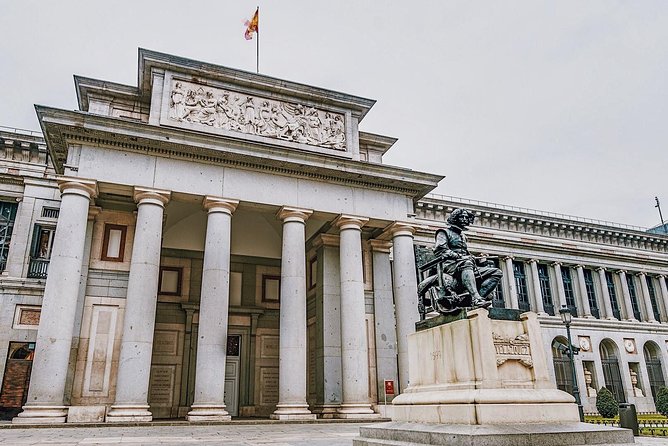
La Latina is one of the most rewarding sections for understanding Madrid as a lived-in neighborhood rather than a collection of grand monuments. It occupies much of the oldest part of the city and is made up of narrow streets and small public spaces.
The route continues to Plaza de la Paja, a major marketplace in the 13th and 14th centuries. The square has long had a social, public character, but it also offers quieter corners away from the main flow of the center.
This is where I would pay close attention to the guide’s local advice. Several guides, including Isabella, Michele, and Flo, have been praised for recommending places to eat and drink, along with entertainment options. Those suggestions can be more useful than another paragraph about a monument, especially if you have only a short stay in Madrid.
The walk then passes through Plaza de los Carros, a smaller square with a fountain and places to stop for a drink. It is a brief pause in the route, but it gives you a sense of how Madrid’s old neighborhoods work: one minute you are in a narrow medieval lane, and the next you are in a social square with outdoor life.
Plaza de Puerta Cerrada follows. It is in La Latina, an area built around an older Islamic fortification and regarded as one of Madrid’s oldest and liveliest neighborhoods. The historical layers here are easy to miss if you hurry through on your own. A guide can point out how the street plan and neighborhood character reflect the city’s earlier development.
Arco de Cuchilleros and the approach to Plaza Mayor
The route reaches the Arco de Cuchilleros, a well-known archway with stairs leading up to Plaza Mayor. It is connected with the historic Tablao Flamenco Arco de Cuchilleros, though this walking tour does not include a flamenco performance.
The arch is a good transition between La Latina’s older lanes and the grand formal space of Plaza Mayor. You climb toward one of Madrid’s most famous squares, so the change in scale is part of the experience.
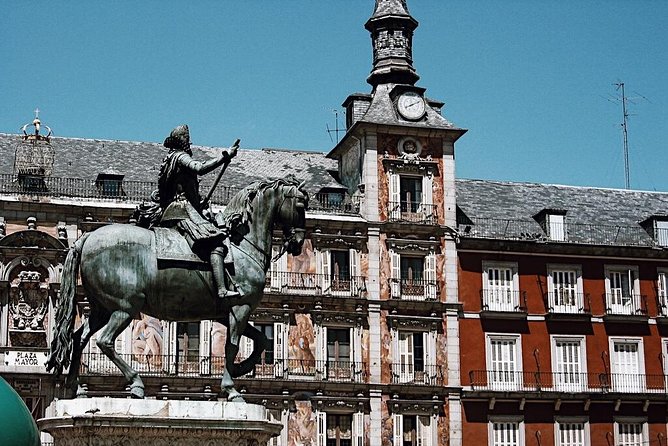
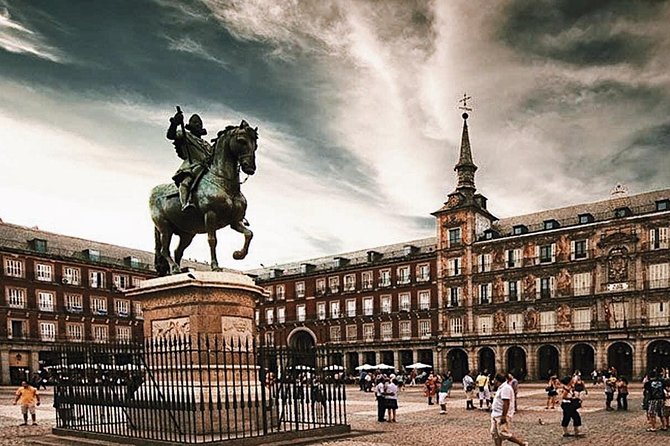
Plaza Mayor was first built during the Habsburg period under Philip III. Its arcaded form made it a major center of old Madrid, and it remains one of the city’s most recognizable public spaces.
The guide can explain how the square fits into Madrid’s political and social life, but keep your expectations measured. The stop is about 10 minutes, and the tour does not include a dedicated interior attraction here. You are getting context, orientation, and a useful first look, not a full architectural study.
Mercado de San Miguel and Madrid’s food culture
Mercado de San Miguel sits beside Plaza Mayor in the center of Madrid. It is known for its historic structure and food from across Spain.
This stop adds a welcome change of subject. After walls, palaces, churches, and medieval streets, you get a practical introduction to the city’s eating culture. The market can also help you decide what kinds of Spanish food you want to seek out later.
The tour does not include food or a formal tasting, so budget separately if you want to eat there. The short visit is best treated as an introduction. If the market interests you, return later when you are not watching the clock.
Food advice is one of the most consistent strengths of the guiding style described for this experience. Guides have discussed local places to eat, drinks, churros and chocolate, and the origins of small Madrid traditions. That kind of information can turn the tour into a useful launchpad for the rest of your stay.
Real Casa de Postas and the final stop at Puerta del Sol
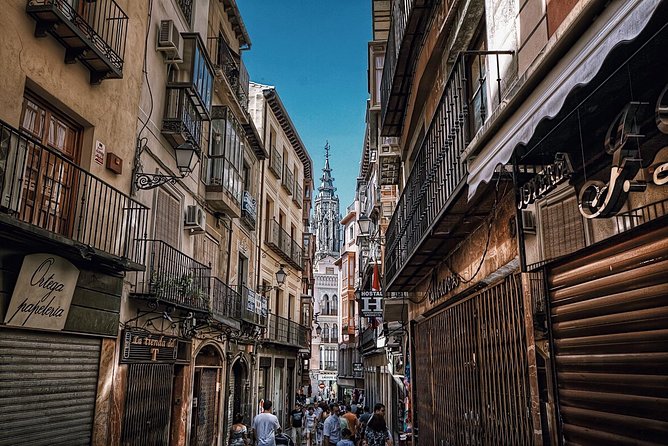
The Real Casa de Postas is a neoclassical administrative building. It once housed telegraph service offices of the National Police force before Madrid’s regional government bought it in 1985.
It is not as famous as the palace or Plaza Mayor, which is precisely why it benefits from a guide’s explanation. Without context, you might walk past it without a second glance. With context, it becomes another marker of how Madrid’s civic functions changed over time.
The final stop is Puerta del Sol, one of Madrid’s central squares. It is the center of Spain’s radial road network and contains the famous clock whose bells mark the traditional eating of the Twelve Grapes at New Year.
Ending here makes practical sense. Puerta del Sol is one of the easiest places from which to continue exploring, and you finish with a better mental map of the old center. You can use what you learned to return to the palace, shop, find a meal, or walk toward another district.
What the guide experience is really like
The strongest part of this tour is not the number of stops. It is the guide’s ability to turn a route into a conversation.
Isabella has been described as interactive and attentive, making an effort to learn names and suggest local places. Sergio has been praised for taking time with explanations and making history easy to follow. Jake is often noted for broad historical knowledge, local familiarity, and the ability to adjust the route in bad weather. Michele has been praised for explaining monuments carefully and adapting to the group’s pace.
Flo brings folklore and food into the walk, while Leti has been described as especially engaging. Alfonso has been praised for detailed explanations that make the past feel more immediate. David has been noted for a good balance between history, neighborhood advice, and a manageable pace.
There is one important qualification. One larger group reported that the guide was hard to hear because no headsets were provided, and the guide sometimes began speaking before everyone had gathered. That problem is less likely in a truly private or very small group, but it is worth staying close to the guide and asking for a repeat if street noise gets in the way.
The experience is described as private or semi-private, and only your group participates in a private booking. Yet group sizes can vary by departure. One report described a group of 12, while several others ended up with only a few people. Ask about the format if personal attention is a priority.
Walking pace, weather, and practical details
The tour lasts about two hours and 30 minutes. You will move between 14 listed locations, with roughly 10 minutes assigned to each stop. That is a fairly full schedule, but the walk is not described as athletic. One guide reportedly included chances to stand and rest, and another adjusted the route to find shelter from rain.
Still, you should wear comfortable shoes. Madrid’s old center includes narrow streets, uneven surfaces, stairs, and crowded public areas. Bring water, a hat in summer, and an umbrella if rain is possible.
The tour operates in all weather. National celebrations can affect the route, especially around major civic sites. In that case, an alternative route is provided so you can still see the main highlights, but refunds or discounts are not offered for the change.
Large bags and suitcases are not allowed. The meeting point is near public transportation, but transportation is not included in the price. You also need to provide a mobile phone number with the country code when booking.
Free cancellation is available if you cancel at least 24 hours before the start time. Changes or cancellations inside that window are not accepted for a refund.
Who should book this Madrid walk?
I would recommend it most strongly to first-time visitors who want a clear introduction before exploring alone. You see the city’s central landmarks, learn how the old districts connect, and finish with useful ideas for food and further sightseeing.
It also suits people who prefer conversation over audio devices or large bus tours. The private and small-group options can make the $56.52 price worthwhile, particularly if you want to ask questions or adjust the pace.
It is less suitable if your main goal is a long interior visit to the Royal Palace, a food tasting, or a detailed architectural tour. Most stops are short, admission fees are separate, and the route prioritizes breadth over extended time at one site.
Should you book the Madrid Old City Guided Walking Tour?
Book it if you want to get your bearings quickly and enjoy history explained by a personable guide. The route is well chosen, the finish at Puerta del Sol is convenient, and the best guides bring in food, legends, recent history, and neighborhood advice instead of reciting dates.
Before paying, confirm whether your departure is private or shared and ask how palace access works if the interior is essential to you. Stay near the guide, wear good shoes, and allow extra time to reach Plaza de la Armería.
For a first visit, this is a practical way to understand old Madrid in one concentrated walk. Just see it as an orientation tour with guided highlights, not a full visit to every attraction on the route.
FAQ
How long does the Madrid Old City walking tour last?
The tour lasts approximately two hours and 30 minutes.
How much does the tour cost?
The listed price is $56.52 per person.
Is the tour offered in English?
Yes. The experience is offered in English.
Is this a private tour?
Private and semi-private options are available. A private booking is for your group only, while group size may vary with other booking formats.
Where does the tour begin?
The meeting point is Plaza de la Armería, Pl. de la Armería, Centro, 28013 Madrid, Spain.
Where does the tour end?
The tour ends at Puerta del Sol in central Madrid.
Is admission to the Royal Palace included?
No. Admission to the Royal Palace of Madrid is not included in the tour price.
Is admission to the Almudena Cathedral museum included?
No. Admission fees for the Museo de la Catedral de la Almudena are not included.
Does the tour operate in bad weather?
Yes. The tour operates in all weather conditions, so you should dress appropriately and bring an umbrella if rain is possible.
Can I bring a large suitcase?
No. Large bags and suitcases are not allowed during the tour. Comfortable shoes, water, a summer hat, and an umbrella in case of rain are recommended.
Just added around Spain
- PREMIUM Quad Tours★ 5.0 · 15 reviews
- Luxury Rewaco Trike “The Fun In The Sun Tour” – (3 hours, Min of 2 Passengers)★ 5.0 · 85 reviews
- Luxury Rewaco Trike “The Photo Blaster Tour” – (2 hours, Min of 2 passengers)★ 5.0 · 52 reviews
- Semi-Private Rioja Tour of 3 Premium Wineries from Bilbao★ 5.0 · 128 reviews
- Bilbao Exclusive Private Walking Tour★ 5.0 · 28 reviews
- Bilbao: Guggenheim Like Never Before: VIP Access. Small Group.Top★ 4.5 · 190 reviews
- VIP Buggy Tour Off Road in Benidorm★ 5.0 · 19 reviews
- Barcelona Sailing Experience: Spanish Tapas and Premium Open Bar★ 4.5 · 34 reviews
Madrid VIP Tours, compared.
Madrid: Royal Palace VIP Tour with Skip-the-Line Ticket
Read our review →
VIP Entrance Ticket to Our Secret Alley in Madrid
Read our review →

Madrid: VIP Prado Exclusive Pre Opening Museum Tour
Read our review →
Madrid: Private VIP Real Madrid Bernabeu Stadium Tour
Read our review →
Private Madrid Bike Tour | Exclusive Guided Tour | From 30€
Read our review →Browse the lists this tour appears in