
Review · TOKYO
Tokyo: Exclusive Access to Sumo Morning Practice with Photos
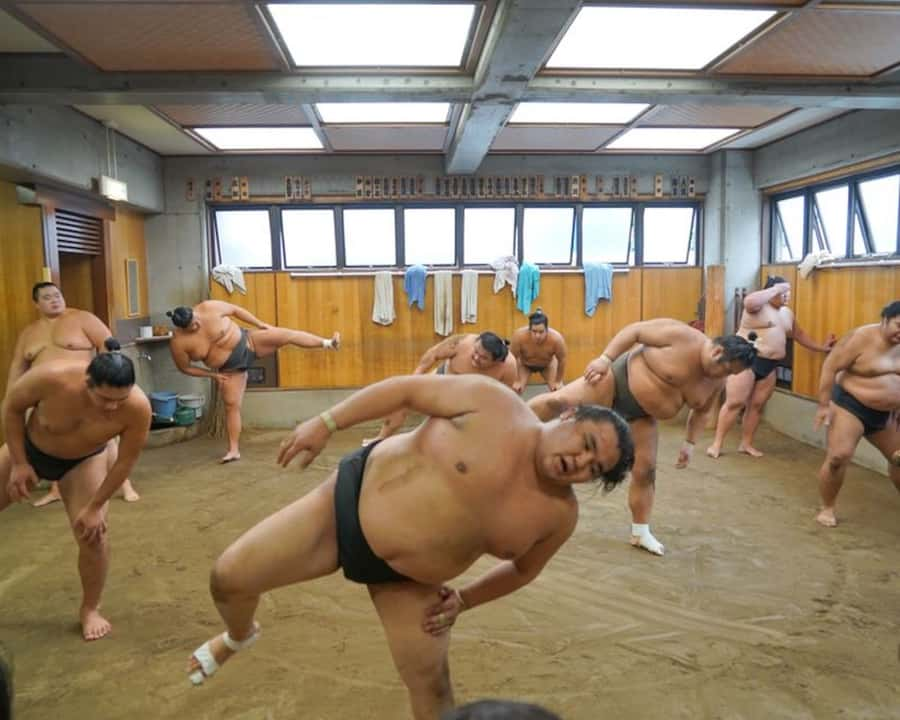
The best part of this $96 Tokyo sumo tour is the distance. You sit on tatami inside a working sumo stable, close enough to watch the wrestlers train without the barrier of a stadium crowd. I like the quiet, serious setting and the small groups of no more than 10 people. I also like the useful explanations about rituals, rules, diet, and stable life, especially when a guide such as Marie, Kazu, Max, or Ken Take leads the visit.
The main drawback is that you cannot control how long the practice lasts. One session finished in less than an hour, while others watched for around 90 minutes. You must also sit on the floor, and photos or conversation with the wrestlers depend on the stable and the morning’s schedule.
Key points to know before booking
- Close-up training: Watch a real practice from inside a sumo stable, not from distant stadium seats.
- Small group setting: The group is limited to 10, though seating is first-come, first-served and may be split.
- Tatami seating: You sit on the floor with no chairs provided, so this matters if your knees or hips are stiff.
- Helpful cultural context: Your English-speaking guide explains sumo rules, rituals, food, training, and stable life with visual cards and quizzes.
- Photos after practice: A photoshoot with the wrestlers is included, but the chance to talk or take pictures can depend on the stable and the wrestlers’ condition.
- Strict timing: Meet at Oshiage Station on time. Late arrivals cannot join or reschedule.
Why this morning practice feels different from a sumo match
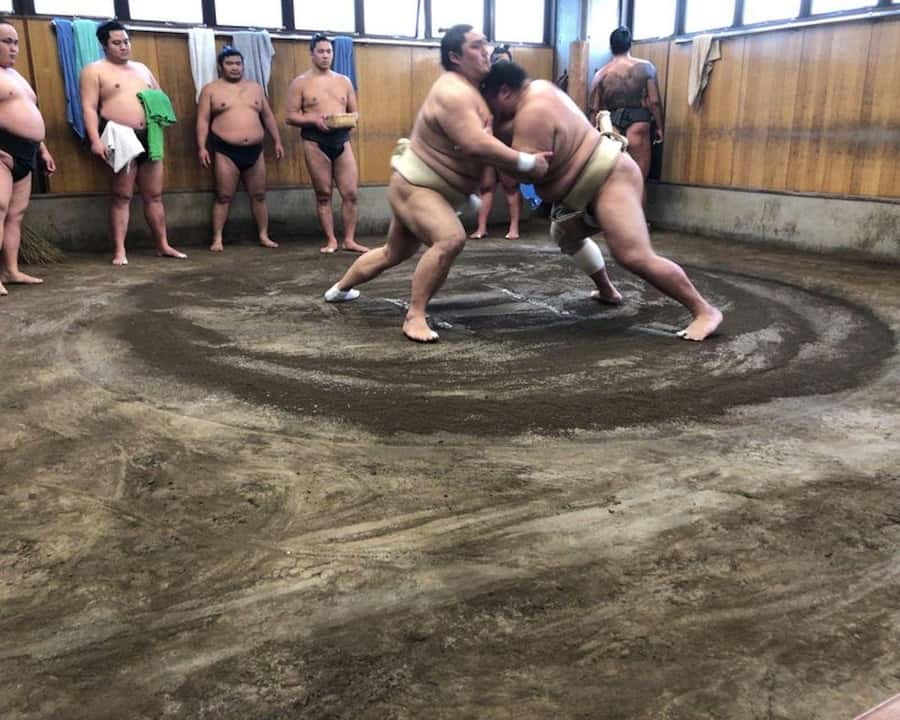
A stadium match gives you ceremony, crowds, bright banners, and the full drama of tournament day. This visit gives you the work behind that spectacle. You watch wrestlers repeat movements, face one another, and train in a room where the focus is practice rather than performance for an audience.
That close setting is the reason to book this activity. At a match, even a good seat may leave you trying to follow the action from a distance. Here, you are near the ring and can see the size, balance, effort, and concentration of the wrestlers at close range.
The atmosphere is not arranged like a stage show. You enter, receive guidance on what to expect, and sit quietly while the practice is already underway or begins around you. That makes the visit feel more like a look into daily sumo life than a standard sightseeing stop.
I especially like that the tour asks you to observe rather than interrupt. Sumo training is the main event. The guide’s job is to help you understand what you are seeing without turning the stable into a noisy classroom.
More Skip-the-Line VIP Tours in Japan:
- Pub Crawl + Unlimited Drinks + VIP entry + Drinking Games & Photographer
★ 5.0 · 1,666 reviews - New Orleans: Cemetery Bus Tour At Dark with Exclusive Access
★ 4.6 · 1,654 reviews - David & Duomo: Accademia & Skip the Line Exclusive Dome Access
★ 5.0 · 690 reviews
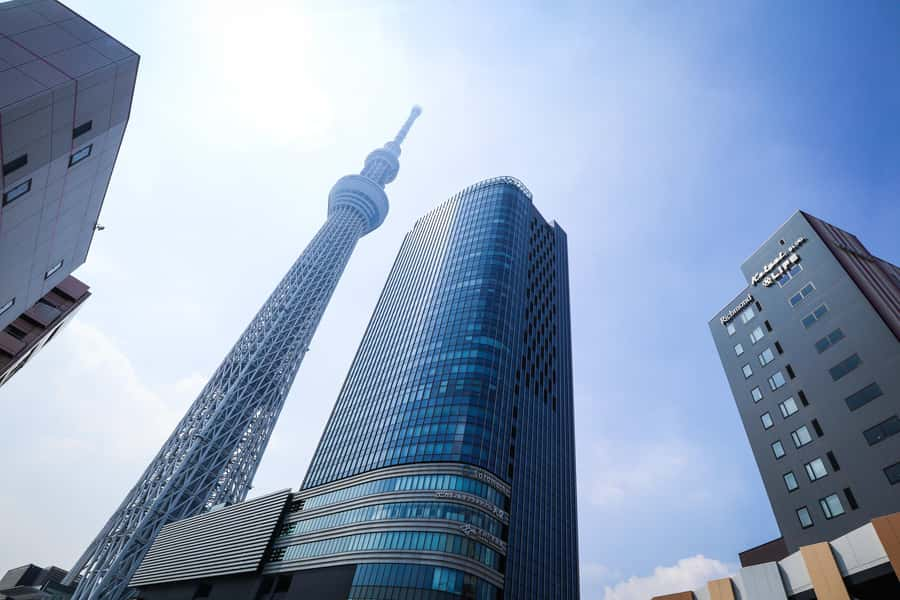
Meeting at Oshiage Station beneath Tokyo Skytree
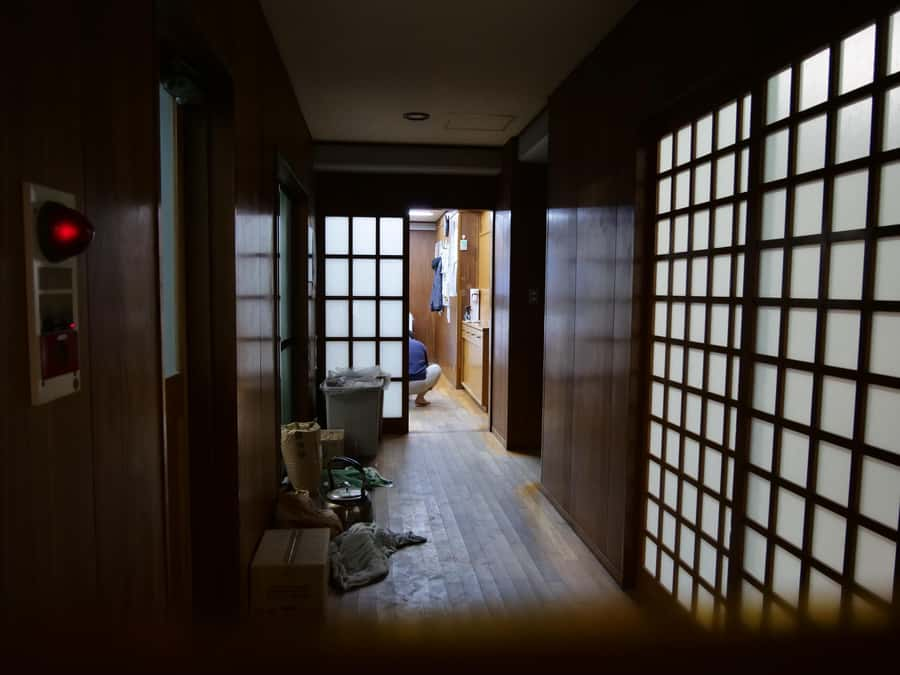
The meeting point is in front of the Oshiage taxi stop, on the ground level outside Exit B3 of Oshiage Station. This detail matters because Exit B3 is not the final meeting location by itself. Once you come up to street level, look for Tokyo Skytree and the signs for Uniqlo, LIFE, and Sizzler.
Your guide will hold a red or orange Magical Trip sign. Allow enough time to find the correct exit and get above ground. The tour starts on time, and a late arrival means you cannot join or move your booking to another time.
Oshiage is a useful starting point because Skytree gives you a clear landmark. Still, I would not cut this close. Tokyo stations can take longer to navigate than their maps suggest, especially if you are carrying luggage or arriving during a busy morning.
From the meeting point, the guide leads the group to the sumo stable. The tour returns to the same taxi stand area after roughly two hours. Transportation details between the station and stable are not specified, so follow the guide’s instructions rather than assuming you will walk the entire way.
Inside the stable, silence becomes part of the experience
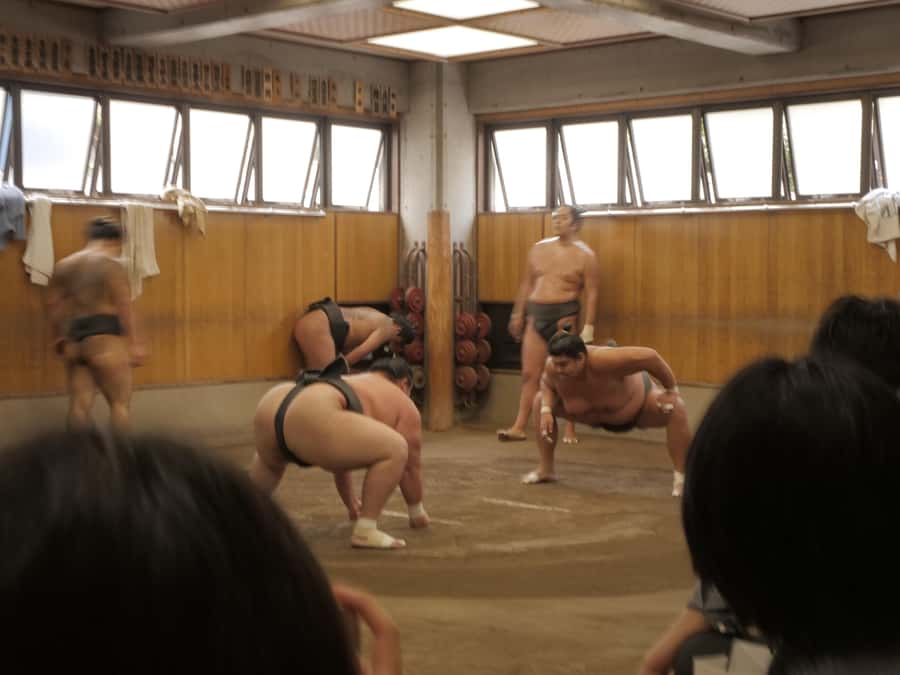
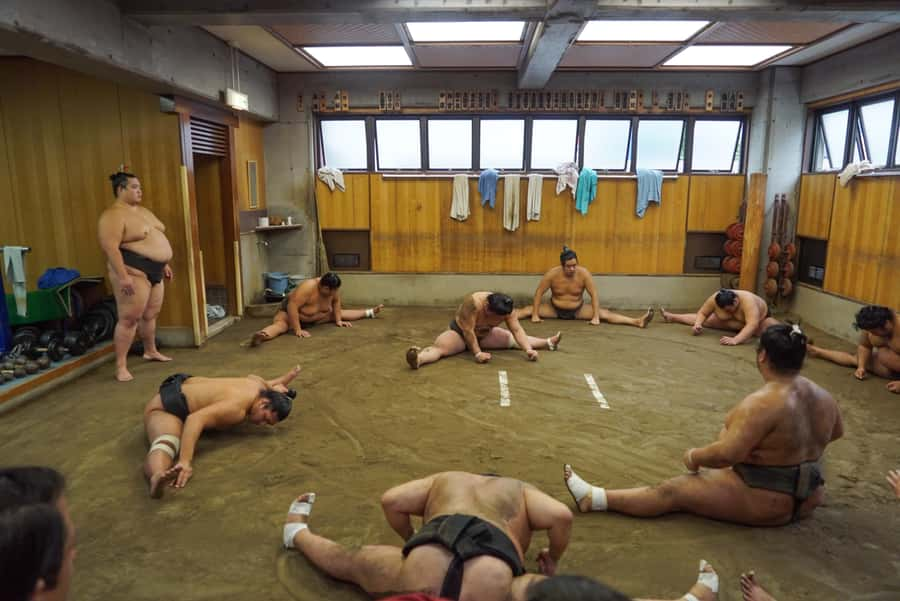
Once inside, you sit on tatami and watch the practice. There are no chairs. You may be seated cross-legged or in another floor position, but you should expect to remain low for much of the session.
That is a small physical challenge, and it is worth taking seriously. One person found that sitting cross-legged made several people’s legs go numb. If your knees, ankles, or hips do not like floor seating, this may be uncomfortable even if you are excited about sumo.
The stable also has its own rules. You must stay in permitted areas, follow instructions, and avoid disruptive behavior. Entering a restricted area or disturbing the practice can lead to removal without a refund. This is a working training space, not a venue designed around tourism.
You can leave early if needed, but you cannot re-enter. There are no restrooms during the tour, so use one before meeting the group. These details are easy to overlook, but they shape how relaxed your morning will feel.
Watching the wrestlers train at close range
The practice itself is the heart of the visit. You see the wrestlers work in a competitive setting, with the physical force and discipline of sumo happening only a short distance away.
The strongest part is the sense of scale. Several people found it striking to see how large and powerful the wrestlers are from such a short distance. You can watch them train without the usual stadium gap, and the experience gives you a better sense of the physical demands behind a bout.
The pace can vary. One morning lasted less than an hour and felt rushed to one person. Other visitors watched for around an hour and a half, arriving while practice was already in full swing. The length depends on the stable’s schedule and the condition of the wrestlers, so do not book this expecting a fixed two-hour practice session.
The advertised duration is two hours for the whole activity, including meeting, travel or access arrangements, explanations, viewing, and the end-of-session photos. The actual wrestling practice may take up only part of that time.
This uncertainty is the main value question. If you want a guaranteed long period of wrestling action, a tournament ticket may suit you better. If you want an intimate look at training and accept that the schedule belongs to the stable, this visit offers something a stadium cannot.
A few more luxury tours around Japan worth a look
- Kyoto:Private Tour/Luxury Vehicle with Guide & photographer
★ 4.8 · 35 reviews - Tokyo: Private Makeover Photography Studio in Luxury Kimono
★ 5.0 · 22 reviews - Paris: Eiffel Tower Premium Photoshoot
★ 4.9 · 425 reviews - Crystal River: VIP Manatee Swim w/ In-water Photographer
★ 4.9 · 184 reviews
What the guide adds to the morning
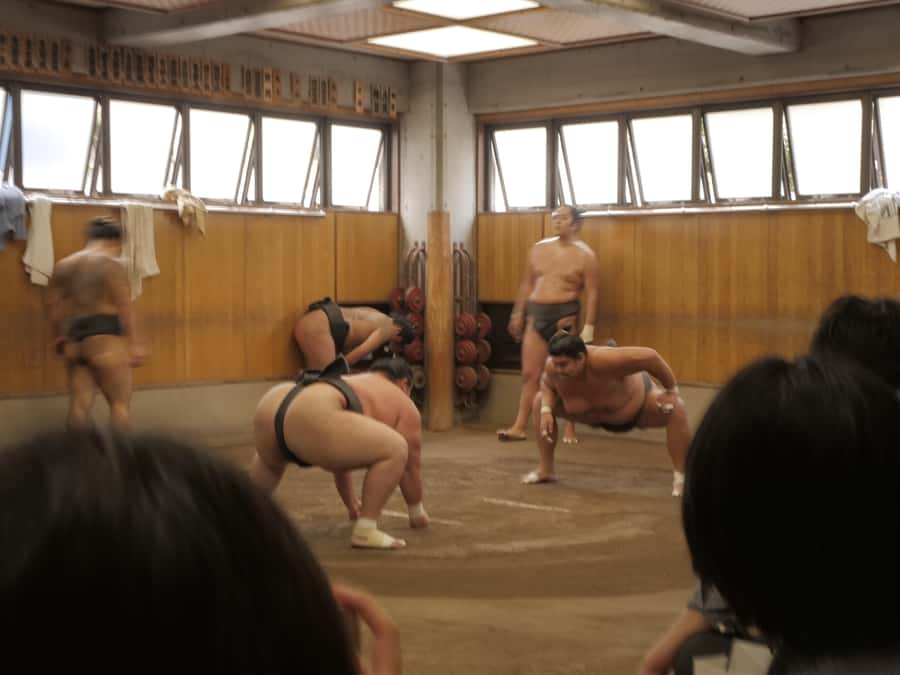
Without context, a sumo practice can look like a series of powerful collisions and repeated movements. The guide helps you understand the purpose behind what you see.
You learn about the rules of a match, the wrestlers’ diet, training routines, rituals, and daily life. Visual cards and quizzes make the explanations easier to follow, particularly if you are new to sumo. The guide also explains what to expect before you enter, then answers questions after the practice.
Guides vary by date. The names connected with particularly strong sessions include Marie, Kazu, Max, and Ken Take. Marie was praised for answering questions about sumo without hesitation, while Kazu explained rituals and the wrestlers’ way of life before and after training. Ken Take was described as friendly and informative during a close-up visit.
The balance between watching and explanation seems to be one of the tour’s strengths. Several people liked having enough information to understand the practice without spending the whole morning listening to a lecture. Still, the depth can depend on the guide and available time. If you want an extensive account of sumo’s past, ask questions during the opportunities provided. The tour is mainly an observation visit, not a full history course.
Photos with the wrestlers after practice
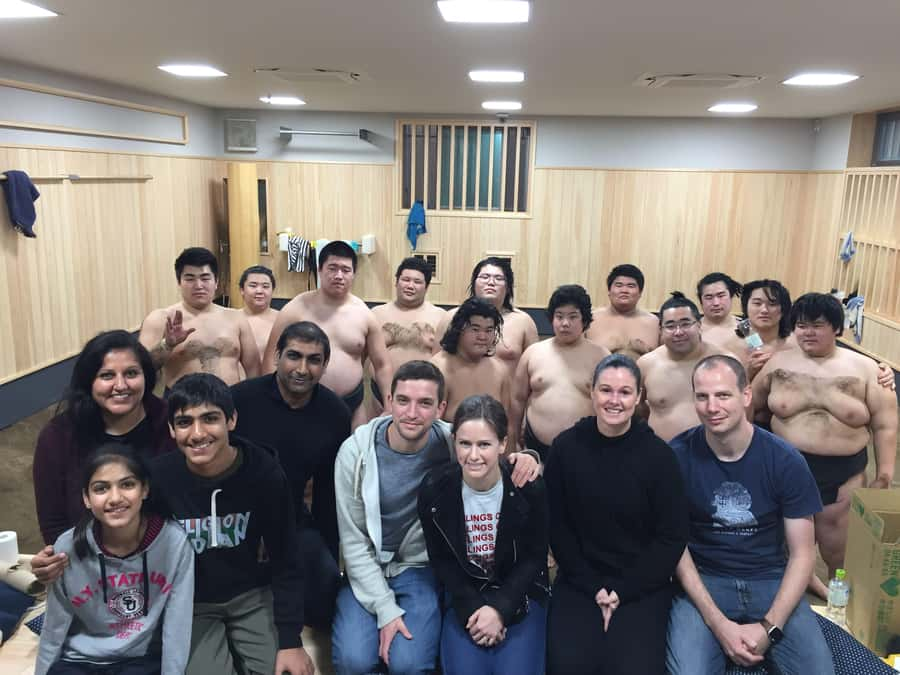
A photoshoot with the sumo wrestlers is included at the end. This can be a memorable finish because you have just watched them train in a serious setting, then may have a brief chance to meet them and take pictures.
Keep the wording carefully in mind: the chance to talk with the wrestlers or take photos can depend on the stable, the wrestlers’ condition, and the rules for that morning. Photography may be limited. The practice comes first, and the stable can change or shorten what is possible.
This is not a meet-and-greet built around long conversations. You should treat the photo opportunity as a possible extra connected to the visit, not as the sole reason to book. The strongest part remains watching the training up close.
The photos can still be useful souvenirs. A few participants specifically appreciated pictures with the coach and team after practice. If you want your own camera or phone available, follow the guide’s instructions about when photography is permitted.
Is $96 a fair price?
At $96 per person, this is not a cheap two-hour sightseeing stop. You are paying for access to a real stable, an English-speaking local guide, a small group, the included sumo guidebook, and the chance of photos with the wrestlers.
The value depends on what you want from sumo. For a first visit to Japan, this gives you a direct encounter with a traditional sport that can otherwise feel hard to access. The small group also matters. A maximum of 10 people is much more manageable than a large crowd when you are sitting inside a working stable.
The price feels less convincing if you expect two full hours of wrestling action or guaranteed conversation with the athletes. Practice may be shortened, and one session lasted less than an hour. You are also paying for the access and setting, not only for the minutes of active training.
I would compare it with the cost and effort of attending a tournament match. A match offers more formal spectacle, but seats close to the ring can be difficult to get. This tour offers less ceremony and more proximity. For someone who values access over pageantry, that trade is sensible.
The Magical Trip Original Sumo Guidebook is included, along with the entry ticket and guide. That material is useful if you want to keep learning after the visit, though the main value is being inside the stable while the practice is happening.
Who will enjoy this, and who may struggle?
I would recommend this for adults and older teenagers who are curious about Japanese culture and want something beyond temples, shopping, and observation decks. It is especially good for a first visit to Japan because the guide gives you a way into a tradition that may otherwise seem difficult to understand.
The minimum age is 12. Children under 12 cannot enter and will be refused without a refund. The activity also suits people who can sit quietly, follow stable rules, and accept an uncertain practice schedule.
You may want to skip it if floor seating is a serious problem, if you need wheelchair or stroller access, or if you dislike fixed start times. Some stables are not wheelchair or stroller accessible, and no chairs are available.
This is also not ideal for someone who wants constant guide commentary or a guaranteed photo session. The experience works best when you are happy to watch, listen, and let the stable set the pace.
Practical ways to prepare for the morning
Dress for the weather, since the meeting and access process may involve time outdoors. Wear clothing that allows comfortable floor seating, and avoid arriving with the expectation that you can change the date or time on the same day.
Use the restroom before the tour. There are no restrooms during the activity, and early exit does not allow re-entry.
Keep your group small in spirit, even if you are traveling with several people. Seating is first-come, first-served, and groups may be split. You may not all sit together inside the stable.
Photography rules can change by stable. Listen carefully before taking pictures and wait for permission around the wrestlers. A quiet, respectful approach is part of getting the most from the visit.
The activity can be canceled or shortened without notice if practice cannot go ahead. If it is canceled, you receive a full refund. For your own planning, avoid placing an important timed attraction immediately afterward.
Cancellation is free up to 24 hours before the start, and you can reserve now and pay later. Those terms help if your Tokyo schedule is still shifting, but same-day changes are not allowed.
Should you book the Tokyo sumo morning practice?
Book it if you want close access to real training, a small group, and practical explanations from an English-speaking guide. The chance to see the wrestlers at work from inside a stable is the part you cannot easily reproduce at a stadium match.
Think twice if you need comfortable chairs, guaranteed practice length, or a long personal meeting with the wrestlers. The schedule belongs to the stable, and the photo opportunity depends on conditions after practice.
For me, the tour makes the most sense as a culture-focused morning for adults and children aged 12 and up. It offers a rare look at the work behind Japan’s most famous traditional sport, provided you accept the floor seating, strict timing, and uncertain practice duration.
FAQ
Where does the sumo tour meet?
Meet at the Oshiage taxi stop on the ground in front of Exit B3 at Oshiage Station. You can see Tokyo Skytree and signs for Uniqlo, LIFE, and Sizzler from the meeting area. The guide holds a red or orange sign marked Magical Trip.
How long does the activity last?
The scheduled duration is two hours. The wrestling practice itself may be shorter or longer within that visit and can be canceled or shortened without notice.
Is the tour conducted in English?
Yes. The tour includes a live English-speaking local guide.
Can children join the tour?
Only children aged 12 and over can join. Children under 12 cannot enter and will be denied participation without a refund.
Do I sit on chairs inside the sumo stable?
No. You sit on tatami, and chairs are not provided. Seating is first-come, first-served, and groups may be split.
Are photos with the sumo wrestlers guaranteed?
A photoshoot with the wrestlers is included, but photography and conversation can depend on the stable, the wrestlers’ condition, and the rules for that day.
More Morning in Japan
- Cu Chi Tunnels Tour from HCM City – Morning or Afternoon
★ 5.0 · 15,833 reviews - Premium Morning Snorkel Sail with Champagne Brunch
★ 4.5 · 2,036 reviews - Deluxe Na Pali Morning Snorkel Tour on the Lucky Lady
★ 4.5 · 1,485 reviews - Luxury Small Group Phi Phi Sunrise from Phuket
★ 5.0 · 1,447 reviews
Just added around Japan
- Tokyo Toyosu Tuna Auction + Breakfast (Sushi Dai or Bentomi)★ 4.8 · 97 reviews
- Tokyo: Rainbow Bridge Day Cruise Show and Only Soft Drinks★ 4.5 · 75 reviews
- Tokyo: WARP SHINJUKU Nightclub Ticket with Drink / VIP Plan★ 4.2 · 55 reviews
- Tokyo: Private Makeover Photography Studio in Luxury Kimono★ 5.0 · 22 reviews
- Osaka Umeda: PICCADILLY DINNER SHOW & NIGHTCLUB with Tasting★ 4.8 · 49 reviews
- Kyoto:Private Tour/Luxury Vehicle with Guide & photographer★ 4.8 · 35 reviews
- Kyoto Day Tour with Certified Tour Guide & Luxury vehicle★ 4.7 · 24 reviews
- From Tokyo/Nagano: Luxury Snow Monkey Private Full-Day Tour★ 4.9 · 82 reviews
Tokyo VIP Tours, compared.
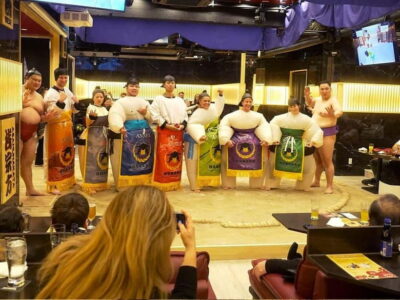
Tokyo:Luxury Sumo Show Experience & Japanese cuisine & Drink
Read our review →
From Tokyo: Mt Fuji Private Day Tour In Luxury Land Cruiser
Read our review →

Tokyo Toyosu Tuna Auction + Breakfast (Sushi Dai or Bentomi)
Read our review →
From Tokyo/Nagano: Luxury Snow Monkey Private Full-Day Tour
Read our review →
Tokyo: Rainbow Bridge Day Cruise Show and Only Soft Drinks
Read our review →
Tokyo: WARP SHINJUKU Nightclub Ticket with Drink / VIP Plan
Read our review →
Browse the lists this tour appears in