
Review · ITALY
Ravenna: Exclusive Private Walking Tour with a Local Expert
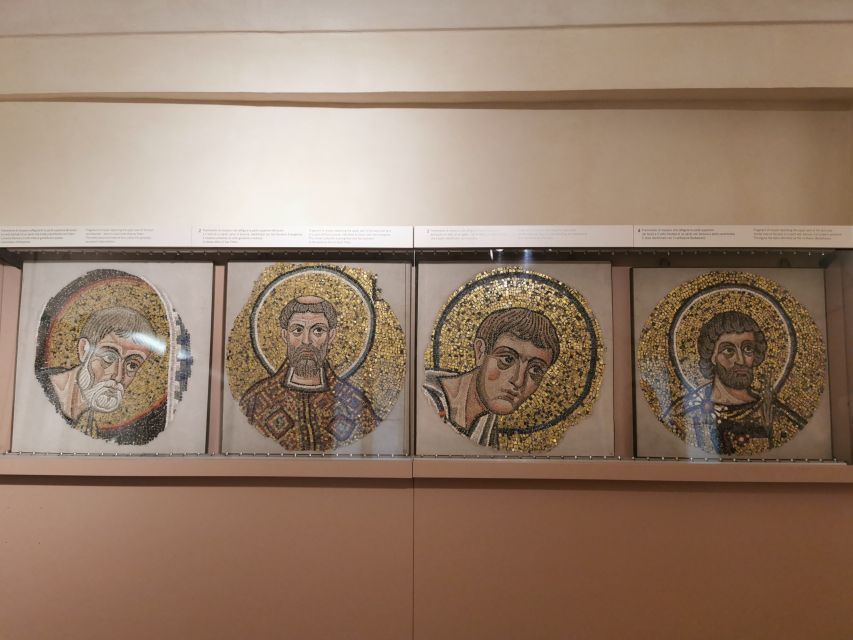
Ravenna saves its best surprises for indoors: golden Byzantine mosaics that turn churches and small chapels into glowing storybooks. This three-hour private walk takes you to four major monuments, with a local guide explaining the people, politics, symbols, and artistic choices behind the pictures.
I like the one-to-one pace, which lets you stop and ask questions instead of trailing behind a large group. I also like the compact route, with only 15 minutes between the first two sites and about five minutes between the others. The main consideration is cost: at $141 per person, plus €12.50 for admission, this is not a budget walk for a solo visitor.
Key points to know before booking
- Four essential mosaic sites: Visit Sant’Apollinare Nuovo, the Mausoleum of Galla Placidia, San Vitale, and the Neonian Baptistery.
- Private attention: Your group has its own guide, with no radio headset or crowded lecture line.
- Strong art-history focus: Guides such as Marta, Chiara, and Giuseppe explain iconography, architecture, politics, and early Christianity.
- A well-sized route: Three hours gives you time to look closely without trying to cover every monument in Ravenna.
- Tickets cost extra: Admission is €12.50 per person, and the guide helps you buy them.
- Easy day-trip format: The tour begins near Sant’Apollinare Nuovo and ends at the Neonian Baptistery, all on foot.
Why Ravenna’s mosaics deserve a guided visit
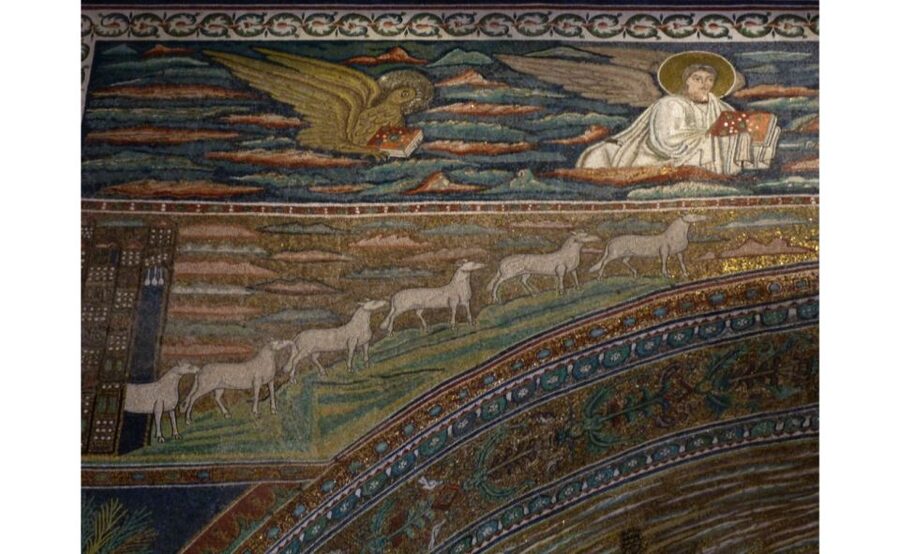
Ravenna is not a city where a quick glance tells the whole story. From floor level, the mosaics can look like beautiful walls covered in small colored tiles. Your guide’s job is to help you read them as art, religious teaching, imperial messaging, and political history all at once.
That matters most in San Vitale, where Justinian and Theodora appear in the apse mosaics with attendants, ceremonial clothing, and carefully chosen objects. A good explanation helps you notice who is included, who is missing, and how the figures communicate power without naturalistic movement.
The guides on this experience are particularly strong on interpretation. Marta is an art historian who has led many of the tours, and her approach combines academic training with an easy conversational style. Chiara has been praised for clear explanations and local stories, while Giuseppe brings strong enthusiasm for Ravenna’s churches, mosaic craft, and connection to the Eastern Roman Empire.
The assigned guide varies, so you cannot book a specific person based on the information provided. Still, the repeated strengths are clear: patient answers, good pacing, and the ability to explain difficult subjects without turning the walk into a lecture.
More Walking Tours in Italy:
- Legends of Florence: Exclusive Walking Tour by night
★ 4.9 · 70 reviews - Florence: Luxury Duomo Cathedral Private Walking Tour
★ 4.0 · 29 reviews - Frida Kahlo VIP [Museum Tickets Included] Walk, Markets & Churros
★ 5.0 · 982 reviews
Sant’Apollinare Nuovo: a long gallery of stories
The tour begins at Basilica di Sant’Apollinare Nuovo on Via di Roma. This is a practical starting point because the building gives you an immediate sense of Ravenna’s scale and artistic ambition.
The basilica was first built as a Palatine Chapel and later became a place of worship. Inside, long mosaic panels run above the nave, presenting scenes from the Old and New Testaments. The effect is less like looking at one isolated masterpiece and more like walking through a carefully arranged sequence of biblical stories.
The Procession of the Magi is one of the key images here. The three wise men move toward the infant Jesus, and their clothing, posture, and placement provide useful clues about how the artists wanted the scene to be understood.
This is a place where a guide earns the fee quickly. Without help, you might see the color and sparkle but miss the order of the panels, the changes in style, or the relationship between religious scenes and the building’s original imperial use.
Give yourself time to look upward. The details are high above eye level, and the nave’s length can make you rush from one end to the other. A private guide can pause the group when something deserves a closer look, instead of following a fixed speech designed for a large crowd.
Galla Placidia: a small room with huge visual force
From Sant’Apollinare Nuovo, you walk about 15 minutes to the Mausoleum of Galla Placidia. This is the longest walking stretch on the route, but it is still short enough to feel like a natural move through central Ravenna rather than a transfer between disconnected sights.
The mausoleum is much smaller than San Vitale, and that change in scale is part of its power. Once inside, the deep blue ceiling and walls create a close, almost enclosed atmosphere. The mosaics seem to press toward you rather than stretching across a huge church.
The Good Shepherd is the major image to look for. Your guide can point out how the figure works as both a religious symbol and a carefully composed image, surrounded by details that reward patient viewing.
This stop may be the most emotionally immediate part of the tour, but it can also be the most demanding for people who dislike enclosed spaces or need longer time for their eyes to adjust. The room is small, and other people may be present. A private tour does not mean the monument is reserved solely for your party.
Still, the guide’s explanation helps you understand why this modest building matters. The mosaics are not simply decorative. Their color, arrangement, and Christian symbols reflect the beliefs and artistic habits of the fifth century.
San Vitale: the tour’s grand centerpiece
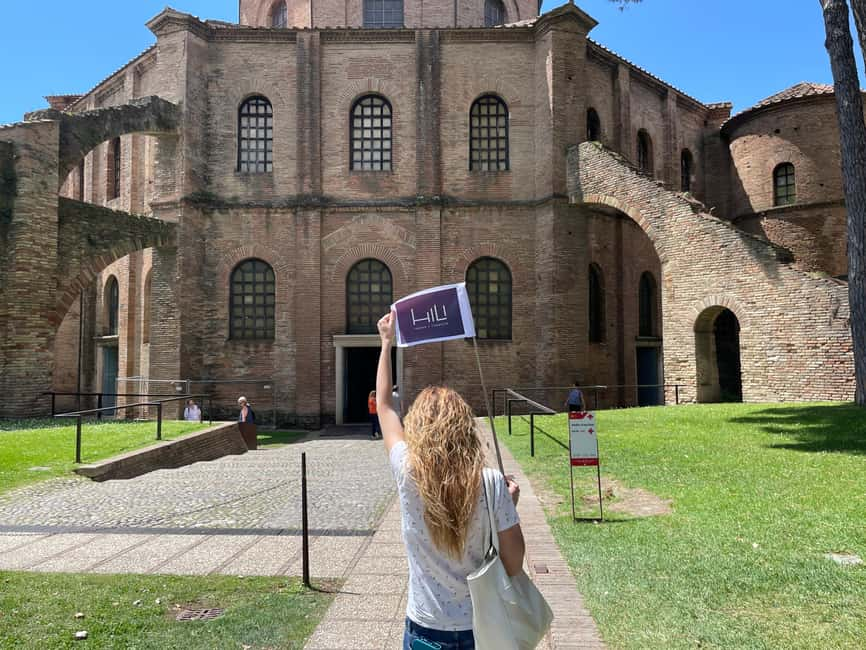
After another five-minute walk, you reach the Basilica of San Vitale. This is the largest and most architecturally complex stop on the route, and for many people it becomes the main reason to visit Ravenna.
San Vitale’s octagonal plan and tall dome make the building feel different from Sant’Apollinare Nuovo. The interior rises around you, while the mosaics gather attention in the apse. The architecture and decoration work together, so your guide will likely move between the building’s shape and the images covering its surfaces.
The mosaics of Emperor Justinian and Empress Theodora are the essential sight. They are famous for good reason, but fame alone does not explain their impact. Look for the formal procession, the rich robes, the attendants, and the objects held by the figures. These details create a portrait of authority and religious duty.
A guide can also explain the political setting behind the images. Ravenna was tied to the Roman and Byzantine worlds, and the church’s decoration reflects more than private devotion. It communicates imperial presence and a particular vision of Christian rule.
This is also where a private format has real value. You can ask why the figures look so still, how the mosaic technique produces the shifting light, or what certain gestures and objects mean. The guide can adapt the depth to your interests instead of delivering only the standard facts.
The possible drawback is sensory overload. San Vitale offers so much to see that three hours can pass quickly. If you try to inspect every figure, border, and architectural detail, you may feel rushed later. I suggest choosing a few themes to follow, such as imperial power, biblical symbolism, or mosaic technique.
A few more luxury tours around Italy worth a look
- From Milan: Como, Lugano and Bellagio Exclusive Boat Cruise
★ 4.8 · 6,635 reviews - Legendary Venice: Doge’s Palace, St Mark’s & VIP Terrace Access
★ 4.5 · 5,033 reviews - From Naples: Exclusive Tour of Amalfi Coast
★ 4.8 · 3,970 reviews - Rome: Colosseum Arena, Roman Forum & Palatine Hill VIP Tour
★ 4.5 · 3,674 reviews
The Neonian Baptistery: a final, focused image
The last stop is the Battistero Neoniano, also called the Baptistery of the Orthodox. It is only about five minutes from San Vitale, and the tour ends here.
The building is known for its early Christian mosaics, especially the ceiling scene of Christ’s baptism. The image centers on an important Christian rite, and the circular composition gives the ceiling a different visual rhythm from the long panels at Sant’Apollinare Nuovo or the formal imperial scenes at San Vitale.
The baptistery is a fitting final stop because it narrows the focus. After the large basilica, you finish with a more concentrated look at religious imagery and the meaning of baptism. Your guide can connect the ceiling mosaic to the broader story of early Christian art covered throughout the walk.
The tour finishes at the baptistery rather than returning to the starting point. That is useful if you want to continue sightseeing from the historic center, but you should note the ending location when planning your next move.
What the private format changes
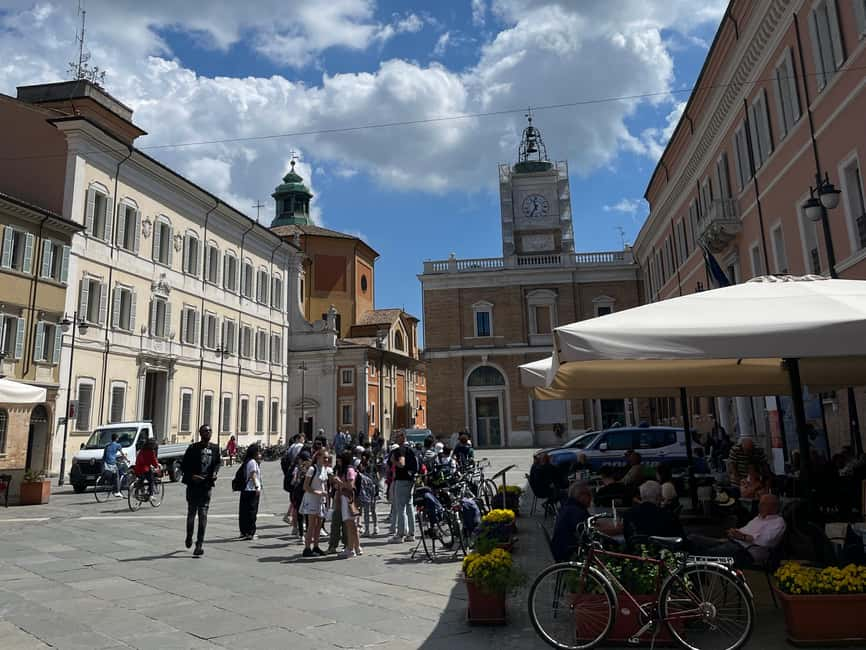
The private setup is not just a smaller version of a standard group tour. It changes how you use the three hours.
You can ask for more explanation about art history, early Christianity, Ravenna’s rulers, or the technical side of mosaic-making. If your group is especially interested in symbolism, the guide can spend more time on iconography. If you prefer a lighter introduction, you can keep the conversation moving.
Several guides have also been praised for making the walk feel personal without losing structure. Marta is described as warm, patient, and able to make historic figures feel like real people. Chiara is noted for mixing precise information with local anecdotes. Giuseppe is particularly associated with explanations of Ravenna’s politics, Byzantine art, and the city’s older monuments.
The absence of a headset can be a plus. You speak directly with the guide instead of listening through a radio system, which makes it easier to interrupt politely with a question. The tradeoff is that you need to stay physically close enough to hear, especially in busy or echoing interiors.
The official group type is private, and the tour is offered in English or Italian. Wheelchair access is listed, though the route includes walking between sites, so it is sensible to confirm the practical details for your particular needs before booking.
Three hours is enough, but only for the essentials
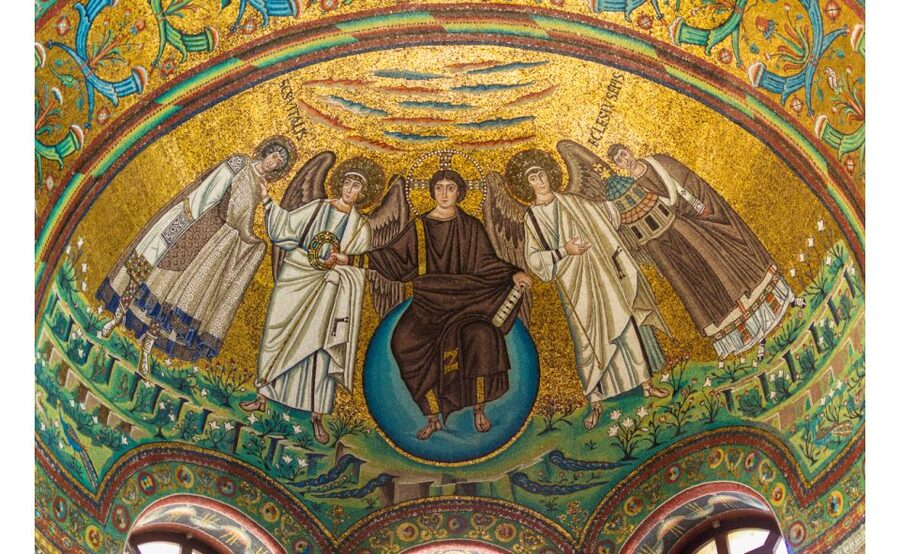
This is a focused introduction, not a complete survey of Ravenna. The city has more churches, museums, mosaics, and connections to famous figures than this route can cover.
That limitation is useful for a first visit. You see four of the most important sites without spending the day moving across town. The route is compact, and the time is long enough for serious explanations without becoming exhausting for most people.
Past experiences also suggest that guides may add small local touches when time allows. One guide took a group through a mosaic workshop, where an artist demonstrated the craft. Other tours included a look at local market specialties, advice about regional pasta, gelato suggestions, or a quick food stop. These extras are not guaranteed, so book this for the four monuments and treat any added stop as a bonus.
The pace matters in warm weather. One August visit was described as well paced with short breaks, and the route has no long transfers. Even so, you should wear comfortable shoes and bring water. The walk is easy in structure, but much of the value comes from standing still and looking upward.
Price, tickets, and overall value
The listed price is $141 per person. Admission is separate at €12.50 per person, with the guide helping you purchase the tickets.
That total makes the tour expensive for one person or a couple compared with a self-guided visit. The value improves as your private group grows, since the guide’s time is shared among your own party. For two people, you are paying for focused instruction and flexibility, not just transport or entry.
I would compare the price to the cost of missing the meaning of the mosaics. If you already have a strong background in Byzantine art and prefer reading on your own, you may decide the admission tickets are enough. If you want to understand why Justinian and Theodora matter, how the biblical scenes are arranged, and how Ravenna connects to the Roman and Byzantine worlds, the guide adds real value.
The tour also offers free cancellation up to 24 hours before the start and a reserve-now, pay-later option. It operates in rain, which is helpful because nearly all of the important viewing happens indoors.
Who should book this Ravenna walk
I would choose this tour for a first visit to Ravenna, especially if you have only one day in town or are coming by train from Bologna. It suits couples, families, and small private groups who want to ask questions and set their own pace.
Art lovers will get the most from it, but you do not need a specialist background. The guides explain the symbols and political setting in accessible terms, then add detail when you show interest.
I would be less likely to recommend it to a solo visitor on a tight budget, since $141 plus admission is a serious outlay. I would also hesitate if your main goal is to see every church in Ravenna, sample food at length, or spend a full day in museums. This route is about four major monuments, presented with care.
Should you book it?
Book this private walk if you want Ravenna’s mosaics to become understandable rather than merely pretty. The strongest feature is the guide’s role: Marta, Chiara, Giuseppe, and other local experts have been praised for clear explanations, art-history skill, flexibility, and a friendly manner.
The tour costs more than entering alone, but it covers the four key sites in a sensible three-hour route and gives you room to ask questions. For a first visit, that is a fair trade, especially if you share the cost with family or friends. If you are content with a guidebook and want the lowest possible price, visit independently. Otherwise, this is a strong way to make sense of Ravenna’s remarkable interiors.
FAQ
How long is the Ravenna private walking tour?
The tour lasts three hours.
Which sites are included?
The route includes Sant’Apollinare Nuovo, the Mausoleum of Galla Placidia, the Basilica of San Vitale, and the Neonian Baptistery.
Where does the tour begin?
The listed starting point is Basilica di Sant’Apollinare Nuovo at Via di Roma, 53. The meeting point may vary depending on the option booked.
Where does the tour finish?
The tour finishes at the Battistero Neoniano, also called the Baptistery of the Orthodox.
How much does the tour cost?
The listed price is $141 per person.
Are admission tickets included?
No. Admission tickets cost €12.50 per person, and the guide assists with the purchase.
Is this a private tour?
Yes. It is offered as a private group experience with your own guide.
What languages are available?
The live tour guide is available in English or Italian.
Is the tour wheelchair accessible?
The activity is listed as wheelchair accessible.
Does the tour operate in rainy weather?
Yes. The tour takes place even in case of rain.
Can I cancel for a full refund?
Yes. You can cancel up to 24 hours in advance for a full refund.
Just added around Italy
- Exclusive Siena and San Gimignano Tour & Chianti Wine Experience★ 5.0 · 19 reviews
- Cinque Terre & Pisa Premium Tour from Florence★ 5.0 · 170 reviews
- From Florence:Tuscany Tuk Tuk with Lunch, Wine & San Gimignano★ 5.0 · 15 reviews
- Exclusive Winery Tour with Tasting and Dinner in Chianti vineyard★ 4.5 · 49 reviews
- Exclusive Cinque Terre by Ferry with stop in Pisa from Florence★ 5.0 · 16 reviews
- Florence: Vip early Timed Entry Ticket Uffizi Gallery★ 5.0 · 34 reviews
- EXCLUSIVE – Wine Tasting near Florence with Castle and Ancient Cellars Tour★ 5.0 · 34 reviews
- Premium Private Tour to Siena, Pisa, San Gimignano and Tuscany★ 5.0 · 143 reviews
Italy VIP Tours, compared.
From Milan: Como, Lugano and Bellagio Exclusive Boat Cruise
Read our review →
Legendary Venice: Doge’s Palace, St Mark’s & VIP Terrace Access
Read our review →
From Naples: Premium Tour of Sorrento, Positano, Amalfi
Read our review →
Sorrento: Exclusive Capri Boat Tour and Optional Blue Grotto
Read our review →
VIP Vatican Breakfast and Guided Tour with Sistine Chapel Access
Read our review →
Colosseum, Roman Forum & Palatine Hill Guided Tour
Read our review →
Florence: Premium Pizza & Gelato Preparation Class with Wine
Read our review →Browse the lists this tour appears in