
Review · NEW YORK CITY
“The Met” Metropolitan Museum of Art Exclusive Guided Tour
The Metropolitan Museum of Art is too large for casual wandering. This 150-minute guided tour gives you a clear route through its Great Hall, medieval galleries, American rooms, and European paintings, with enough context to make the art easier to understand. You may hear lively stories from guides such as Mark, Robin, Katherine, or Rob, depending on the date and option you book.
I like the way the tour connects the museum’s building to its collection, including the story of an American institution that began before the United States was 100 years old. I also like the small-group or private format, which gives you a better chance to ask questions instead of trailing behind a guide giving a fixed speech.
The main consideration is time. Two and a half hours is enough for major highlights, not enough for two million works. The tour involves a moderate amount of walking, large bags are forbidden, and temporary exhibitions are not included.
Key points to know before you book
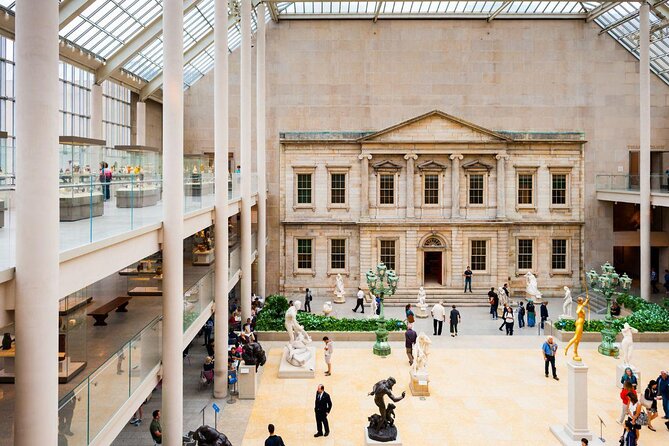
- The Great Hall sets the scene: Begin with The Met’s grand entrance before moving into selected galleries.
- The route crosses centuries: Expect ancient Greece and Egypt, medieval Europe, American art, and major European painters.
- Guides shape the experience: Mark, Robin, Katherine, Rob, and others are praised for warmth, humor, strong art knowledge, and adapting to different ages.
- Small groups matter: A maximum of 10 people makes questions and conversation more realistic than on a large coach tour.
- Skip the ticket line: Entrance is included, but temporary exhibitions are not.
- Plan for walking: Wear comfortable shoes, bring weather-appropriate clothing, and leave suitcases and large bags elsewhere.
Why The Met benefits from a guided route
The Met is not a tidy row of rooms where you can simply follow one chronological path. Its enormous collection covers ancient objects, decorative arts, paintings, sculpture, armor, American design, and much more. Without a plan, you can spend an hour finding your way and still miss the rooms you most wanted to see.
This tour gives you a route and a human filter. Your English-speaking art historian selects important works, explains why they matter, and adds the sort of background that labels often leave out. The guide may connect a painting to the artist’s life, explain how a room was assembled, or point out an architectural detail you would otherwise walk past.
I find that especially useful at The Met because the museum can feel like several museums under one roof. Ancient Egypt requires a different kind of attention from a Vermeer painting. The American wing tells a different story from the medieval armory. A good guide helps you change gears.
The experience is described as private or small-group, with no more than 10 people. That limit is important. You can ask why a particular object matters, request more time in a favorite section, or tell the guide that your children need a different pace. The format is less about receiving a lecture and more about having a conversation while you move.
More Museum Visits in New York City:
- “The Met” Metropolitan Museum of Art Exclusive Guided Tour
★ 5.0 · 863 reviews - Louvre Museum – Exclusive Guided Tour (Entry Included)
★ 5.0 · 6,296 reviews - Van Gogh Museum Amsterdam Exclusive Tour w/ Reserved Entry
★ 5.0 · 1,760 reviews
Starting beneath the Great Hall
The Great Hall is a fitting beginning. It gives you an immediate sense of the museum’s scale, ambition, and public character. Your guide also uses the building itself as part of the story, explaining how The Met developed and how later additions changed the visitor experience.
The museum is not just a container for art. Its courtyards, facades, staircases, and galleries tell you how New York wanted to present culture to the public. The tour draws attention to those layers, including the way different parts of the building meet around the museum’s atriums.
That architectural introduction is practical as well as interesting. Once you understand the general layout, the museum becomes less confusing. You gain a mental map that can help if you return later for a longer visit.
Do not expect a full architectural tour. The building history supports the art route rather than replacing it. The guide has only 150 minutes, so the focus remains on selected highlights.
Ancient Greece, Egypt, and the scale of the collection
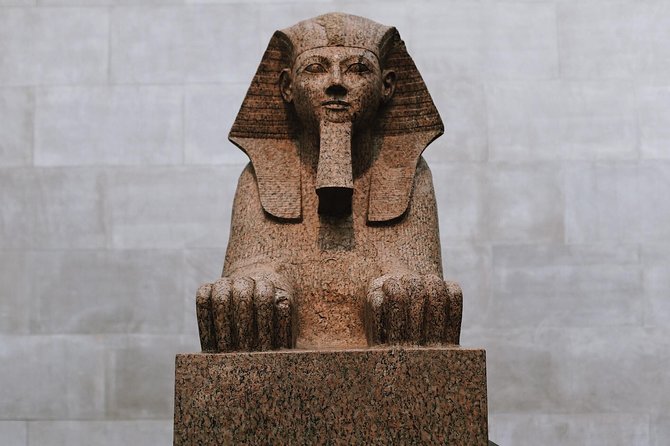
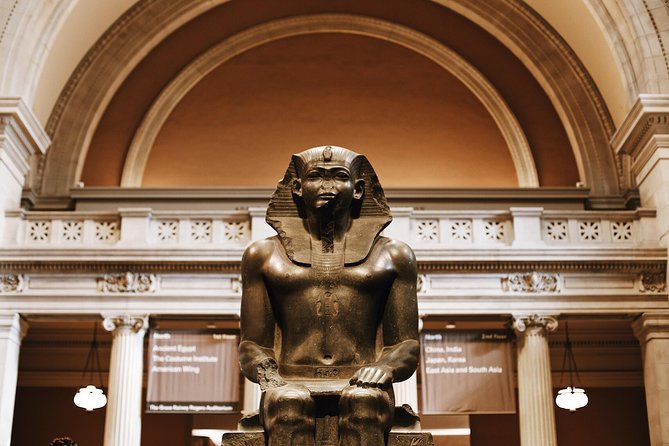
The Met’s ancient galleries show why this museum can overwhelm first-time visitors. Objects from Ancient Greece and Egypt represent long stretches of time and very different cultures, artistic aims, and religious beliefs.
The tour will not cover every case, nor should it try. Instead, your guide can give you a way to look at the objects. You might learn how an artifact was made, what role it served, or what its survival tells us about the society that produced it.
This is where a live guide adds real value for families and first-time art museum visitors. A child may not care about a date on a label, but a story about how an object was used can make the room feel less remote. Several guides are praised for keeping children engaged, and the conversational format gives you a chance to ask for explanations in plain language.
The practical catch is that these sections can be absorbing enough to slow you down. If ancient art is your main interest, tell your guide early. The private option is the better choice if you want to spend more time in one period rather than follow a broad highlight route.
Medieval Europe and the armor of Henry VIII

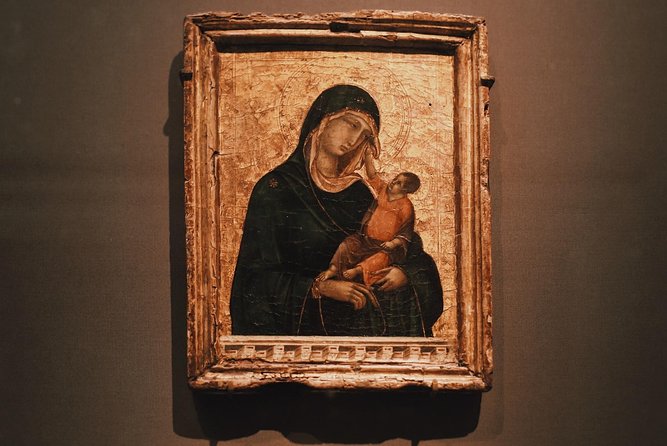
The medieval section adds a change of mood. Here, you encounter objects linked to ceremony, power, religion, and warfare. The Studiolo from the Ducal Palace is one of the featured highlights, along with armor worn by Henry VIII.
The Studiolo is especially useful for understanding how an elite European ruler surrounded himself with art and ideas. It is not simply a pretty room. Its design reflects status, learning, collecting, and the way powerful people used interiors to shape their public image.
The armor brings the period down to a more physical level. Looking at armor associated with Henry VIII helps you think about the body, movement, battle, and royal display. It also offers a memorable contrast to the paintings and sculptures elsewhere in the museum.
A guide can make this section accessible even if medieval art is not your usual interest. You may get stories about the people connected with the objects, along with details that help you notice construction and decoration. The galleries can also be popular, so your guide’s ability to move a small group through crowded rooms matters.
A few more luxury tours around New York City worth a look
- NYC: Gray Line Guided 5 Hour Manhattan Premium Bus Tour
★ 4.1 · 20 reviews - Acropolis: Premium Acropolis and Parthenon Guided Tour
★ 4.8 · 5,208 reviews - Guided Luxury Paris Day Trip with Optional Lunch at the Eiffel Tower
★ 4.5 · 2,702 reviews - Great Ocean Road Tour w/ Deluxe Minibus & Top-Rated Guide
★ 4.8 · 2,644 reviews
American art and the story of a young nation
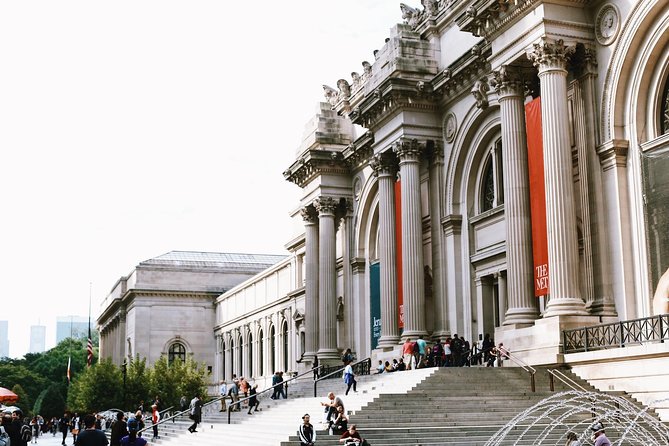
The American wing gives the tour a useful change in perspective. The Met’s American collection began before the United States had reached its first century, so the galleries reflect a country still working out its identity and cultural voice.
Two featured stops are the staircase from the Chicago Stock Exchange and the famous portrait of Washington crossing the Delaware River. These are very different objects. One shows how American architecture and design could turn a functional building element into art. The other presents a dramatic version of national memory.
The important point is not simply that these are famous pieces. Your guide can help you ask why they became important, what kind of country they were meant to represent, and how American art differs from older European traditions.
That comparison is one of the tour’s most useful threads. American artists borrowed from Europe, but they were also responding to local politics, expansion, commerce, and national symbols. The American galleries make more sense when you see them as part of a young country’s effort to define itself.
If you have a particular interest in American painting, architecture, or decorative arts, mention it when you meet your guide. The private option offers the best chance of adjusting the route around your priorities.
Vermeer, Seurat, Van Gogh, and European painting
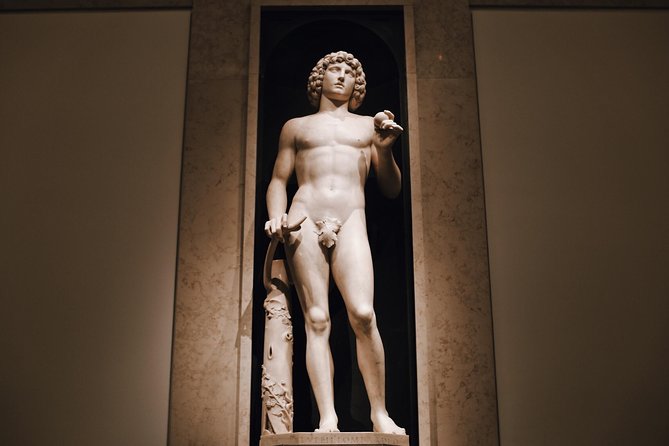
The European galleries contain some of the names most visitors hope to see, including Vermeer, Seurat, and Van Gogh. The tour uses these artists not only as famous stops, but also as a way to discuss changing styles, personal lives, and the pressures artists faced.
Vermeer rewards close looking. His paintings can appear calm and simple at first, yet small choices of light, space, and gesture carry much of the meaning. A guide can help you slow down long enough to notice those choices.
Seurat brings a very different problem to the eye. His carefully built marks and color system ask you to consider how a painting changes when viewed close up and from a distance. A short explanation can make what might seem like a strange technique feel deliberate and exciting.
Van Gogh offers a strong human story as well as a visual one. The tour presents the turbulent and inspiring lives of European painters, helping you connect artistic decisions with the conditions in which the artists worked. Be careful not to expect a full biography of each painter. The guide must keep moving across a large museum.
This is one reason the guide’s personal approach matters. A strong guide can tell you which detail deserves your attention, then step back and let you look. The best moments are not necessarily the longest stops. They are the ones that change how you see a painting.
A tour style built around conversation
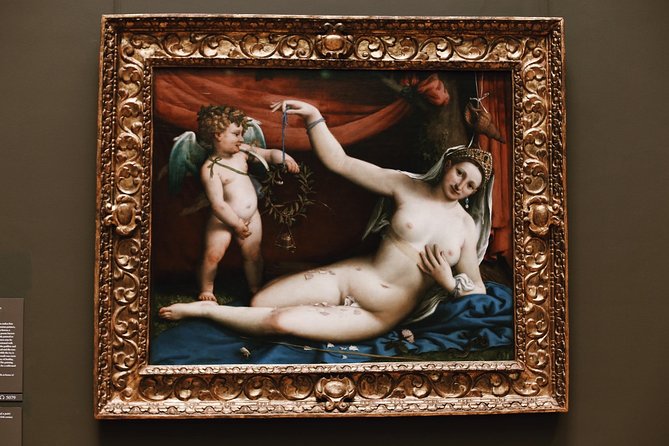
The tour is designed to avoid a one-way speech. Your guide is expected to answer questions, listen to your interests, and add personal anecdotes. That matters at The Met because visitors arrive with very different levels of art experience.
You do not need to know art history before you arrive. The tour can work for someone who loves museums, but it also suits the reluctant visitor who normally feels lost in front of paintings. One guide, Mark, is praised for helping someone who did not think they appreciated art begin to see the collection differently.
That is a useful test. A tour should not make you feel foolish for asking basic questions. It should explain why a work matters without burying you under technical terms.
The guides also appear comfortable with mixed-age groups. Families have found that children stayed engaged, while other guests valued the ability to adapt commentary to different ages. If you are traveling with children, tell the guide what usually holds their attention. The more information you give at the start, the more useful the conversation can be.
Several guides are singled out for distinct strengths. Mark is described as warm, energetic, and funny. Robin is praised for clear explanations, broad museum knowledge, and handling crowded rooms. Katherine is noted for shaping the route around personal interests. Rob is described as personable and original in his approach. These names are not guaranteed for every departure, but they show the kind of guide style you may encounter.
What $132 means in practical terms
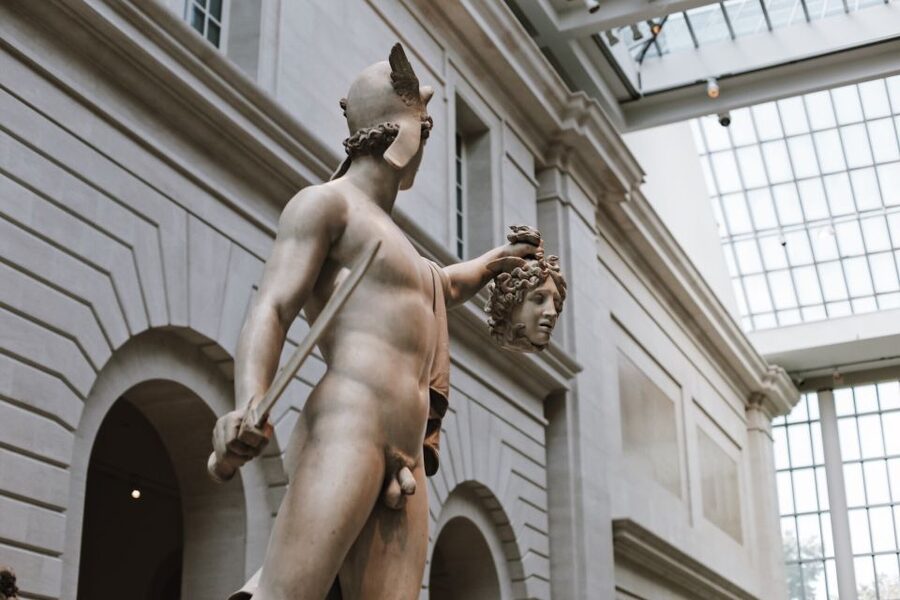
At $132 per person, this is not a cheap museum visit. The price includes entrance, a 2.5-hour guided tour, and a professional art historian. It does not include food, drinks, hotel pickup, drop-off, or temporary exhibitions.
The value depends on how you use your New York time. If you are happy to wander for several hours, read labels, and find your own way, the price may not suit you. If you have one visit, limited energy, or little interest in planning a route through a huge building, the guide can save substantial time and frustration.
The skip-the-ticket-line benefit adds practical value, though it does not mean every room will be quiet or uncrowded. The museum can still be busy, and your route may slow around popular works.
A small group makes the cost easier to justify than a large general tour. You are paying for access to the collection plus interpretation, questions, and direction. The private option costs more in many booking setups, but it is the clearest choice for families, art specialists, or anyone needing a wheelchair-friendly arrangement.
Temporary exhibitions are not included, so check your priorities before booking. If a special show is the main reason you want to visit, you will need to arrange that separately.
Timing, meeting point, and what to bring
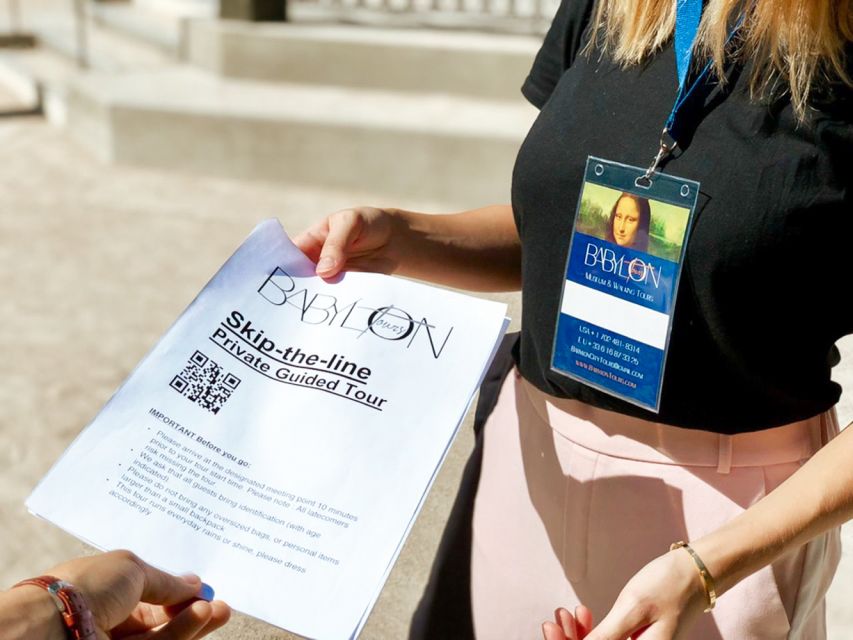
The tour runs daily, but starting times depend on availability. The meeting point can vary by the option you book, so read your confirmation carefully rather than assuming every group meets in the same place.
The museum route involves a moderate amount of walking. Wear comfortable shoes and dress for the weather, since you may be outside before entering or moving through parts of the building. A bottle of water, umbrella, and summer hat are sensible additions.
Do not bring a suitcase or large bag. Large luggage is not allowed. You should also carry a passport or other identification, as requested in the tour instructions.
The tour operates in all weather. National celebrations can affect the route, but an alternative path will still include the tour’s highlights. There is no refund or discount when this happens.
Security measures can also limit access to some areas. These rules are outside the guide’s control, so keep your expectations flexible.
Cancellation is free up to 24 hours before the tour for a full refund, and you can reserve now and pay later. Those terms are helpful if your New York schedule is still shifting.
Who should book this Met tour
I would choose this tour if you have never visited The Met and want a strong first orientation. It also suits you if you want major highlights without spending half the day working out where to go.
Families can benefit from the stories and flexible conversation. The tour is also a good match for couples or friends with different levels of interest in art, since the guide can explain works in accessible language without making the visit feel shallow.
Private booking makes the most sense if you want a route built around one collection, need a slower pace, or are traveling with a group that wants to stay together. Wheelchair-friendly tours are available only with the private option, so confirm that arrangement before booking. The general information lists wheelchair users as unsuitable, which makes the private format essential for accessible planning.
You might skip this experience if you prefer solitary museum visits, want to spend hours in one gallery, or mainly care about temporary exhibitions. A guided highlight route cannot replace the freedom of returning to a painting for as long as you wish.
Should you book The Met Exclusive Guided Tour?
Book it if The Met feels too large to tackle alone, or if you want art explained through stories rather than labels. The strongest reasons are the focused route, small group size, skip-the-line entry, and guides who can adjust their approach to adults, children, and different levels of interest.
At $132, the tour is best viewed as a time-saving orientation rather than a bargain admission ticket. You will not see all two million works, and temporary shows cost extra. But you should leave with a clear sense of the museum, a useful list of rooms to revisit, and enough context to look at the collection with more confidence.
FAQ
How long does The Met guided tour last?
The tour lasts 150 minutes, or 2.5 hours.
What does the price include?
The price includes museum entrance, the guided tour, and a professional English-speaking art historian guide. Food, drinks, hotel pickup, drop-off, and temporary exhibitions are not included.
How many people can join a tour?
A maximum of 10 people is allowed per tour. Private and small-group options are available.
Which parts of The Met does the tour visit?
The route begins in the Great Hall and includes selected highlights from medieval Europe, the American wing, and the European galleries. It also covers art and artifacts from areas such as Ancient Greece and Egypt.
Can I bring a large bag or suitcase?
No. Large bags and luggage are not allowed. Comfortable shoes, weather-appropriate clothing, water, and an umbrella are recommended.
Is the tour wheelchair accessible?
Wheelchair-friendly tours are available only with the private option. The general tour information lists the experience as unsuitable for wheelchair users, so you should confirm the private arrangement before booking.
Just added around New York City
- NYC: VIP Rockefeller Center Tour with Observation Deck Entry★ 4.9 · 15 reviews
- NYC: Private Luxury Tour of NYC With Transportation★ 4.7 · 231 reviews
- NYC: Half-Day Luxury Bus Tour of Top Highlights★ 4.8 · 281 reviews
- NYC: Dyker Heights and NYC Holiday Lights Luxury Bus Tour★ 4.3 · 42 reviews
- New York City: Bustronome Gourmet Lunch Tour on a Luxury Bus★ 4.5 · 20 reviews
- NYC: Gray Line Guided 5 Hour Manhattan Premium Bus Tour★ 4.1 · 20 reviews
- From Manhattan: 4-Hour Christmas Lights Luxury Bus Tour★ 4.5 · 222 reviews
- NYC at Night: 3-Hour Luxury Bus Tour of Top Highlights★ 4.5 · 448 reviews
New York City VIP Tours, compared.

Carriage Ride in Central Park (VIP – PRIVATE) Since 1964™
Read our review →
NYC: City Cruises Luxury Brunch, Lunch or Dinner Cruise
Read our review →
“The Met” Metropolitan Museum of Art Exclusive Guided Tour
Read our review →
NYC: Woodbury Common Premium Outlets Shopping Round Trip Service
Read our review →
Manhattan: Statue and Skyline Cruise Aboard a Luxury Yacht
Read our review →
Private Luxury Tour of NYC With Transportation
Read our review →
NYC at Night: 3-Hour Luxury Bus Tour of Top Highlights
Read our review →
NYC: Half-Day Luxury Bus Tour of Top Highlights
Read our review →Browse the lists this tour appears in