
Review · FEZ
Majestic Desert: 3-Day Luxury Journey from Marrakech to Fes
The biggest draw here is the sheer change of scenery in three days. You leave Marrakech over the High Atlas, pass ancient kasbahs and palm oases, sleep beside the Erg Chebbi dunes, then cross the Middle Atlas to Fes. It is a grand sampler of southern Morocco, not a slow holiday.
I especially like the sunset and sunrise camel rides, which give you two very different views of the dunes. I also like the human touch: guides such as Omar, Ali, Zohair, and Mohamed el Qayed are repeatedly praised for humor, care, and practical help. The catch is simple: you will spend many hours in the vehicle, including about seven hours on the final day.
Key points at a glance
- Ride camels at sunset and sunrise: Cross the golden Merzouga dunes twice, with the best light of the day.
- Sleep in a desert camp: The deluxe option can include a private bathroom and shower, though winter nights may be very cold.
- See Ait Ben Haddou and Ouarzazate: Combine a famous UNESCO site with Morocco’s film-country scenery.
- Walk through Todra Valley: A 40-minute to one-hour local walk includes the gorge, village life, and handmade carpets.
- Cross three mountain regions: Travel over the High Atlas, through the Ziz Valley, and into the cedar forests near Azrou.
- Pay $138 for a great route, with tradeoffs: Meals, drinks, and the Ait Ben Haddou guide cost extra, and comfort depends on the group vehicle.
The long road from Marrakech to Fes
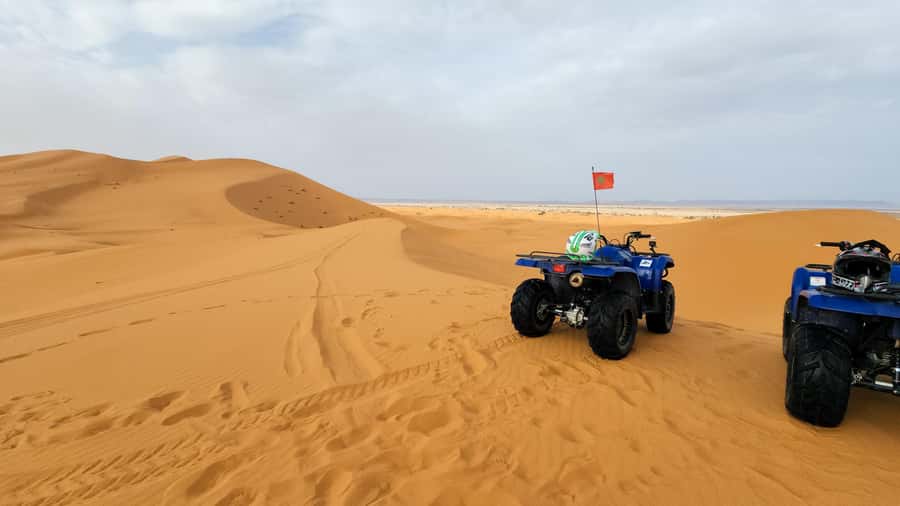
This 60-hour trip is best understood as a moving tour with two major rewards: the desert night and the huge variety of Moroccan scenery along the way. You are not simply transferring between two cities. You are crossing mountain passes, oasis country, canyon country, and desert.
The advertised price of $138 per person is strong value for the distance covered. Transport, fuel, tolls, a driver-guide, one hotel night, breakfasts, dinners, the desert camp, camel rides, and sandboarding are included. You still need to budget for lunches, drinks, and a small guide fee at Ait Ben Haddou, listed at about €2 per person.
That low price also tells you what kind of trip this is. It is efficient rather than leisurely. You will stop often for food, toilets, photos, and points of interest, but you will not have hours to wander every town. If you want to see a great deal between Marrakech and Fes, this works well. If you want long mornings beside a pool, choose a slower trip.
Pickup is around 7:30 in the morning from central Marrakech. Medina lanes may be too narrow for the vehicle, so you can be assigned a nearby meeting point. Give the operator your riad or hotel name and keep a working WhatsApp number with the country code handy for final pickup instructions.
A few more luxury tours around Fez worth a look
- 3 Days merzouga desert luxury camp from Fes to Marrakech
★ 5.0 · 166 reviews - 3-Day Luxury/Budget Desert Tour to Marrakech via Merouga from Fez
★ 4.5 · 151 reviews - From Fes: 3-Day Luxury Desert Tour to Marrakech via Merzouga
★ 4.8 · 124 reviews
Day one: High Atlas passes and Ait Ben Haddou
The first morning takes you up toward the Tizi n’Tichka pass, the famous road across the High Atlas Mountains. The route is a fine reminder that Morocco is not one-note desert country. You begin among city streets and soon reach high mountain scenery, steep slopes, and broad views.
The road is winding, so your seat matters. One person specifically found the raised back seat tight for long legs, then was happier after changing places on later days. If you are tall, ask about seating early and avoid assuming every seat will feel the same.
Ait Ben Haddou is the day’s major cultural stop. This fortified settlement of earthen buildings has been recognized by UNESCO and is one of Morocco’s best-known sights. Its red-brown walls and towers are especially striking against the dry hills. It has also appeared in major film productions, which explains Ouarzazate’s nickname, the Hollywood of Africa.
A local guide at Ait Ben Haddou is not included. The stated cost is about €2 per person, a small extra that can help you understand the buildings, lanes, and former trading role of the site. Without that guide, you can still walk around, but the place makes more sense when someone points out how the settlement was built and used.
After Ouarzazate, the road reaches Skoura Oasis. Palm groves bring a sudden band of green to the dry surroundings, while old kasbahs appear along the route. This contrast is one of the trip’s pleasures: water shapes the whole region, and the oasis shows how farming and settlement survive in an arid climate.
The day ends in Dades Valley after about five hours and 35 minutes of driving. You spend the night in a local guesthouse or hotel with an air-conditioned room and private bathroom. The accommodations have generally exceeded expectations, but do not expect a luxury resort standard on this first night. The appeal is the setting and the chance to rest before the desert leg.
Day two: Todra Gorge and the road to Merzouga
Day two begins with the Dades Valley’s red cliffs and quiet morning air. You then head toward Todra Gorge, one of southern Morocco’s most dramatic natural sights. Tall rock walls close around the road and walking area, giving the stop a very different feel from the open desert.
The included Todra Valley walk lasts about 40 minutes to an hour and comes with a local guide. You can expect natural scenery, views of the gorge, and a look at traditional handmade carpets. This is more than a quick photo stop, but it is still a short introduction rather than a full hike.
The local guiding can vary by language and pace. Spanish, English, and French are offered on the main tour, yet one group found a Todra guide slow and difficult to understand in a mixed-language group. If clear explanation matters to you, ask your main guide to clarify anything you miss.
After the gorge, the route passes Berber villages and changing mountain scenery before reaching Merzouga. The shift is gradual. Rocky slopes give way to wider, emptier ground, and then the sand dunes begin to dominate the view.
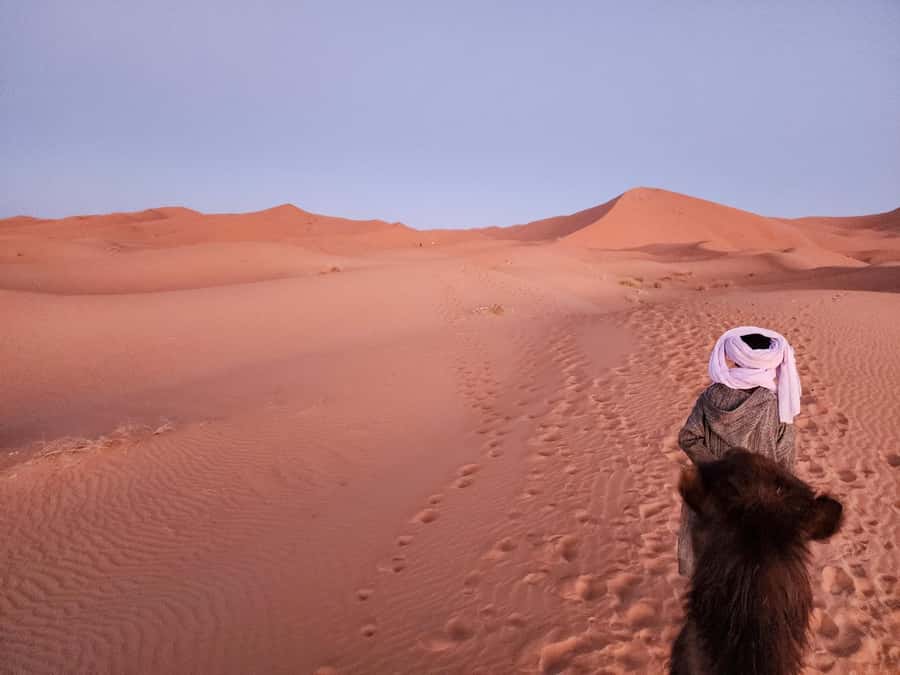
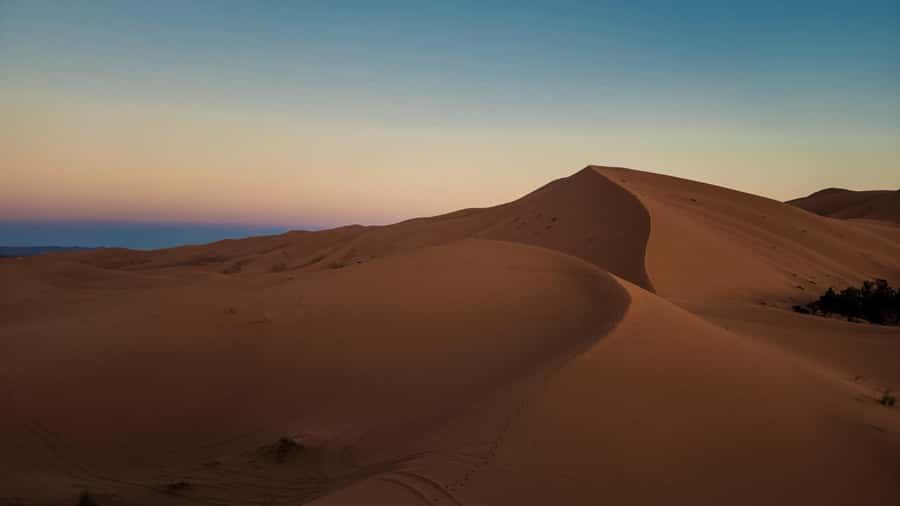
This is where the trip earns its name. At Merzouga, you board camels for the ride toward camp. The sunset departure is the emotional high point for many people because the sand changes color as the sun drops. The pace is calm, and the elevated view from the camel lets you see the dunes in long curves rather than as a single pile of sand.
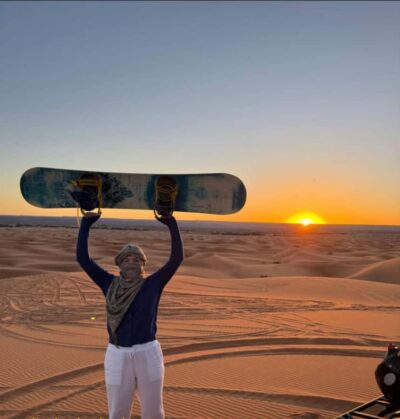
Camel rides are not for everyone. The included ride lasts long enough to reach camp, and sitting on a camel can be uncomfortable if you are not used to it. You can ask the camp staff about alternatives if needed, but the supplied details confirm the camel ride as a central part of the experience. Sandboarding is also included for those who want more activity.
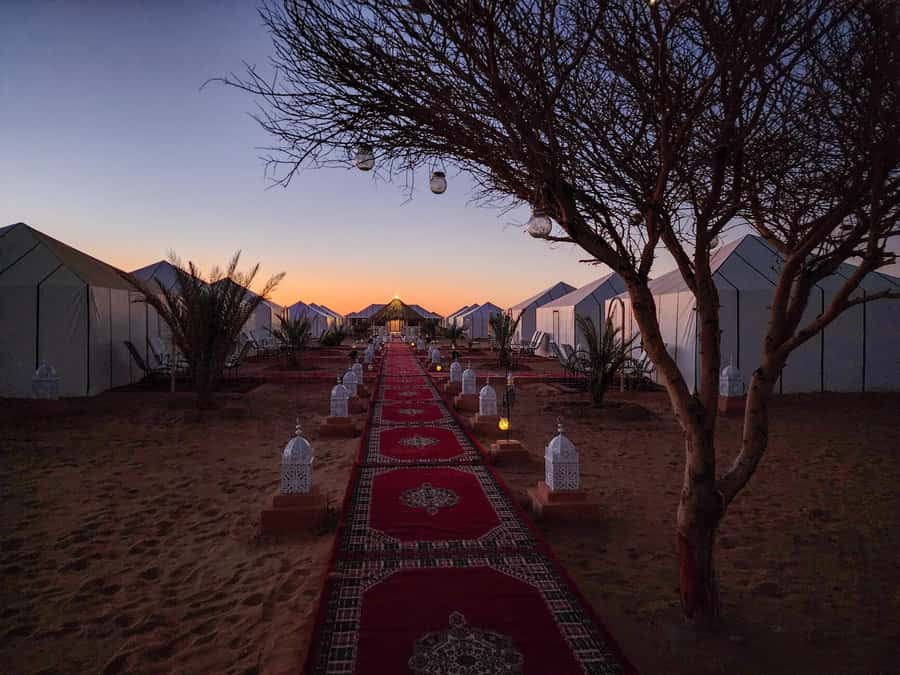
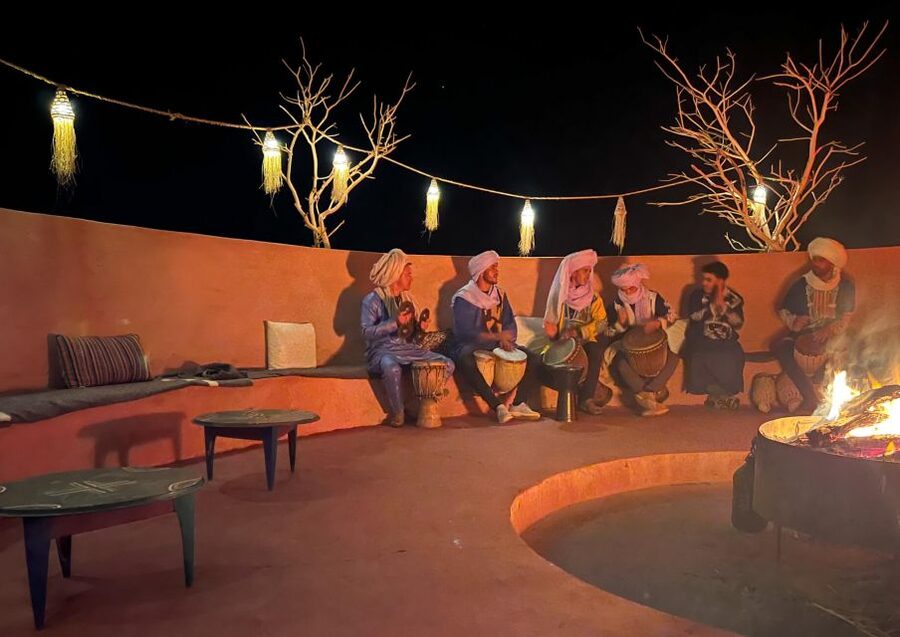
At camp, dinner and local music are part of the evening. Expect a social night around the campfire, with Moroccan food, music, and a chance to try traditional Berber clothing and henna. The camp atmosphere can be lively, especially when several groups arrive together. If you want complete quiet, this may feel more like a shared event than a private desert retreat.
Choosing the right desert camp
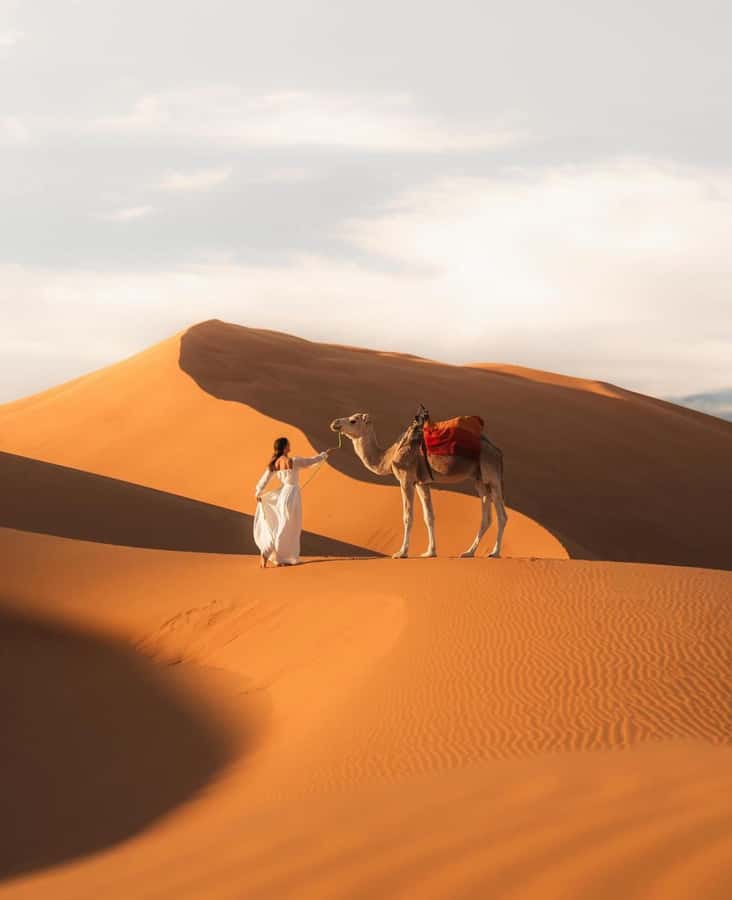
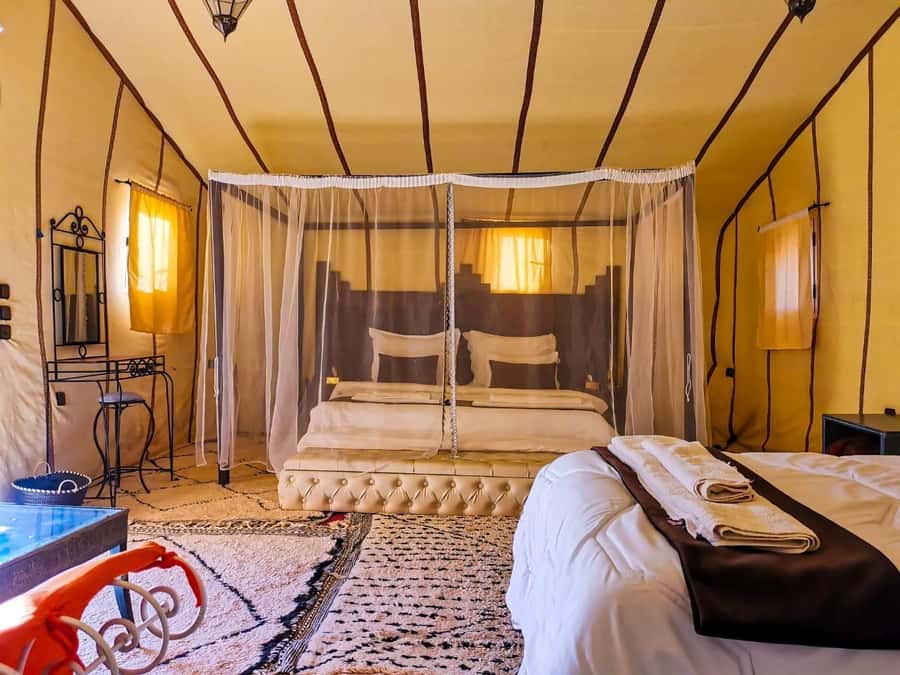
The word luxury needs a little explanation here. The deluxe camp option has been described as spacious and clean, with comfortable beds and, in some cases, a private bathroom and shower. That is a welcome step up from basic camping, especially after two days on the road.
The important catch is temperature. Winter nights in the dunes can be bitterly cold, and the camp may have no heater. Several people stayed comfortable under multiple blankets, but you should bring warm layers, a hat, gloves, and a scarf in January or February. Do not pack only for Marrakech’s daytime weather.
The food at camp has been a pleasant surprise for many people, with dinner included and often described as good. Breakfast is also included. Lunches are not, so keep money and water available during the day. Drinks and other beverages are extra.
The camp is not the same thing as a private desert lodge. Shared meals and music are normal, and the number of visitors can change the mood. Still, it gives you the part that matters most: sleeping near the dunes, looking up at a clear night sky, and waking before sunrise.
You get a second camel ride at dawn. The sunrise is quieter than the evening ride and gives you a different view of the same desert. Afterward, you return from the dunes and begin the long journey north.
Same place, a different kind of splurge:
- From Fes: 2-Day Merzouga Desert Trip w/Luxury Tent & Dinner
★ 4.7 · 844 reviews - Exclusive Fez Medina Walking Tour with Private Guide
★ 5.0 · 392 reviews - Luxury 2-Days Desert Trip from Fes to.:( fes or marakech)
★ 4.5 · 330 reviews - 2Days Desert Tour From Fez: Round-Trip with Luxury Camp stay
★ 4.8 · 259 reviews
Day three: Erfoud, the Ziz Valley, and Middle Atlas forests
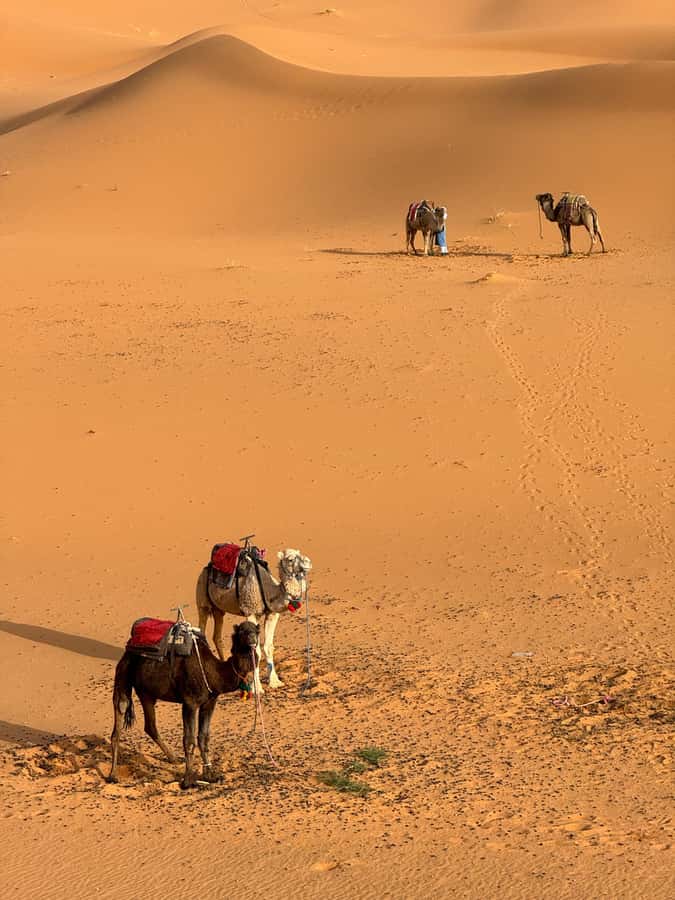
The final day is the longest, with about seven hours and 15 minutes of driving. That is a serious amount of road time, though stops break it up. You leave Merzouga for Erfoud, a town associated with fossils, then continue through the Ziz Valley.
The Ziz Valley provides another sharp contrast. Palm groves line the valley floor while dry mountains rise around them. It is a good place to watch how water supports communities in southern Morocco. The trip’s route makes this lesson visible without turning it into a classroom lecture.
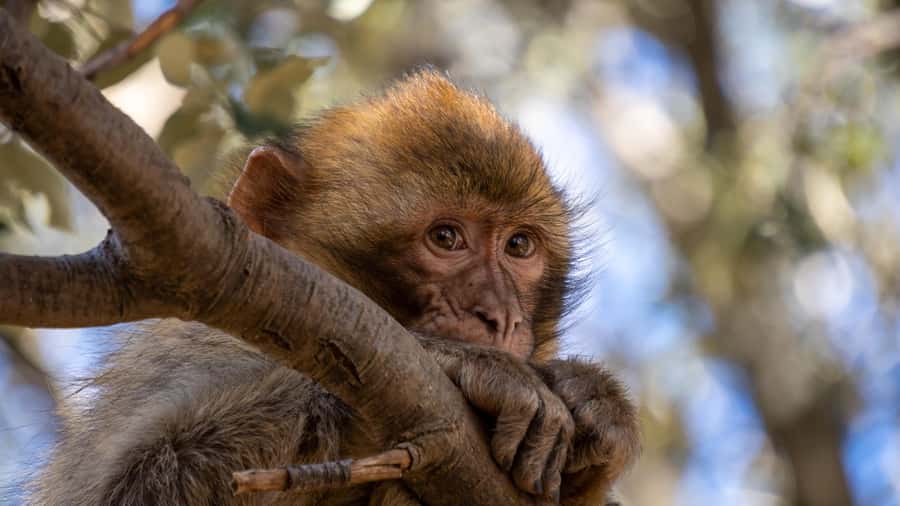
The road then climbs toward the Middle Atlas. Near Azrou, you may stop to photograph Barbary macaques in the cedar forests. This is a fun change after the desert, but wildlife is never fully predictable, so think of it as an opportunity rather than a guaranteed close encounter.
Ifrane is the day’s most unexpected stop. With its European-style buildings, cooler mountain setting, and tidy streets, it is often called Little Switzerland. The brief pause gives you a break from the vehicle and another reminder of how much Morocco changes from region to region.
Finally, you descend toward Fes. Arrival is at the nearest point to your hotel or riad, not always directly at the door. Medina access can be limited, so be prepared for a short walk or local transfer if your lodging is inside a narrow old-city lane.
Guides, drivers, and the comfort factor
The people running the trip make a real difference. Omar is praised for keeping groups laughing and on schedule, while Ali is repeatedly described as warm and helpful. Zohair is noted for being polite and attentive, and Mohamed el Qayed is praised for clear explanations and a friendly manner.
Other named guides and drivers include Tarik, Mustafa, Hicham, Ibrahim, Tarek, Hesham, Joseph, and Said. You may not receive the same person named in another booking, but the pattern is clear: the driver-guide role is central to the experience. A good one turns long road sections into manageable travel days.
The vehicle is air-conditioned transport by 4×4 or minibus. The exact vehicle and group size can vary because private and small-group options are available. A small group gives you more room to ask questions and may make stops easier, while a larger group can feel more social but less flexible.
Air conditioning and ventilation can also affect comfort. One person found the bus stuffy when the ventilation was switched off, so speak up if the air feels stale. Regular stops help, and the route typically includes breaks every couple of hours for food, coffee, toilets, or photos.
Who should book this journey?
I would choose this trip if you have limited time and want to connect Marrakech and Fes while seeing the desert. It suits first-time visitors who want a broad introduction to Morocco without arranging separate transport, hotels, guides, and camp activities.
It also works for people who enjoy changing scenery. In three days, you get mountain passes, kasbahs, oasis palms, canyon walls, dunes, cedar forest, and a town with a European look. That range is the strongest reason to book.
I would think twice if you dislike long drives, winding mountain roads, shared meals, or early starts. Families can enjoy it, but the road time may test young children. Anyone with back or knee concerns should consider the camel ride and the long vehicle hours before paying.
Bring comfortable shoes, sunscreen, comfortable clothes, and much warmer clothing than you think you need in winter. Keep a small day bag accessible, since you will want water, layers, and camera gear during frequent stops.
Should you book the Marrakech to Fes desert journey?
For $138 per person, this is a very good way to see southern Morocco and reach Fes without losing three days to ordinary transport. The strongest moments are the sunset and sunrise camel rides, the night music at camp, Ait Ben Haddou, Todra Gorge, and the constant change in scenery.
Book it if you value variety, friendly guides, and a well-organized route more than unhurried travel. Skip it if you need spacious seating, guaranteed heating at camp, or plenty of free time at each stop. For most people with only a few days, the route delivers an impressive amount of Morocco for the money.
FAQ
How long is the Marrakech to Fes desert tour?
The experience lasts about 60 hours over three days. The first day includes about five hours and 35 minutes of driving, the second about four hours and 45 minutes, and the final day about seven hours and 15 minutes.
What is included in the $138 price?
The price includes pickup from central Marrakech, air-conditioned 4×4 or minibus transport, fuel, tolls, a driver-guide, one hotel night, breakfasts, dinners, a desert camp night, camel rides at sunset and sunrise, sandboarding, the Todra Valley walk, and drop-off near your Fes accommodation.
Are lunches and drinks included?
No. Lunches, drinks, and other beverages are not included, so you should bring extra money for daytime meals and refreshments.
Is the guide at Ait Ben Haddou included?
No. A guide at Ait Ben Haddou costs about €2 per person. The main tour guide accompanies you along the route, but this separate local guide fee is extra.
Is the desert camp heated?
The provided information does not promise heating. Winter nights can be very cold, although the beds may have several blankets. Bring warm layers, especially from December through February.
Do I ride camels more than once?
Yes. The experience includes a camel ride through the dunes at sunset and another at sunrise. Sandboarding is also included at the desert camp.
What languages are available?
The main tour is offered in Spanish, English, and French. Local guide communication can vary by stop, so ask your main guide to explain anything that is unclear.
Where will pickup and drop-off happen?
Pickup is around 7:30 in the morning from a central Marrakech location. If your riad is inside the Medina or on a road that vehicles cannot reach, you will receive a nearby meeting point. Drop-off is at the nearest accessible point to your hotel or riad in Fes.
Just added around Fez
- FES TO Chefchaouen Day Trip- luxury Private Tour★ 5.0 · 49 reviews
- VIP TOUR OF FES- Medina by local guide & Rempart by car-FULL Day★ 5.0 · 74 reviews
- Luxury Overnight From Fez To Merzouga★ 5.0 · 65 reviews
- Fes Guided Sightseeing Tour with Luxury Car All Inclusive Tickets★ 4.5 · 34 reviews
- luxury 3 Days 2 Nights Desert Tour from Fez to Marrakesh★ 4.5 · 73 reviews
- Fes to Fes Private Desert tour 1-night 2-Day Tour luxury camps★ 5.0 · 23 reviews
- luxury day trip to Chefchaouen From fes by small group★ 5.0 · 59 reviews
- 2 Day Desert Tour from Fez with Camel ride Overnight luxury Camp★ 4.5 · 24 reviews
Fez VIP Tours, compared.
From Fes: 2-Day Merzouga Desert Trip w/Luxury Tent & Dinner
Read our review →
Exclusive Fez Medina Walking Tour with Private Guide
Read our review →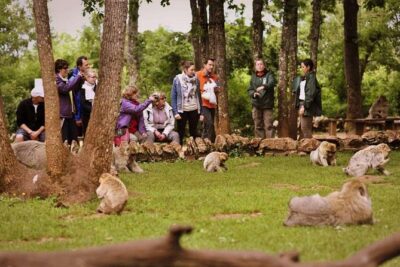
Luxury 2-Days Desert Trip from Fes to.:( fes or marakech)
Read our review →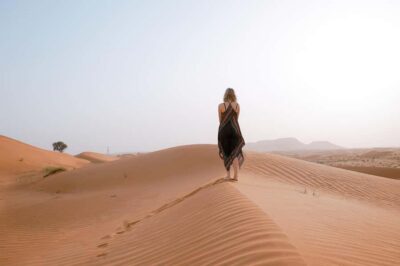
2Days Desert Tour From Fez: Round-Trip with Luxury Camp stay
Read our review →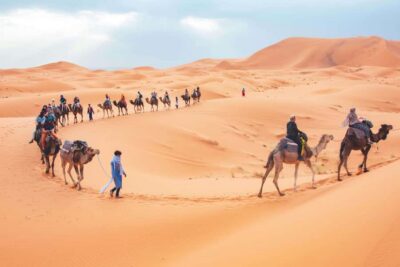
From Fes To Marrakech: 2-Days with Luxury Camp, Desert Tour
Read our review →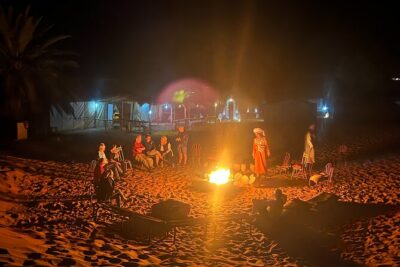
3 Days merzouga desert luxury camp from Fes to Marrakech
Read our review →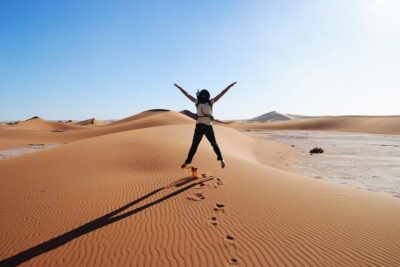
3-Day Luxury/Budget Desert Tour to Marrakech via Merouga from Fez
Read our review →![2 days luxury desert trip [fes to fes or marakech]](https://4.vipdaytrips.com/wp-content/uploads/2-days-luxury-desert-trip-fes-to-fes-or-marakech-400x267.jpg)
2 days luxury desert trip [fes to fes or marakech]
Read our review →Browse the lists this tour appears in