
Review · JAPAN
Kyoto: Tea Ceremony with Maiko Premium
Kyoto’s Maiko Premium experience gives you something rare: a chance to speak directly with a Maiko, then watch her perform. You’ll learn the basics of making matcha, eat two Japanese sweets, ask about her training and daily life, and take a photo beside her. I like the open Q&A and the traditional games most. They turn a formal-looking encounter into a friendly cultural exchange.
I also like that the $50 price includes the full program, not just a short photo session. You get tea, sweets, two dances, a keepsake Senjafuda charm, and time to talk. The main drawback is the setting: this is held in a modern building with tables, stools, and promotional posters, not in a traditional tatami room or ochaya.
Key points to know before booking
- Meet a Maiko or Geiko: The performer may be a young Maiko or a more experienced Geiko, depending on the schedule.
- Make your own matcha: You watch the preparation, then whisk your tea and enjoy two dried Japanese sweets.
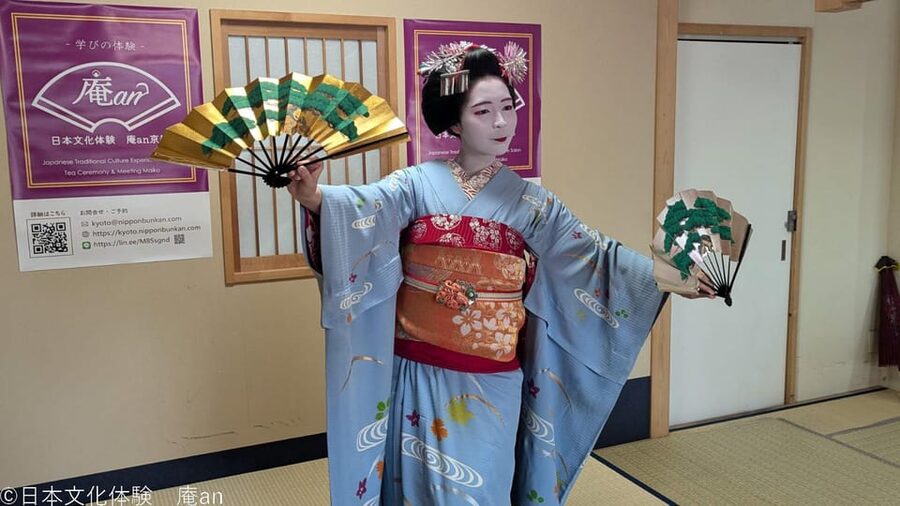
- Two traditional dances: The dances express subjects such as the seasons, love stories, and daily life.
- Ask personal questions: The Q&A offers a direct look at training, work, customs, and the Maiko way of life.
- Premium includes the fun parts: Games, dances, photos, and the Senjafuda charm are central to the Premium program.
- Arrive early: The venue is one minute from Exit 1 of Gojo Station, but late arrivals cannot delay the event.
Meeting a Maiko near Gojo Station
The venue is easy to reach. From Exit 1 of Gojo Station on the Subway Karasuma Line, walk about one minute. The entrance faces Gojo-dori, the main street, so you do not need to hunt through a quiet side lane.
This convenience matters because the program runs on a firm schedule. The hosts will not hold the event for late arrivals, and there is no compensation for transportation costs if you miss it. I would arrive about 15 minutes early. That gives you time to find the entrance, settle in, and avoid starting the program in a rush.
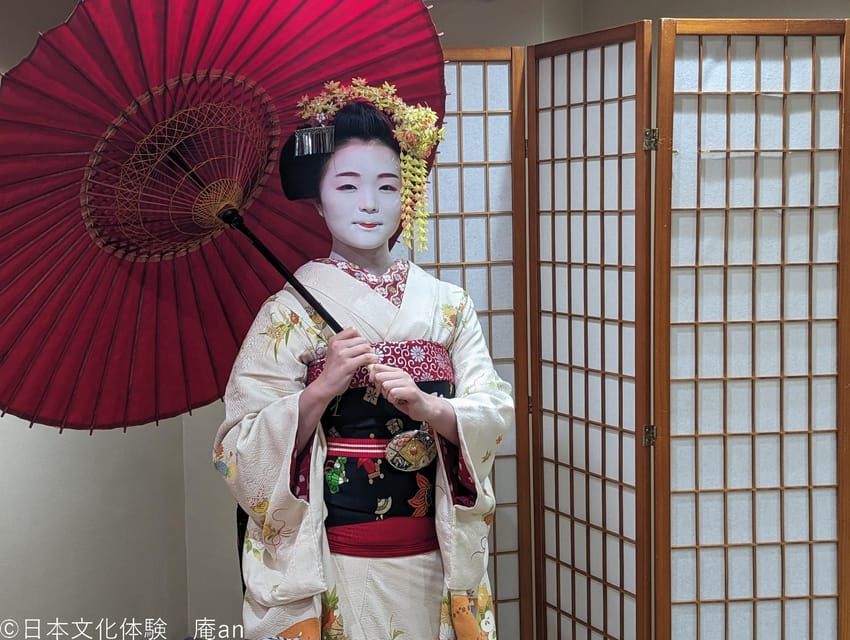
The building itself sets expectations. This is not an ochaya, the traditional entertainment house associated with Kyoto’s Geiko and Maiko culture. It takes place in a room inside a modern building, with tables and stools rather than tatami flooring. Several people have also noted that advertising and a QR code can appear behind the performer in photos.
That may disappoint you if you are looking for a perfectly traditional backdrop. On the other hand, the simple room helps keep the price moderate and makes the event less intimidating. The atmosphere is relaxed, and the focus stays on the performer and the conversation.
There is no elevator, so you need to use stairs to reach the venue. Keep that in mind if anyone in your party has difficulty with stairs.
A few more luxury tours around Japan worth a look
- Tokyo:Luxury Sumo Show Experience & Japanese cuisine & Drink
★ 4.7 · 577 reviews - Kyoto: Private Highlights Tour with Guide and Luxury Vehicle
★ 4.6 · 316 reviews - From Tokyo: Mt Fuji Private Day Tour In Luxury Land Cruiser
★ 4.9 · 168 reviews
What the 90-minute program includes
The published schedule runs from the opening greeting to departure in about 90 minutes. The Maiko leaves the room at around the 75-minute mark, followed by a short period for chatting before you depart.
The actual pace can vary. One account described a program closer to 70 minutes, while the stated duration is 90 minutes. I would plan around the full 90 minutes, but do not assume every minute will be filled with equal amounts of conversation. The number of people in the room, translation needs, and the group’s questions can affect the timing.
The order generally looks like this:
- Greeting from the Maiko
- Matcha demonstration and tea preparation
- Two Japanese sweets and matcha
- Question-and-answer session
- Photos with the Maiko
- Senjafuda gift
- Two dances
- Interactive game
- Short chatting period after the Maiko leaves
That is a lot to fit into one sitting. The program works best if you see it as a broad introduction to Maiko culture rather than a long, formal tea ceremony.
Making matcha with two Japanese sweets
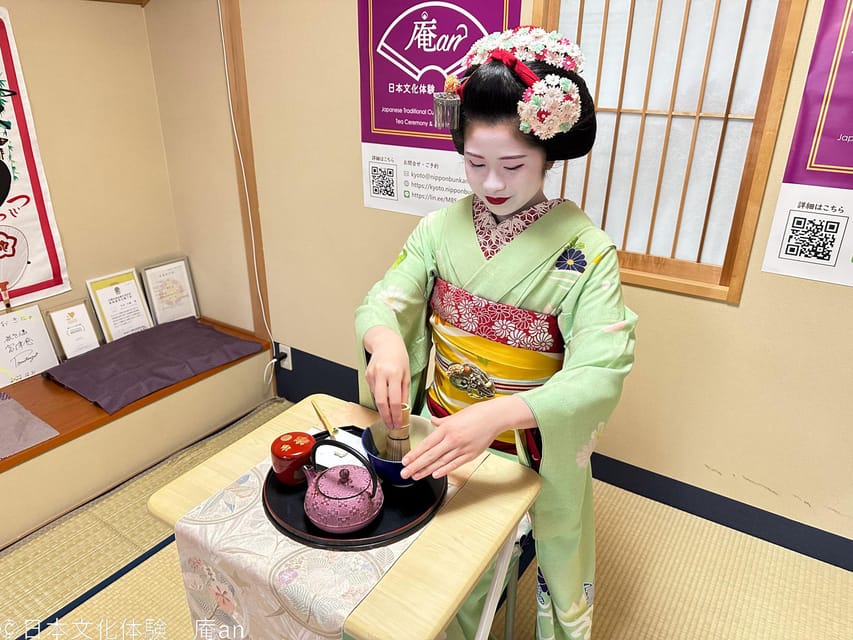
The tea portion begins with a demonstration. The Maiko shows you the basic method for preparing matcha, explains what to do, and then gives you the chance to make your own cup.
This is not presented as an advanced tea-school lesson. It is a hands-on introduction that lets you take part rather than simply watch. You can expect the matcha to taste like ordinary matcha, with two dried-style Japanese sweets served alongside it.
I like this part because it gives the program a clear cultural center. The tea ceremony is not just a performance. You are asked to do something yourself, which makes the etiquette and movements easier to remember.
Still, set your expectations correctly. If you have studied the highly formal rules of Japanese tea ceremony, this will feel basic and informal. The room uses tables and stools, and the focus is on access and participation. For most first-time visitors, that is a benefit. For a serious tea student, it may feel more like a short demonstration than a full ceremony.
The experience includes snacks and a drink, with the matcha and sweets forming the main refreshment. Additional drinks may be available inside for a moderate charge, but do not expect a full meal.
The Q&A is the cultural heart of the visit
After the tea preparation, you have a chance to ask questions. This is where the program becomes more than a costumed appearance.
You can ask about the Maiko’s training, daily routines, kimono, hairstyle, work, and path toward becoming a Geiko. The training takes years, and the conversation helps explain why the clothing, makeup, manners, and movements require such discipline.
The performer answers questions directly, with English support provided as much as possible. The instructor is Japanese, and you should contact the provider in advance if you want English translation added. Do not assume every part of the session will be fully translated without making that request.
Several specific performers have received warm praise, including Kanosuzu-san and a Maiko named Karen. One session featured a host who spoke both Japanese and English, which helped a mixed-language group. The exact performer is not guaranteed, and a Geiko may appear instead of a Maiko.
That substitution is not a downgrade. A Maiko is an apprentice in Kyoto’s traditional entertainment world, while a Geiko is an accomplished professional. Their experience and style differ, but both offer a valuable look at a living Kyoto tradition.
I would prepare a few questions before arriving. Ask what a typical workday looks like, how the training changes over time, what the kimono means, or how the performer learned a particular dance. A little preparation will help you get more from the short Q&A.
Same place, a different kind of splurge:
- Mt Fuji Exclusive Tour with Private Car English Guide
★ 5.0 · 116 reviews - Tokyo: Exclusive Access to Sumo Morning Practice with Photos
★ 4.8 · 107 reviews - Tokyo Toyosu Tuna Auction + Breakfast (Sushi Dai or Bentomi)
★ 4.8 · 97 reviews - From Tokyo/Nagano: Luxury Snow Monkey Private Full-Day Tour
★ 4.9 · 82 reviews
Photos, the Senjafuda, and the limits of the backdrop
You get a chance to take a commemorative photo beside the Maiko. Photos and videos are also allowed during parts of the presentation, so you are not limited to one quick snapshot at the end.
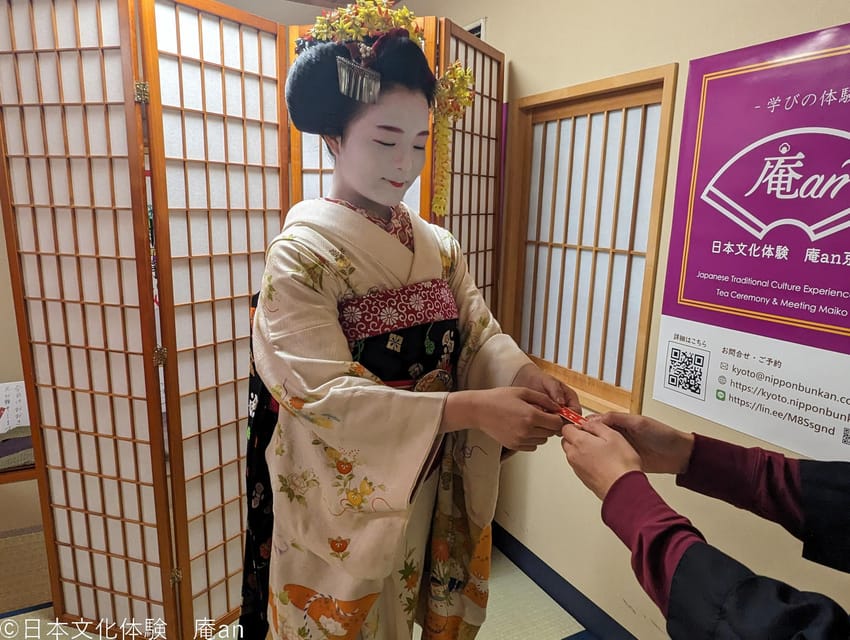
The keepsake is a Senjafuda, a small lucky charm traditionally associated with a person’s name or mark. It is a thoughtful touch because you leave with something more personal than a standard souvenir.
The room is the weak point for photographs. The background can include company advertising, posters, and a QR code. Several people specifically wished for a screen, artwork, or a more Japanese-looking wall behind the performer.
You can still get a good photo, but do not expect the setting to look like a historic teahouse. If the image matters to you, sit where the backdrop is least distracting and ask the staff about the best photo position. The Maiko herself, with her kimono and hairstyle, remains the visual focus, but the room will not create the atmosphere of Gion.
Two dances that show the Maiko’s craft
The Maiko performs two traditional dances. These are not quick entertainment fillers. They use controlled movements, careful posture, and gestures tied to seasonal scenes, romantic stories, or everyday life.
This is often the most moving part of the program. The dance gives you a chance to watch the discipline behind the appearance. A slight turn of the head or movement of a fan can carry meaning, and the restrained style rewards close attention.
The room is small enough for you to see the details, although your exact view depends on your seat. Optional seating upgrades are available: a first-row SS seat costs 3,300 yen, a second-row S2 seat costs 2,200 yen, and a third-row S3 seat costs 1,100 yen.
I would not automatically pay for the front row. The standard seating may be enough for many people, especially if the room is not large. The upgrade makes more sense if you care about close views and clear photos, or if you have limited mobility and want to avoid an obstructed angle.
The dance is also where the modern room is most noticeable. Elegant movement against a plain wall and advertising does not have the same effect as a dance in an old Kyoto house. You are paying for access to the performer and the program, not for a historic setting.
A playful game breaks the formal mood
The interactive game is a smart part of the Premium format. Volunteers can join the Maiko, while everyone else watches, claps, and cheers.
The game makes the event family-friendly. Children have enjoyed this part, and it gives younger visitors something active to follow after the quieter tea demonstration and Q&A. Adults may also appreciate the change of pace. The Maiko’s polished manners are still present, but the activity shows a lighter and more playful side.
You do not need to volunteer. Watching is part of the fun, and the group atmosphere encourages everyone to take part through applause and support.
This is one reason I would choose Premium instead of a shorter tea-only option. The dance and game create the strongest sense of a shared evening rather than a quick cultural demonstration.
Is $50 a good value?
At about $50 per person, the experience offers solid value if you want several different elements in one booking. You receive matcha instruction, two sweets, a Q&A, a photo opportunity, a Senjafuda charm, two dances, and a game, all within 90 minutes.
The price is especially reasonable for families and first-time visitors who want an accessible introduction to Maiko culture. You do not need to arrange separate performances, tea instruction, and cultural talks around Kyoto.
The value is less clear if your main goal is a formal tea ceremony in a historic room. In that case, the modern venue and basic tea lesson may leave you wanting more. You would be paying for the personal interaction and performance, not for a traditional building or a specialist tea-school lesson.
The Premium label matters. The dances and game are important parts of what makes this program varied, so I would choose the Premium version if your budget allows. The optional seat fees add to the cost, but they are not essential for everyone.
Children under two can attend free when seated on a parent’s lap. If a separate seat or meal is required, the regular per-person fee applies. Anyone who is not participating in the experience cannot enter, so do not book extra places for companions who plan to wait inside.
Practical details that affect your visit
The program operates between 10:00 and 17:00, and reservations received after 17:00 are processed the next day. The instructor language is Japanese, with English translation available as much as possible if requested.
Cancellation is free up to eight days before the activity for a full refund. After the cancellation deadline, fees apply, and changing the date or time after a fee has been incurred can also create an additional charge. Read the conditions carefully before booking, particularly if your Kyoto schedule is still uncertain.
The venue is not described as a place for lunch or dinner, and the event may take place alongside people who are eating. The supplied refreshments include snacks and a drink, while the tea session includes matcha and sweets. If you need a full meal, plan that separately.
The event provider is B.B.Advisors Inc. AN KYOTO. The meeting point is close to public transportation, but the stairs, fixed start time, and limited language support are the details most likely to affect your day.
Who should book this Maiko experience?
I would recommend it to you if you want a direct introduction to Kyoto’s Maiko tradition without committing to a costly private dinner. It suits first-time visitors, families, photographers who want a close portrait opportunity, and anyone curious about the person behind the costume.
It is also a good choice if you enjoy asking questions. The Q&A is not an optional extra. It is one of the clearest ways to understand the work, training, and customs involved.
You may want to skip it if the room itself is central to your idea of an authentic Kyoto evening. This is not an ochaya, and the promotional backdrop can weaken the mood in photos. You should also look elsewhere if you want a long, highly formal tea ceremony or detailed instruction in tea-school etiquette.
Should you book the Kyoto Maiko Premium experience?
Yes, if you want personal contact, performance, and participation in one compact program. The chance to prepare matcha, ask questions, watch two dances, play a game, and take a photo creates a fuller experience than a simple stage show.
Book it with realistic expectations. You are entering a modern event room, not a historic teahouse. The exact performer may be a Maiko or Geiko, English help needs to be requested, and the program can feel shorter if the group moves quickly.
For most visitors, the combination of access and price makes the Premium option the sensible choice. Arrive early, request language help ahead of time, prepare questions, and choose a front-row upgrade only if close views matter greatly to you.
FAQ
Where is the Maiko tea ceremony held?
The meeting point is a one-minute walk from Exit 1 of Gojo Station on Kyoto’s Subway Karasuma Line. The entrance faces Gojo-dori.
How long does the experience last?
The stated duration is 90 minutes. The Maiko portion ends at about 75 minutes, followed by chatting time before you leave the room.
Will a Maiko definitely appear?
A Maiko is scheduled for the program, but a Geiko may be invited instead depending on the situation.
Is the venue a traditional Japanese teahouse?
No. The activity takes place in a building with tables and stools. It is not an ochaya or a traditional tatami house.
Is English available?
The instructor language is Japanese. English translation will be provided as much as possible if requested, so contact the provider before the activity if you need language support.
What is included in the ticket?
The Premium program includes the tea ceremony, matcha, two Japanese sweets, a Q&A, a photo opportunity, a Senjafuda charm, two dances, and an interactive game. Snacks and a drink are also included.
Can young children attend free?
Children under two can attend free when seated on a parent’s lap. If a seat or meal is needed, the regular fee for one person applies.
Just added around Japan
- Tokyo Toyosu Tuna Auction + Breakfast (Sushi Dai or Bentomi)★ 4.8 · 97 reviews
- Tokyo: Rainbow Bridge Day Cruise Show and Only Soft Drinks★ 4.5 · 75 reviews
- Tokyo: Exclusive Access to Sumo Morning Practice with Photos★ 4.8 · 107 reviews
- Tokyo: WARP SHINJUKU Nightclub Ticket with Drink / VIP Plan★ 4.2 · 55 reviews
- Tokyo: Private Makeover Photography Studio in Luxury Kimono★ 5.0 · 22 reviews
- Osaka Umeda: PICCADILLY DINNER SHOW & NIGHTCLUB with Tasting★ 4.8 · 49 reviews
- Kyoto:Private Tour/Luxury Vehicle with Guide & photographer★ 4.8 · 35 reviews
- Kyoto Day Tour with Certified Tour Guide & Luxury vehicle★ 4.7 · 24 reviews
Japan VIP Tours, compared.
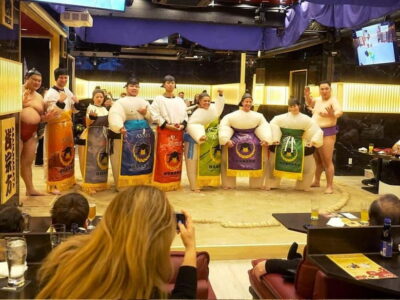
Tokyo:Luxury Sumo Show Experience & Japanese cuisine & Drink
Read our review →
Kyoto: Private Highlights Tour with Guide and Luxury Vehicle
Read our review →
From Tokyo: Mt Fuji Private Day Tour In Luxury Land Cruiser
Read our review →
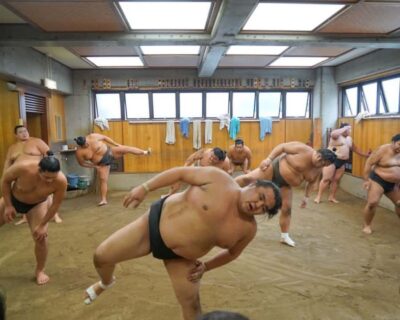
Tokyo: Exclusive Access to Sumo Morning Practice with Photos
Read our review →
Tokyo Toyosu Tuna Auction + Breakfast (Sushi Dai or Bentomi)
Read our review →
From Tokyo/Nagano: Luxury Snow Monkey Private Full-Day Tour
Read our review →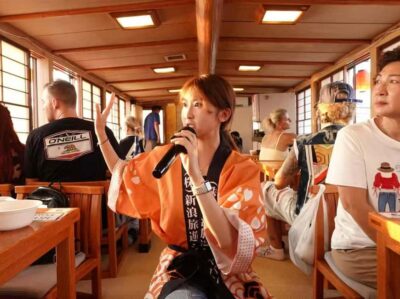
Tokyo: Rainbow Bridge Day Cruise Show and Only Soft Drinks
Read our review →Browse the lists this tour appears in